Guinea-Bissau on edge after activist’s killing
A Prominent Critic’s Death Sparks Outcry in Guinea-Bissau
Samael.lol – The killing of Vigario Luis Balanta, a 35-year-old teacher and vocal opponent of the military regime, has sparked widespread protests and accusations of state repression in Guinea-Bissau. His body was found in a remote, swampy region 30 kilometers outside the capital, Bissau, with severe injuries and two gunshot wounds to the head, according to a witness who shared details with AFP. The incident has raised alarms about the erosion of democratic freedoms and the safety of civil society activists.
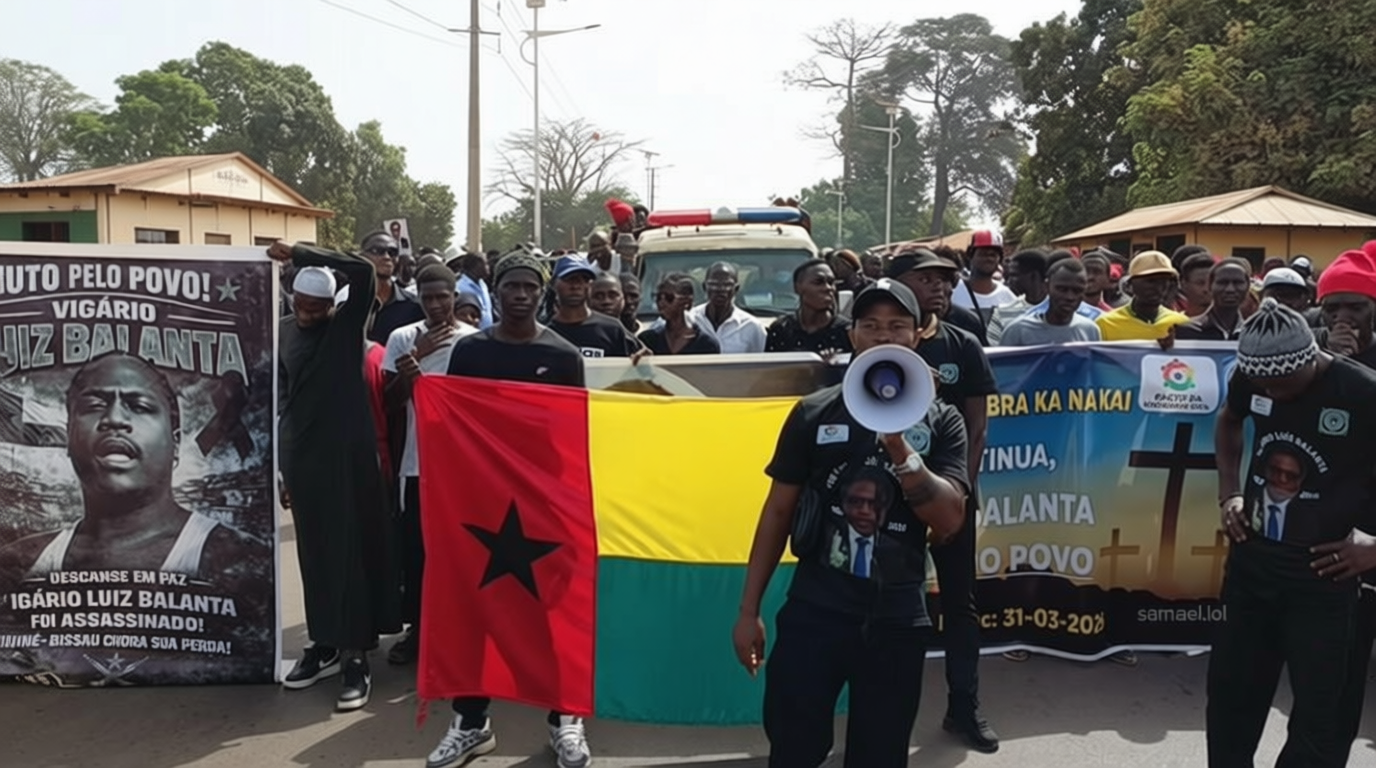
“We are all Vigario,” “We want justice,” and “Down with the dictatorship” — chants echoed at his funeral, which turned into a demonstration against the military government. Hundreds gathered at Antula Cemetery in Bissau, demanding accountability for the activist’s brutal demise.
Balanta was a key leader in the civil society group Po di Terra, which advocates for national unity and political reform. RFI reported he had been missing for days before his release, later followed by his kidnapping in the Pilun district. His death occurred two days later, prompting the UN to describe it as “a brutal killing.” The transitional military regime, which took power in a coup four months prior, faces growing pressure from opposition and human rights organizations.
“Despite the fear in the population, support is strong,” Balanta declared in his final interview with DW in January. “We will keep going. We have to act strategically and mobilize the people.” His words underscored the movement’s resolve amid escalating tensions.
Seif Magango, a spokesperson for the UN human rights office, highlighted the broader context of restricted civic space in Guinea-Bissau. “The reduction of democratic freedoms has accelerated since the November 2025 coup,” he stated, citing arbitrary detentions, assaults on dissenters, and the suspension of radio stations. Activist Sumaila Jalo called the killing a “warning to all who oppose the regime,” emphasizing the ongoing struggle for justice.
The military government swiftly condemned the act, labeling it a “crime under particularly violent circumstances” and vowing to investigate thoroughly. However, critics remain unconvinced, questioning the regime’s commitment to transparency. Meanwhile, the Guinean diaspora has organized rallies, including in Lisbon, to demand accountability.
Political friction has intensified as the government ordered private radio stations to shut down, citing unpaid licensing fees totaling 5 million CFA francs ($9,000). Though broadcasts resumed after talks with the prime minister, the state of press freedom remains precarious. Residents report severe fuel shortages, yet the government denies the crisis, with some citizens facing intimidation for claiming the issue.
Amid these challenges, the military under General Horta N’Tam plans to hold presidential and legislative elections by December, aiming to restore civilian governance. Former president Umaro Sissoco Embalo, whose whereabouts are unclear, is accused by opposition figures of orchestrating the coup to secure power. Economist Carlos Lopes noted that Embalo may have initiated the takeover but now holds less influence over the junta than anticipated. “Revolutions often consume their own children — especially in Guinea-Bissau,” Lopes observed, reflecting on the nation’s turbulent political history.