China’s Xi Jinping hosts Taiwan opposition leader in Beijing
A strategic meeting to ease cross-strait tensions
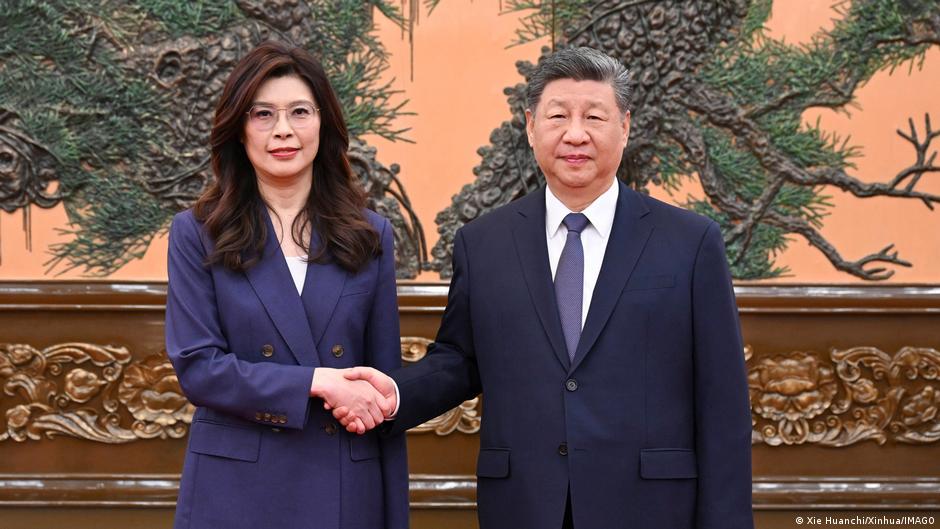
Samael.lol – Chinese President Xi Jinping met with Cheng Li-wun, the head of Taiwan’s Kuomintang (KMT), in Beijing on Friday. The encounter marks the first KMT visit to mainland China in ten years and follows Cheng’s declaration of a “peace” mission aimed at reducing regional hostilities. As a proponent of closer ties with Beijing, her participation underscores the Chinese government’s efforts to reshape the narrative around Taiwan’s political landscape.
Beijing sees Cheng’s trip as an indicator of shifting dynamics in Taiwan, where the ruling Democratic Progressive Party (DPP) has been a key source of friction. The DPP’s leadership, which Beijing does not acknowledge, has fueled tensions since Tsai Ing-wen took office in 2016. This meeting, however, signals potential room for compromise, with Xi emphasizing the importance of unity and opposing Taiwan’s push for independence.
“Opposing Taiwan independence is the only way to prevent conflict,” Cheng stated after the talks, highlighting her alignment with Beijing’s goals. She also noted that the Taiwan Strait “will no longer be a flashpoint” if political confrontations are resolved.
Xi Jinping reiterated his stance during the meeting, advocating for diplomatic efforts to achieve “reunification” while stressing China’s readiness to use force if needed. “The trend of compatriots growing closer and uniting will not reverse,” he said, according to Taiwanese media reports. The Chinese leader urged the KMT and Communist Party to strengthen mutual trust and collaborate on the path to unification.
Escalating tensions and political shifts
Since the DPP’s Lai Ching-te assumed power in January 2024, cross-strait relations have worsened. Beijing has cut ties with Lai, branding him a “separatist” after he took over from Tsai Ing-wen. Meanwhile, the KMT secured a coalition with the Taiwan People’s Party (TPP), enabling them to block a $40 billion defense budget proposed by the DPP. This division has stalled progress on bolstering Taiwan’s military readiness.
Taiwan’s defense minister, Wellington Koo, warned lawmakers that the budget is essential to counter China’s expanding military presence. “China’s threat is intensifying,” Koo said, after the KMT opted to skip budget discussions. Despite this, the KMT insists Cheng’s visit is separate from defense spending decisions, maintaining that her engagement with Beijing does not influence their stance on military allocations.
Global implications and arms support
Cheng’s meeting comes ahead of a May summit between Xi and U.S. President Donald Trump, where U.S.-Taiwan relations are expected to take center stage. The U.S. remains Taiwan’s principal arms supplier and supports the island’s self-governance, though it avoids endorsing independence. A $13 billion arms package was recently paused by Trump to avoid disrupting the summit, as reported by The Wall Street Journal in February.
The KMT’s alignment with the TPP has created a political balance, allowing them to counter the DPP’s defense initiatives. However, Cheng’s position on reduced military spending contrasts with the DPP’s priorities, creating internal debates over Taiwan’s security strategy. As China continues large-scale military drills near the island, the stakes for maintaining stability remain high.