NASA’s billion-dollar space race goes into overdrive
Samael.lol – Amid its intensified focus on sending humans to the Moon and Mars, NASA’s ambitious endeavors come with significant financial commitments. Yet, the question remains: who bears the cost, and what tangible benefits does this investment yield for those still on Earth? While some outcomes of its missions are challenging to quantify in monetary terms, the agency’s programs have consistently delivered innovations that permeate daily life, such as memory foam, scratch-resistant lenses, and home air purifiers.
Costs and Challenges of Artemis II
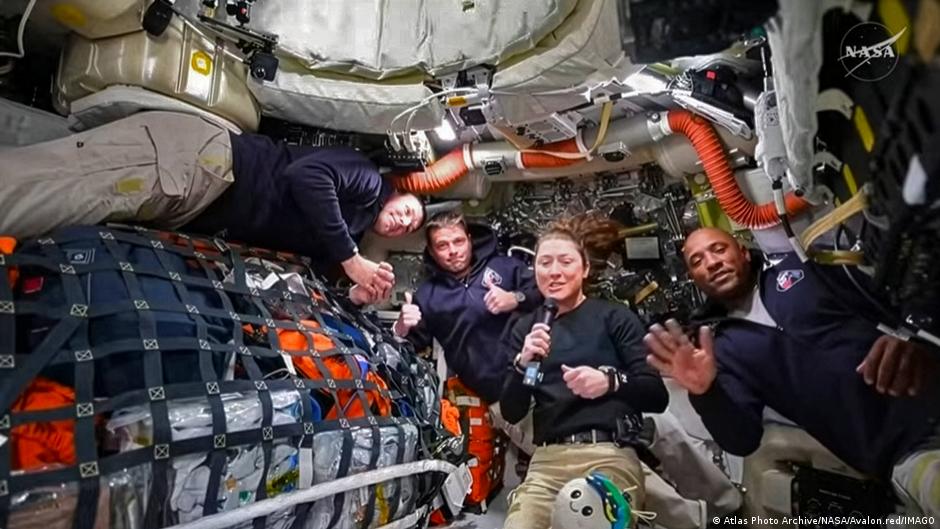
The Artemis II mission, which achieved a historic milestone by carrying four astronauts farther from Earth than any humans before, sparked debate over its expense and purpose. During its 10-day journey, attention was drawn to the onboard toilet, which not only malfunctioned but also accounted for an estimated $23 million in costs. NASA designed the mission, while aerospace firms like Boeing, Northrop Grumman, and Lockheed Martin handled its assembly.
Financial Breakdown of Artemis Missions
Building and launching a single Orion crew capsule alone costs approximately $1 billion, according to a 2021 report by NASA’s inspector general. Additional expenses include $300 million for the service module, provided by the European Space Agency, and $2.2 billion for the Space Launch System rocket boosters. Ground infrastructure, such as mobile launchers, adds another $570 million. Altogether, each Artemis flight is projected to cost around $4.1 billion, with the total Artemis project estimated at $93 billion by 2025.
NASA’s budget has long been a focal point for scrutiny. The agency has spent over $1.9 trillion since 1958, adjusted for inflation. While President Donald Trump’s first term emphasized a return to the Moon, his second term proposed a nearly 25% cut to the 2026 budget, which Congress largely rejected. The Department of Government Efficiency (DOGE) further impacted NASA by reducing federal workforce numbers, with about 4,000 employees leaving or planning to leave, roughly a fifth of the agency’s former staff.
Despite these challenges, NASA’s mission has seen renewed momentum. In December 2021, Trump signed an executive order to strengthen the US presence in space, aiming for a Moon landing by 2028 and a permanent lunar base by 2030. This outpost, equipped with nuclear reactors, would serve as a gateway to Mars. However, public opinion remains mixed. While most US politicians support NASA, many citizens are more cautious about the value of human spaceflight.
The New Space Race and Congressional Support
Senator Ted Cruz highlighted the urgency of the situation at a Senate hearing, stating,
“Make no mistake, we are in a new space race with China.”
He noted China’s strategic investments, including its Tiangong space station, which secures a permanent presence in low Earth orbit, and its goal to establish a lunar foothold by 2030. To fund this competition, Congress allocated $24.4 billion to NASA in 2026, representing 0.35% of federal spending. The 2027 budget request, $18.8 billion, reflects a 25% reduction, aligning with a shift toward lunar and Martian exploration.
Commercial space ventures are also reshaping the landscape. Companies like SpaceX and Blue Origin are driving innovation, while discussions about space-based data centers signal the emergence of a broader space economy. This growing sector suggests that the race for cosmic dominance is no longer solely a government affair, but a multi-faceted global effort.