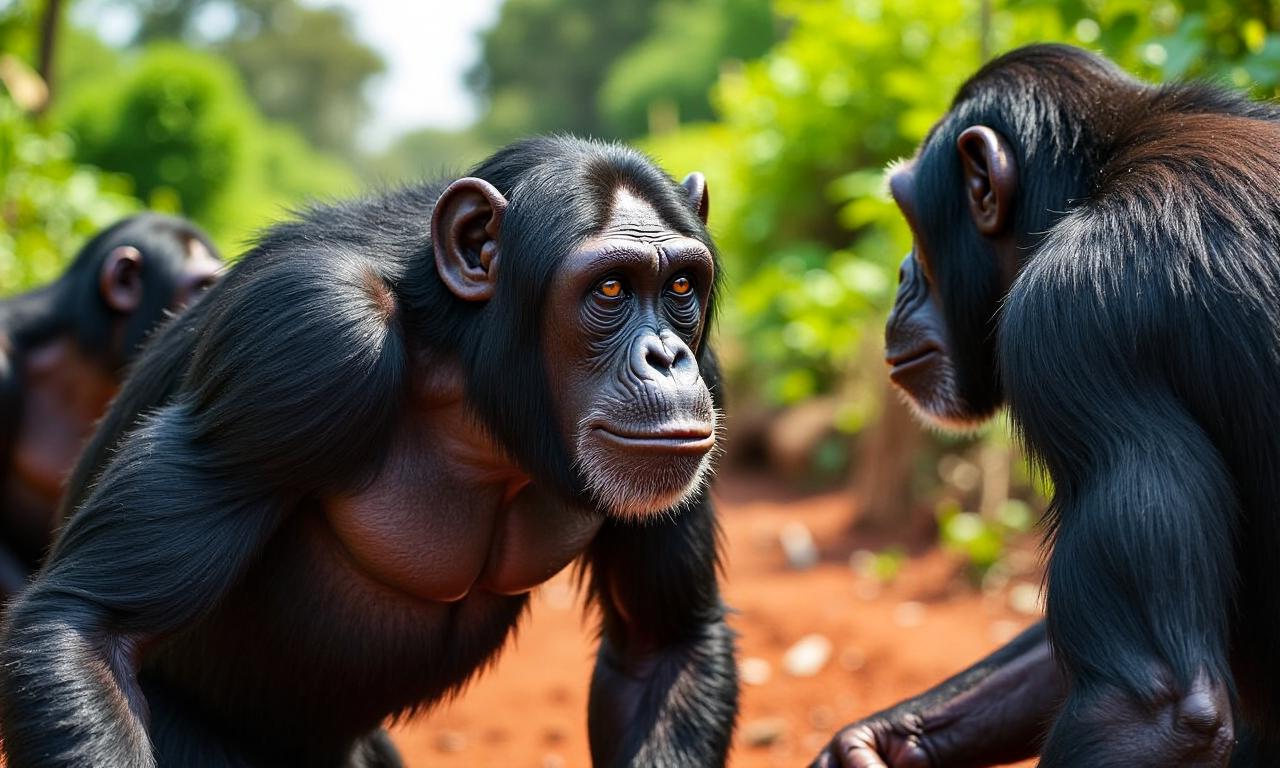
Chimpanzees in Uganda locked in vicious ‘civil war’, say researchers
Samael.lol – The most extensive documented wild chimpanzee community has fractured, with members engaged in persistent conflict for over eight years, according to a recent study. Researchers note that the Ngogo chimpanzees in Uganda’s Kibale National Park, once a tightly bonded group, now display aggressive behavior toward one another. While the precise reasons for this division remain unclear, the team has documented 24 instances of lethal violence since 2018, including the deaths of 17 infant chimps.
“These were chimps that would hold hands,” said lead author Aaron Sandel. “Now they’re trying to kill each other.”
The study, featured in the journal *Science*, suggests that the prolonged and intense nature of this conflict could shed light on the origins of human warfare. Sandel, an anthropologist from the University of Texas and co-director of the Ngogo Chimpanzee Project, emphasized that chimps exhibit strong territorial instincts and often engage in hostile interactions with outsiders. He likened this behavior to a “fear of strangers,” as explained during an interview with the *Science* podcast.
Historically, the nearly 200 Ngogo chimps lived in unity, divided only into Western and Central factions. These subgroups maintained harmony, sharing resources and social activities. However, the dynamic shifted in 2015 when the Western group began fleeing from the Central chimps, sparking a period of six weeks where interactions nearly ceased. When contact resumed, the encounters grew more aggressive, with heightened displays of hostility.
By 2018, the division had solidified, leading to targeted attacks. The research found that seven adult males and 17 infants from the Central group were killed by the Western faction in 24 recorded incidents. Although the actual toll may be higher, the study attributes the conflict to factors like competition for resources, group size, and male rivalry. Sandel highlighted that the chimp groups’ prior cooperation turned into lethal aggression once they were redefined by membership.
“Individuals who once lived, fed, and patrolled together for years became targets based on their new group identity,” the researchers wrote in their paper.
James Brooks, a scientist at the German Primate Center, noted that the study serves as a cautionary tale for human societies. “Group divisions can pose significant risks,” he stated in a commentary on the research. “Humans must draw lessons from the group-based behaviors of other species, both in conflict and cooperation, while recognizing that our evolutionary past doesn’t dictate our future.” For more updates from the African continent, visit BBCAfrica.com and follow @BBCAfrica on Twitter, BBC Africa on Facebook, or bbcafrica on Instagram.