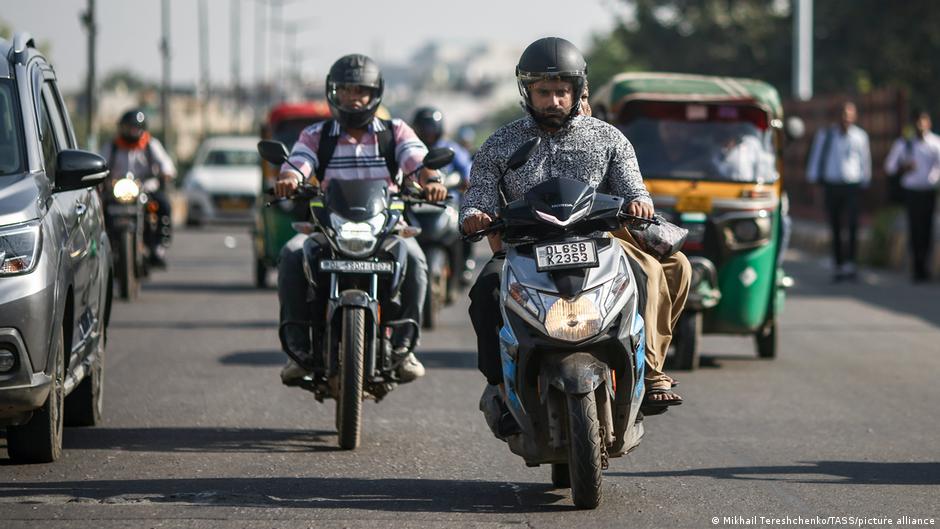
India news: Delhi plans to ban new fossil fuel bikes by 2028
Samael.lol – Delhi aims to phase out conventional two-wheelers to combat persistent smog and pollution levels. The city, infamous for its winter haze, faces severe air quality challenges. A recent policy draft outlines a strategy to eliminate fossil fuel-powered vehicles from 2028, targeting emissions as a primary cause of pollution.
The draft Delhi Electric Vehicle (EV) Policy 2026-2030, released for public input, emphasizes the need for rapid electrification. It states that two-wheelers make up about 67% of Delhi’s vehicle population, making their transition essential for cutting emissions. The policy also includes incentives and tax benefits for buyers of electric bikes, three-wheelers, and goods vehicles.
Political Symbolism in West Bengal
Meanwhile, Prime Minister Narendra Modi’s BJP is actively campaigning in West Bengal, where the upcoming 2026 assembly elections have heightened political tensions. The state’s Trinamool Congress (TMC) faces criticism from the BJP, which has used the issue of fish as a symbol of its opposition.
West Bengal’s Chief Minister Mamata Banerjee recently accused the BJP of threatening to ban fish, meat, and eggs, claiming the party “lacks understanding of Bengal’s traditions.” Her remarks follow claims that the BJP seeks to restrict fish access for communities reliant on it. In response, BJP candidate Sharadwat Mukhopadhyay carried a raw fish during a rally, a gesture that sparked online discussions.
“They are not aware of the traditions and culture of West Bengal… It’s a party of outsiders.”
Union home minister Amit Shah denied plans to ban fish, stating in a rally that the BJP would protect the state’s immigrant communities. “You are not here by the grace of any TMC leader. You are here under the protection of India’s Constitution,” he assured, addressing refugee groups in the region.
Citizenship Act and Electoral Dynamics
Modi also pledged to accelerate the Citizenship (Amendment) Act (CAA) if the BJP secures power in West Bengal. The law, enacted in 2019, fast-tracks citizenship for Hindus, Sikhs, Buddhists, Jains, Parsis, and Christians fleeing religious persecution in Pakistan, Bangladesh, and Afghanistan. Muslims from these countries are excluded, a move seen as a shift toward religious criteria in citizenship.
“Infiltrators should pack up their bags,”
Modi warned during a rally in Purba Bardhaman, while reassuring refugee communities of their rights. The CAA has drawn backlash from opposition parties, Muslim groups, and activists, who argue it weakens India’s secular identity.
With its porous border with Bangladesh, West Bengal is a key battleground for the CAA’s impact. The law’s implementation now hangs in the balance as political alliances and public sentiment shape the outcome of the state’s crucial elections.