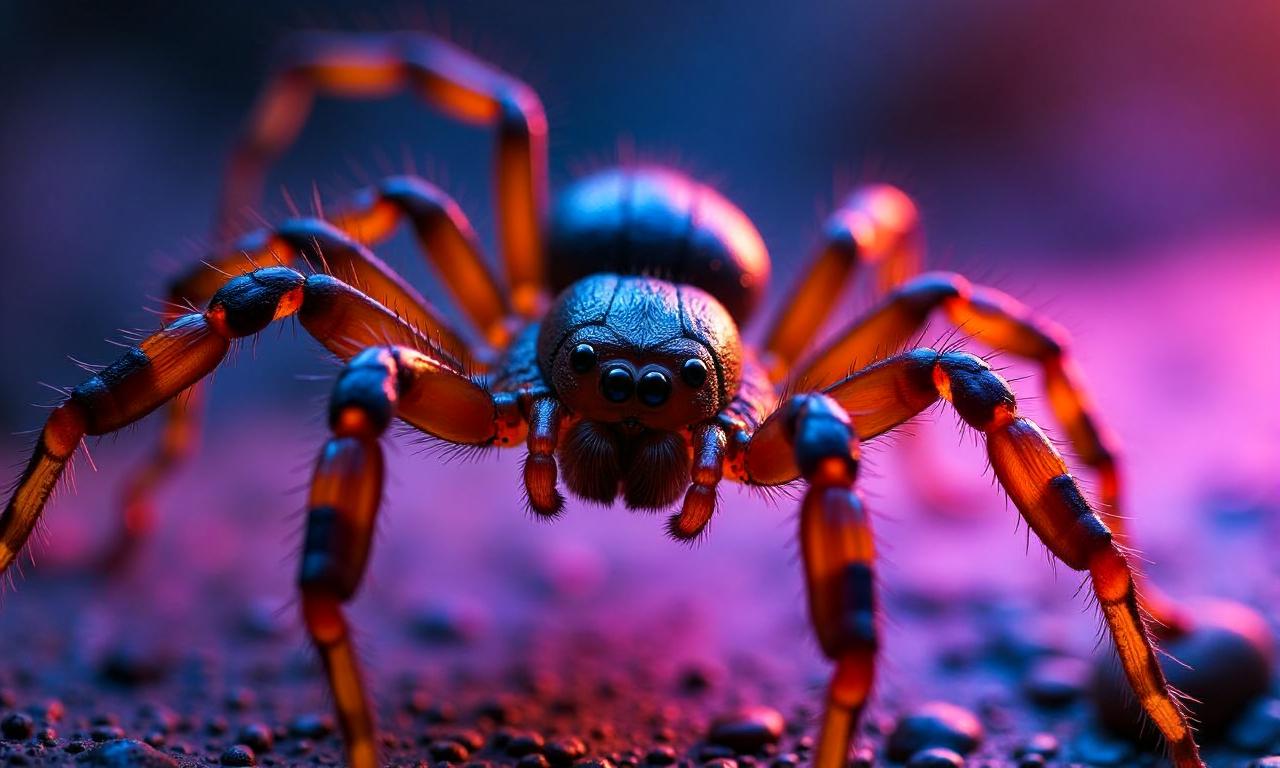
Are spider bites on the rise in England?
Samael.lol – According to a freedom of information request by the Press Association, the number of hospitalizations due to spider bites in England has grown significantly over the past decade. NHS data reveals 100 emergency admissions in 2025, compared to 47 in 2015. Experts suggest this trend is linked to a surge in the noble false widow spider population, which is considered the most hazardous spider species in Britain.
Spider Behavior and Impact
The charity Buglife notes that these spiders are not inherently aggressive and have not been recorded as causing severe illness or death. However, they can lead to discomfort, including pain and localized swelling, in rare instances. Originating from Madeira and the Canary Islands, the false widow spider was first spotted in southern England in 1879.
“I think if you were going back 50 years, then there would have been hardly any consequences from spider bites in Britain,” said Clive Hambler, a lecturer in biological and human sciences at the University of Oxford.
“The incidents of severe bites from spiders in Britain will have increased, as this species (false widows) became hugely more abundant in Britain, particularly in the south,” Hambler added.
Rising Admissions and Media Influence
NHS records obtained by PA show 43 admissions in 2021, rising to 95 in 2022. The numbers remained steady at 91 for both 2023 and 2024. Of the 100 cases in 2025, 73 involved A&E departments, a sharp contrast to the 38 out of 47 cases in 2015. Incidents such as a baby in Ireland seeking emergency care after a bite and a Lincolnshire woman describing her finger as “exploding” from a suspected spider bite highlight public concern.
“The figures are ‘interesting’ but ‘not surprising,’ given the explosion in the population of noble false widow,” stated Dr. Michel Dugon, a zoologist at the University of Galway. “More media coverage of false widow spiders and their bites over the last few years might have convinced some people to believe they were bitten when it was something else.”
Effects and Risk Assessment
Spider bites typically leave small puncture marks, which can cause pain and redness. Professor David Lalloo from the Liverpool School of Tropical Medicine emphasizes that false widow bites are not life-threatening. He noted that while the venom may make someone feel unwell for a day, it does not lead to gangrene. Buglife attributes such infections to bacteria from other sources, like scratches or mosquito bites.
“They will never run or jump at you in an aggressive manner as some people describe,” the charity said. “Most British spiders couldn’t bite you if they tried; their fangs are too small or weak to penetrate human skin.”
“Most large spiders are not inclined to bite a human – you can handle hundreds of large house or garden spiders and never get bitten,” Buglife added.
Spread of Venomous Spiders
Buglife also warns that venomous spiders can be introduced to the UK through imported goods or produce. They recommend caution when encountering spiders in grocery areas, as their presence might indicate potential risks.