End of the Orban Era: Hungary and Europe Breathe Again
Samael.lol – On Sunday evening, Hungary’s parliamentary election delivered a decisive blow to Viktor Orban’s Fidesz party. The outcome marked a shift that resonates beyond national borders, unsettling allies like Putin and Trump. Peter Magyar, the opposition leader, emerged victorious, signaling a new chapter for the nation.
A Facebook Post Sparks the Turning Point
The end of Orban’s era began with a brief Facebook post. At 9:11 p.m. CET, Magyar shared a message on a blue background:
“Prime Minister Viktor Orban just congratulated me on the phone on our victory.”
Though only half the votes had been counted, the collapse of Fidesz’s dominance and the triumph of Magyar’s Tisza party were clear.
Magyar’s Tisza party secured a two-thirds majority in parliament, a feat not seen since the fall of the communist regime in 1989/90. The electoral turnout reached nearly 80%, a historic high. This overwhelming result prompted immediate reactions, as the Hungarian people rekindled hopes for a more democratic future.
Magyar’s Victory Speech and the Public’s Response
Just ten minutes after Magyar’s post, Orban addressed supporters, acknowledging defeat.
“Our party will serve the country and the Hungarian nation from the opposition,”
he stated, vowing to “never, never, never give up.” Meanwhile, crowds of young revelers flooded the streets of Budapest and other cities, echoing the jubilant scenes of 1989/90.
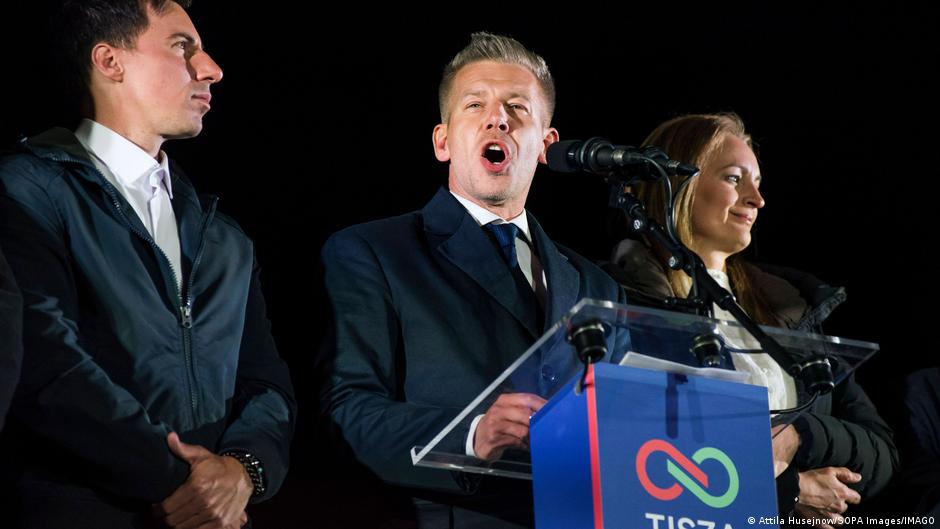
Magyar delivered a 40-minute speech filled with hope and reconciliation. He emphasized unity, stating,
“From today, our country is alive again.”
His promises included rebuilding a humane system and fostering mutual respect among voters. When he pledged to align Hungary with NATO and the EU, the audience erupted with chants of “Europe! Europe!”
Breaking the Orban System
Magyar called for resignations from top civil servants, the president, and key judicial figures, aiming to restore checks and balances. He also reached out to Fidesz supporters, saying,
“I will also be your prime minister and ensure that we will be able to accept each other, even if we do not hold the same opinions.”
Political analysts hailed this as a “new era,” with some claiming Tisza could dismantle the Orban regime.
Experts noted that Orban’s downfall stemmed from his years of authoritarianism. He reshaped state institutions, centralized power, and framed Hungary as Europe’s freest nation. Critics were labeled as traitors, and the nation was immersed in a campaign of hostility, recently targeting Ukraine with sweeping allegations. Orban’s courtship of autocrats like Putin further fueled discontent.