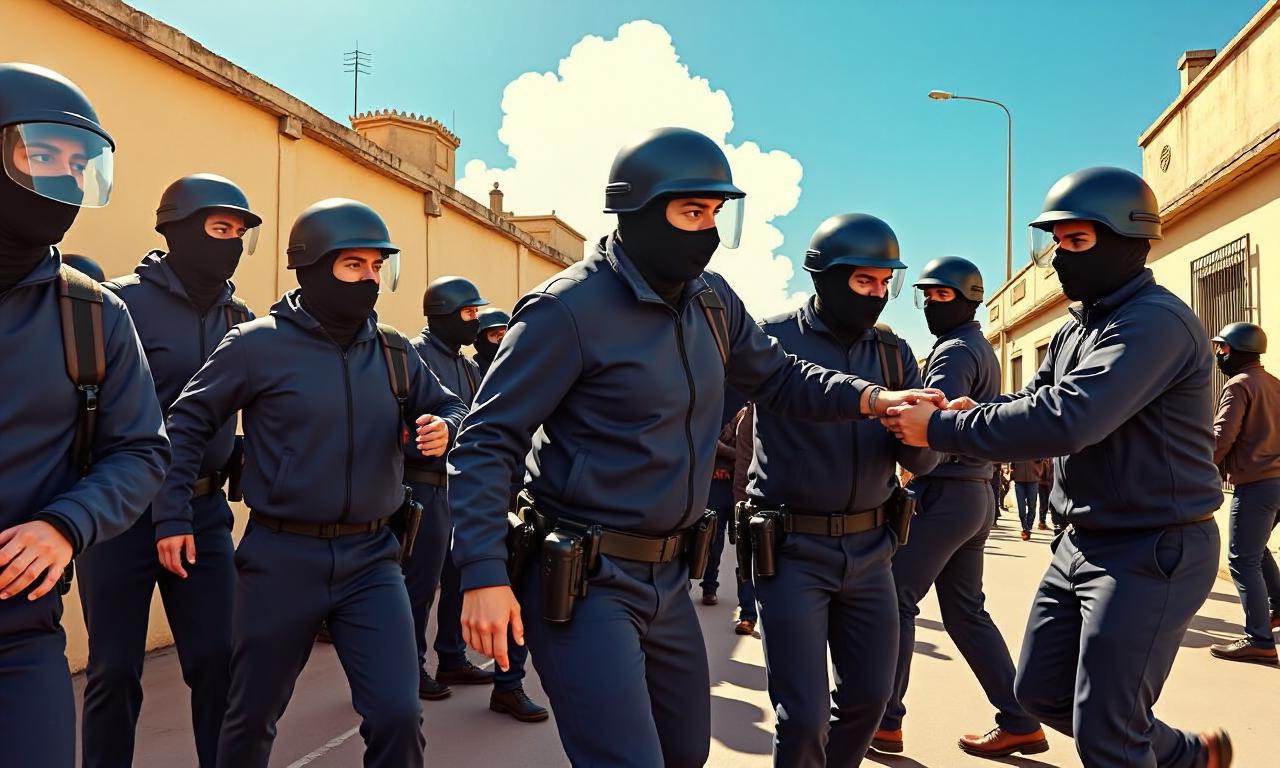
Greek police using masked migrants to forcibly push other migrants back across border
Samael.lol – According to extensive evidence gathered by the BBC, Greek authorities are reportedly employing migrants as armed operatives to repel incoming asylum seekers at the Turkey border. Internal police documents obtained by the broadcaster reveal that senior officers have directed and managed the recruitment of these so-called mercenaries, who are said to engage in violent pushbacks. Witnesses have described incidents of migrants being stripped, robbed, beaten, and in some cases, sexually assaulted during these operations.
Claims of mercenaries being used on the border date back to at least 2020, though the practice has intensified in recent years. The Greek prime minister, Kyriakos Mitsotakis, told the BBC he was “totally unaware” of the allegations, while government officials have yet to respond to detailed written inquiries. Pushbacks, which involve forcing migrants and asylum seekers to return to their country of origin without due process, are typically classified as illegal under international law.
Investigation and testimonies
The BBC’s probe, conducted in partnership with the Consolidated Rescue Group (CRG), began last autumn after receiving disturbing video footage allegedly showing migrants being mistreated by mercenaries. The footage, shared by a smuggler disillusioned with his network, highlights the mistreatment, though its authenticity remains unverified. Independent sources, however, corroborate similar accounts of abuse. Migrants, former mercenaries, and police insiders have contributed to a growing body of evidence indicating that hundreds of individuals are pushed back into Turkey weekly.
Merchants in the region have reportedly been recruited from countries like Pakistan, Syria, and Afghanistan. They are allegedly incentivized with cash, stolen mobile devices, and documents that facilitate passage through Greece. In June 2023, footage was shown depicting a group of migrants, having crossed into Evros, being ambushed by masked individuals. A Frontex report identified 10 to 20 “third-country nationals” as acting under Greek officers’ instructions during the incident.
“There is no soldier, police officer or Frontex (EU border agency) officer serving here in Evros who does not know that pushbacks are taking place,” stated a police source.
The report detailed physical and verbal abuse, including “death and rape threats,” sexualized body searches, and theft of personal belongings. Migrants were then forcibly transported back to Turkey, violating EU human rights standards. Despite this, Greek authorities have denied that any migrants from the group were present in the area on the day of the incident.
Broader implications and responses
Maria Gavouneli, president of Greece’s human rights commission (GNCHR), described the findings as potentially constituting “extremely significant” breaches of rights. The organization has documented over 100 alleged forced returns in Evros since 2020, with dozens involving non-Greek nationals in October 2025 alone. While Gavouneli noted a decline in such cases, the pattern of abuse persists.
During a March interview, Mitsotakis reiterated his lack of knowledge about the use of mercenaries, yet emphasized Greece’s role in safeguarding its borders. He argued that European leaders are determined to avoid repeating past mistakes, such as allowing a “massive influx” of migrants and refugees. Frontex has also dismissed allegations of wrongdoing, maintaining its stance on the matter.