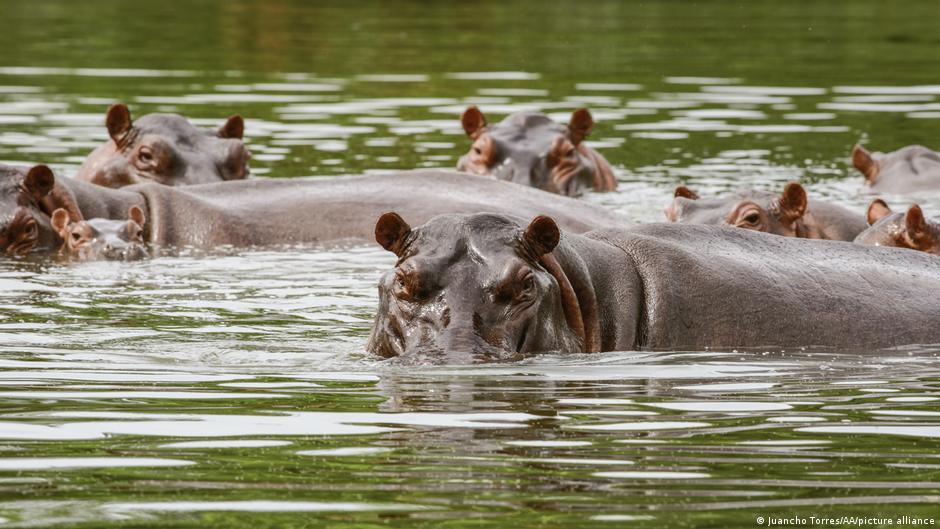
Colombia approves cull of Pablo Escobar-legacy wild hippos
Samael.lol – More than three decades after drug trafficker Pablo Escobar introduced the first hippos to his private zoo, their offspring have grown into a major ecological concern. The Colombian government announced on Monday its intention to cull up to 80 free-ranging hippos, citing scientific evidence that the animals are harming both local communities and natural habitats. Environmental specialists warn that these invasive species are displacing native wildlife and altering delicate ecosystems in central Colombia.
The hippos in question are descendants of four animals illegally imported in the 1980s by Escobar, who used his vast ranch in the Magdalena River valley as a hideout and transport hub. After his death in 1993, the property was transformed into a public theme park, now home to a growing population of these massive mammals. As their numbers swell, officials argue intervention is necessary to prevent further damage.
“We must act to reduce the hippopotamus population,” stated Environment Minister Irene Velez Torres during a Monday briefing. “These actions are essential to protect our ecosystems and native species.”
With no natural predators to keep their population in check, the hippos have multiplied rapidly. Currently, around 200 roam freely in the Magdalena River basin, and without action, estimates suggest their numbers could surpass 1,000 by 2035. The government’s culling program, budgeted at 7.2 billion pesos (€1.68 million), plans to relocate or confine the herd starting in late 2026.
Animal rights advocates have criticized the decision, calling it a harsh response to an issue that could have been managed more humanely. Andrea Padilla, a senator known for spearheading Colombia’s bullfight ban, labeled the plan “cruel” and accused authorities of opting for the “easy way out.” “Killings and massacres will never be acceptable,” she wrote on X. “These are healthy creatures who are victims of government negligence.”
Previous attempts to control the herd, such as relocation and sterilization efforts in 2022 and 2023, failed to curb their growth. Colombia has also explored partnerships with countries like India and Mexico to transfer some hippos abroad, but no formal agreements have been reached. Genetic issues from inbreeding have made it difficult to reintroduce the animals to Africa, their original home.
Pablo Escobar, the notorious leader of the Medellín Cartel, built his hippo population as part of his extravagant lifestyle. By dominating the cocaine trade to the U.S., he amassed immense wealth and became synonymous with extreme violence and corruption. His zoo, located at Hacienda Napoles, now serves as a reminder of the environmental consequences of his legacy.