Orban’s Defeat in Hungary Sparks Shift in Central Europe
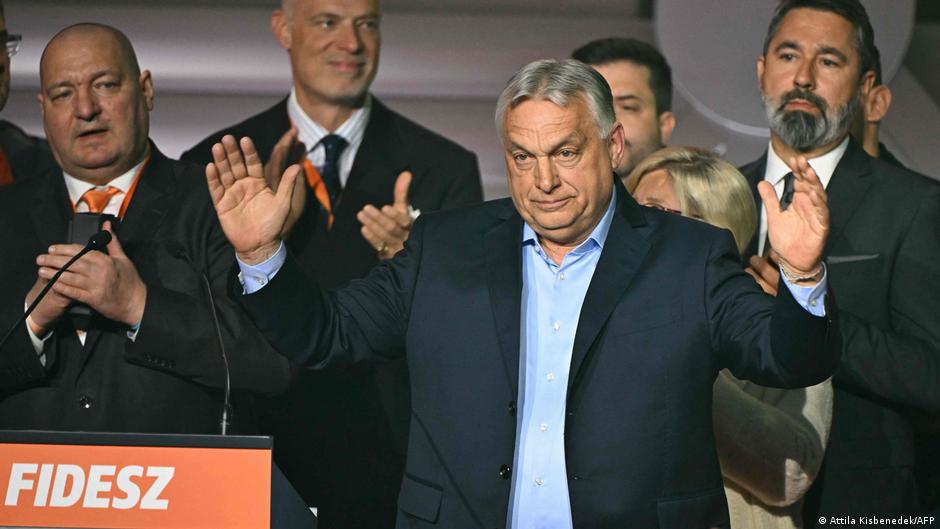
Samael.lol – The recent election results in Hungary, which saw Viktor Orban ousted from power, are creating ripples across the region. Neighboring Czechia and Slovakia, governed by Orban’s political allies, now face an uncertain political future. This change marks a pivotal moment for Central Europe, where Orban had long been a unifying force among nationalist and populist leaders.
Peter Magyar’s election victory on April 12 was driven by more than just public frustration with corruption and economic struggles. It represented a clear rejection of Orban’s “illiberal democracy” and his alignment with Moscow, signaling a broader European realignment. Magyar’s win has forced his former allies, Slovak Prime Minister Robert Fico and Czech Prime Minister Andrej Babis, to recalibrate their positions.
“Facing such a strong opponent as Viktor Orban was never easy, yet he earned the trust of the majority of Hungarians and carries great hopes and expectations,” Babis wrote on X. “He must not disappoint.”
Fico, known for lengthy statements, delivered a concise email with three bullet points. “I fully respect the decision of Hungarian voters,” he stated, expressing readiness for “intensive cooperation” with the new government. His message emphasized Slovakia’s unchanged priorities, including strengthening ties with Czechia, Poland, and Slovakia through the Visegrad Group and securing energy supplies from Russia via the Druzhba pipeline.
The Druzhba pipeline, which has been disrupted since January due to Russian attacks in Ukraine, may see renewed activity. Ukrainian President Volodymyr Zelenskyy hinted at potential repairs within weeks, offering a pathway for Slovakia and Hungary to restore Russian oil imports. This development could reshape energy dynamics in the region.
Political Realignment and Regional Rivalries
Orban’s departure from power weakens the European nationalist bloc he helped form, the Patriots for Europe group, alongside Babis in 2024. This shift leaves Fico and Babis without a key European counterpart, altering their strategic influence. Analysts suggest that Russia may now focus more directly on Slovakia, though Fico’s ability to assume Orban’s role as Putin’s representative remains in question.
“He’s tired,” said Martin Poliacik, a former Slovak MP. “Fico also lacks a strong team of capable and combative enforcers, unlike Orban.”
Poliacik, affiliated with the opposition Progressive Slovakia party, noted that Fico’s political stance could be tested. “The biggest threat to Russia is a free, independent and democratic Ukraine,” he argued. “By extension, the biggest threat to Fico is a pro-European Hungary, because Slovaks would see that this is possible.”
Babis, who returned to power in late 2025 with a coalition including the conservative Motorists for Themselves party and the far-right SPD, faces similar challenges. Critics claim his government is already steering Czechia toward a more authoritarian model, echoing Orban’s strategies. However, Babis and his supporters deny these accusations, emphasizing their commitment to a liberal democratic system.
Analysts Weigh in on Stability
Czech commentator Jindrich Sidlo highlighted structural limits to Babis’s influence. “Babis realized during his first term that he can’t control the country the way Orban can,” Sidlo explained. “Orban governed much longer, with very different electoral results, and had no Senate [C.”
Despite the change in Hungary, analysts caution that political stability may not be guaranteed. “Every status quo is hard to maintain,” Poliacik noted. “It’s like a swinging pendulum.” This volatility underscores the ongoing challenges for Central European leaders navigating a shifting landscape.