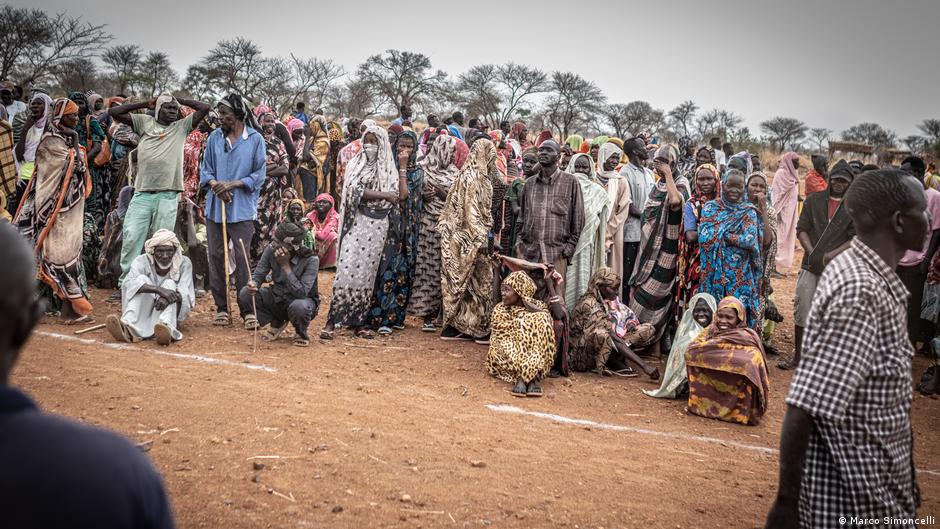
Nuba Mountains, a fragile refuge on Sudan’s front line
Samael.lol – The Nuba Mountains, nestled between Sudan and South Sudan, serve as a critical shelter for displaced people amid the escalating conflict in the region. Yet, this self-governed area faces its own struggles, balancing the needs of hundreds of thousands of refugees with its limited resources. Hassan Koko, a community health worker in South Kordofan, Sudan, recalls the day a drone attack shattered his sense of security. After completing a training course and sipping sweet tea, the sudden strike left several of his colleagues dead. “The drone struck once, then returned to hit those already wounded,” he explains to DW. Though Koko survived, the trauma lingered, marked by a sharp metal shard still visible in his left knee. “My family was relieved I lived, but life has changed,” he says. “Sometimes I go to the market, but most of the time, I’m confined to my home.”
For years, the Nuba Mountains have endured assaults from Sudan’s Armed Forces (SAF), a pattern that intensified after South Sudan gained independence in 2011. The exclusion of the region from the political settlement deepened tensions, fueling long-standing frustrations among its diverse populations—over 50 ethnic groups spread across a territory comparable to Austria. The Sudan People’s Liberation Movement-North (SPLM-N), once part of the SPLA liberation movement that now leads South Sudan’s military, was established that year to advocate for self-rule. However, the alliance with the Rapid Support Forces (RSF) in February 2025 marked a turning point, seen as a risky and contentious move to counter SAF.
The Sudan war, ignited in 2023, has spiraled into one of the world’s worst humanitarian crises. Estimates suggest over 150,000 deaths and the displacement of 14 million civilians. Jalale Getachew Birru, a senior analyst at the Armed Conflict Location & Event Data (ACLED) project, frames the SPLM-N and RSF partnership as a pragmatic strategy. “Both groups share a vision for a federal Sudan, which explains their current alignment,” she states. In urban areas of the Nuba Mountains, RSF soldiers are now a common sight, mingling in cafes and markets, trading looted goods like cars, beds, and electronics from across Sudan.
At the SPLM-N headquarters in Kauda village, Jalal Abdulkarim, overseeing humanitarian aid, shares the challenge of supporting refugees. A note on his desk lists “2,885,393” — the number of displaced people in SPLM-N-controlled zones since the war began. “Refugee programs rely heavily on external NGOs and UN agencies, but their funding has dwindled,” he notes. Following the US Agency for International Development (USAID) budget cuts last year, donations have dropped sharply. “NGOs once contributed millions, but now they’re only giving a fraction,” he says. The International Organisation for Migration (IOM) reports over a million internally displaced in Kordofan, though without a UN presence in Kadugli, the capital, accuracy remains uncertain.
Deeper within the rugged Nuba Mountains, the struggle for stability continues. As the war drags on, the region’s role as a refuge grows more precarious, its people caught between survival and uncertainty. The fragile balance of aid and conflict hangs by a thread, with every passing day bringing new challenges to those seeking safety in this contested land.