Solar Power in Morocco’s Desert: Bold Vision, Mixed Results
Samael.lol – Morocco’s desert, home to a monumental solar tower, symbolizes a bold initiative toward a sustainable energy landscape. Yet, obstacles such as traditional energy sources and infrastructure limitations persist. Situated approximately 200 kilometers (125 miles) southeast of Marrakech, the city of Ouarzazate sits on the Sahara’s edge, often referred to as the “door to the desert.” While the city is famously recognized for its role as a filming location for films like “The Mummy” and “Game of Thrones,” a new energy sector is emerging in its vicinity.
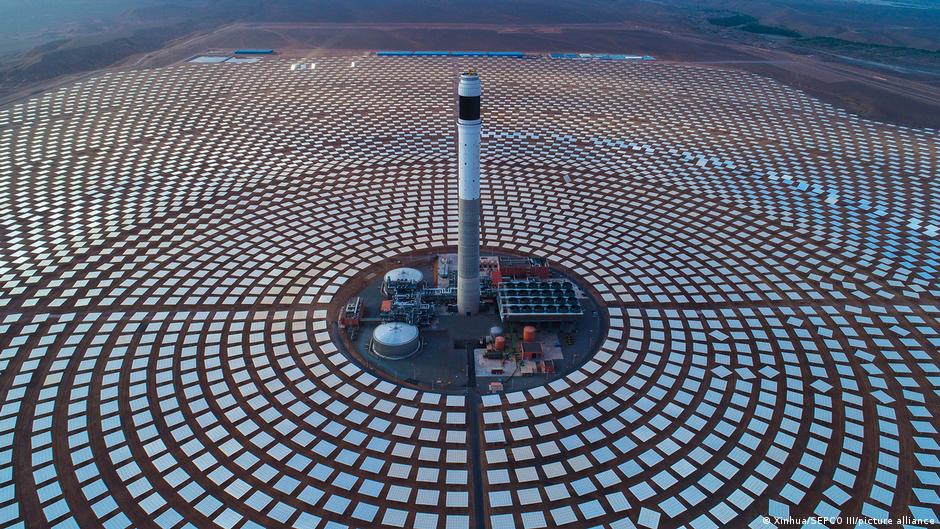
Near Ouarzazate, on a high plateau flanked by the Atlas Mountains, a significant solar power project is under construction. Named Noor, the facility derives its name from the Arabic word for light. Covering nearly 500 hectares (around 1,200 acres), it is designed to supply electricity to over a million households. Unlike standard solar farms, Noor employs concentrated solar power, a method that uses 2 million reflective mirrors to direct sunlight onto a central tower. The intense heat generated melts molten salt to 600 degrees Celsius (1,112 degrees Fahrenheit), creating steam that drives turbines for power generation, even after the sun sets.
Despite this progress, local energy costs remain high. Most residents rely on butane gas rather than solar energy. Intissar Fakir, a senior fellow at the Middle East Institute in Washington D.C., highlighted that Morocco’s energy grid still heavily depends on fossil fuels, particularly coal. “Fossil fuel-generated electricity contributes about 48% of the country’s energy-related greenhouse gas emissions,” she noted. With an average monthly income of $550, Moroccans spend roughly $110 (€94) on electricity. In a country where summer temperatures routinely exceed 40 degrees Celsius, air conditioning and fans are essential, increasing energy demand.
Conditions in Ouarzazate have seen a notable rise in hot days and nights since the 1970s. This cost is partly due to the nation’s reliance on imported coal, oil, and gas, as it lacks domestic fossil fuel production. Fakir explained that energy market volatility makes these imports a substantial budget expense, pushing the need to shift from coal and oil. However, Morocco has outpaced many North African nations in renewable energy development. “Even by global standards, Morocco’s transition plan is pretty ambitious,” she stated. The country aims to power 52% of its economy with renewable energy by 2030 and reach 70% clean power capacity by 2050.
While Noor is a flagship project, it is part of a broader network of solar, wind, and hydro initiatives. Around two dozen megaprojects have already been completed, with many more in development. Additionally, Morocco has committed to eliminating coal power by 2040. Nevertheless, challenges remain. Although renewable technology now generates 46% of the nation’s electricity, only about half of that was achieved in 2023. “The country’s ability to integrate Noor’s output into daily use is still constrained,” Fakir observed. She emphasized the need for grid expansion and energy storage solutions to fully harness these resources.
Experts and civil groups have also questioned the government’s emphasis on large-scale projects over smaller, decentralized alternatives like rooftop solar panels for homes and farms. A major concern is that concentrated solar power requires significant water for mirror maintenance. “Even as solar panels and wind turbines become more affordable, large systems like Noor demand substantial initial investment,” Fakir said. This underscores the balance between ambitious infrastructure and practical, community-level energy solutions.