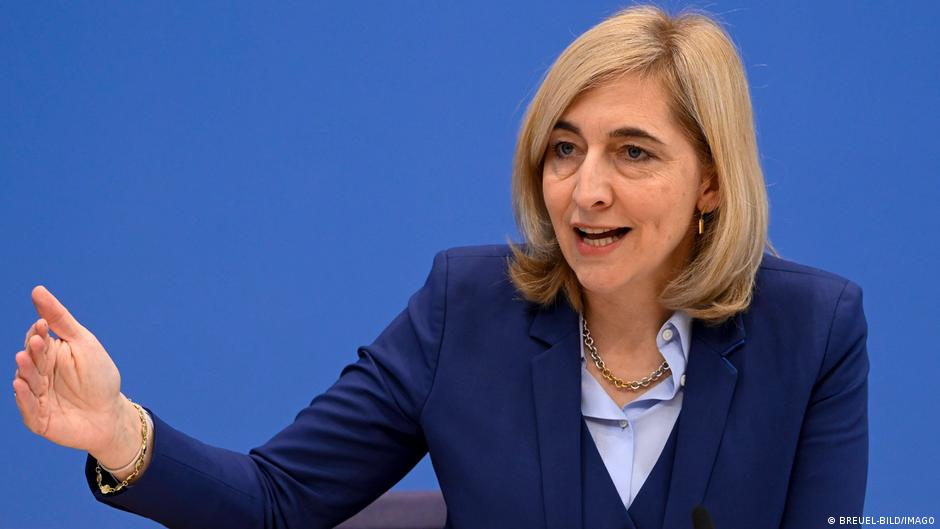
German Health Minister Announces Billions in Cutbacks
Samael.lol – Germany’s healthcare system, already among the most costly globally, faces a significant financial challenge. To address this, Health Minister Nina Warken, representing the Christian Democrats (CDU), has proposed sweeping changes to reduce expenses. These measures include requiring second opinions for expensive procedures and eliminating homeopathy from public coverage. The legislation, set for approval this summer, seeks to stabilize the system by curbing rising health insurance costs.
Warken emphasized the need for fiscal responsibility during a press conference in Berlin. “We simply cannot spend more than we take in,” she stated, highlighting the government’s commitment to balancing the budget. Mandatory health insurance applies to 90% of Germans, with contributions split evenly between employers and employees. At 14.5% of income, these payments have increased by 3% this year, following a 2.5% rise in 2025. However, public insurers are spending even more rapidly, risking a €15 billion shortfall by 2027 without intervention.
Reforms and Controversies
A panel of experts had previously suggested 66 cost-saving strategies, including shifting welfare recipient insurance costs to state funds—a move that could save €12.5 billion in 2027. Warken, however, has chosen not to adopt this recommendation, reportedly yielding to pressure from Finance Minister Lars Klingbeil of the Social Democrats (SPD), who threatened to block it.
“Minister Warken is disproportionately shifting the burden of stabilization onto employees and employers — while she doesn’t dare to confront influential lobbies on the expenditure side,” said Janosch Dahmen, the Greens’ health policy spokesperson, in an interview with Der Spiegel.
The National Association of Statutory Health Insurance Funds (GKV-Spitzenverband) praised the reforms, noting that public insurers currently spend over €1 billion daily on 75 million citizens. “That is a lot of money, and it has to be enough,” the group stated. They welcomed using revenue as a benchmark for spending, despite the 10% rise in hospital costs and 8% increase in doctor fees over the past year.
These proposals will be formalized as a draft law by the end of April, with cabinet approval expected soon. The final step involves votes in the Bundestag and Bundesrat, the federal legislative body, before the summer recess. The reforms aim to prevent further strain on the system, but their success will depend on implementation and public acceptance.