US War on Iran Was a ‘Mistake,’ Says Reeves
UK Chancellor Criticizes Escalation, Highlights Economic Fallout
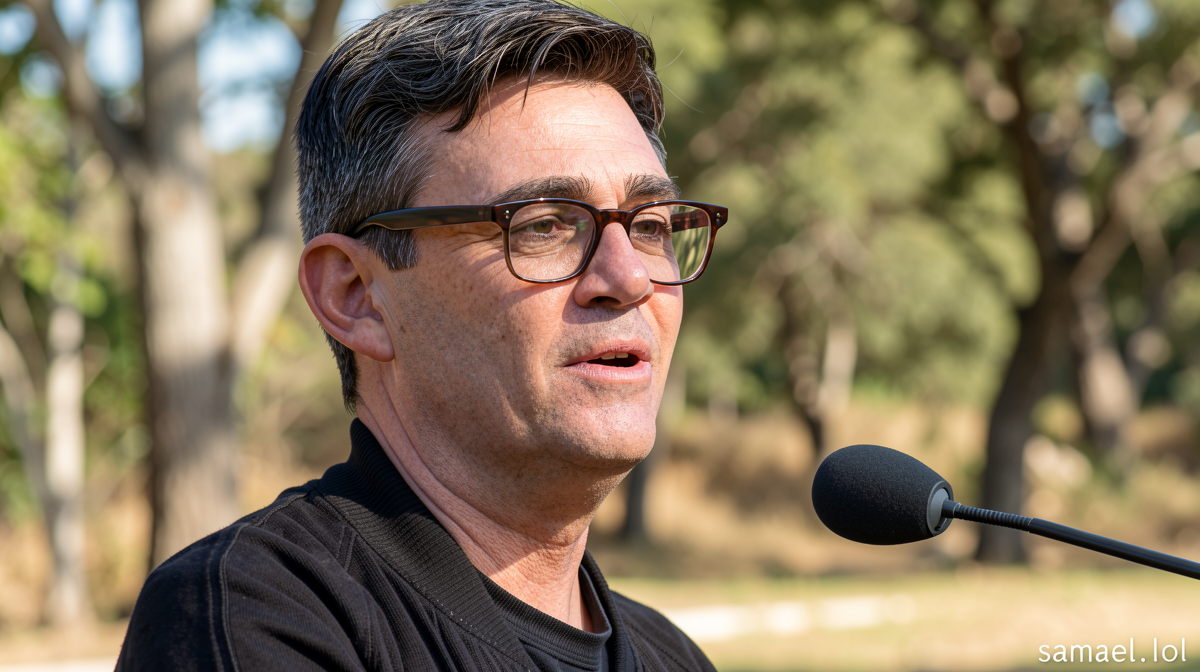
Samael.lol – Chancellor Rachel Reeves has called the US decision to abandon diplomatic talks and escalate to military action a misstep, criticizing the ongoing conflict with Iran. During an interview at the IMF’s annual conference in Washington DC, she emphasized the need for de-escalation as the optimal economic strategy, not just for the UK but for global markets.
“The best economic policy now, not just for the UK, but globally, is to de-escalate,” Reeves stated, addressing concerns about the war’s impact.
The UK government has reiterated its stance on not supporting the US’s military blockade of the Strait of Hormuz, a critical waterway for oil exports. Reeves, however, noted that the conflict has caused significant disruptions, with energy prices rising sharply since hostilities began over six weeks ago.
Reeves acknowledged the UK’s economic vulnerability as a major gas importer, stating that ending the conflict would lead to improved growth and reduced inflation. Yet she added that the UK had already exceeded previous growth projections for 2023, expressing confidence in its resilience.
Despite her sharp critique of the US’s approach, Reeves maintained that the relationship between the UK and the US remains strong. “Friends are allowed to disagree,” she remarked, addressing concerns about the “special relationship” fraying due to differences over the war.
The International Monetary Fund (IMF) recently warned that the US-Israel conflict with Iran could trigger a global economic downturn, with the UK expected to suffer the most among advanced economies. Reeves questioned whether the war had made the world safer, citing the damage to Middle Eastern energy infrastructure as a key factor in prolonged economic strain.
Reeves highlighted the lack of clarity in the US’s objectives, noting that the goals of the conflict—such as regime change or nuclear program reduction—remained undefined. She also pointed out the US’s recent focus on reopening the Strait of Hormuz, suggesting that the waterway was already navigable before the escalation.
Looking ahead, Reeves mentioned that UK Prime Minister Sir Keir Starmer and French President Emmanuel Macron would host discussions on Friday to address the Strait of Hormuz’s navigation in case of a “proper ceasefire.” “We are ready to play our part,” she said, underscoring the UK’s willingness to collaborate.
US Treasury Secretary Scott Bessent defended the war, arguing that short-term economic hardship was justified for long-term security. He claimed that US and Israeli actions had eliminated the “tail risk” of Iranian nuclear strikes against Western nations. The UK government, meanwhile, stated there was “no assessment” that Iran aimed to target Europe with missiles.
Additional reporting by Jemma Crew