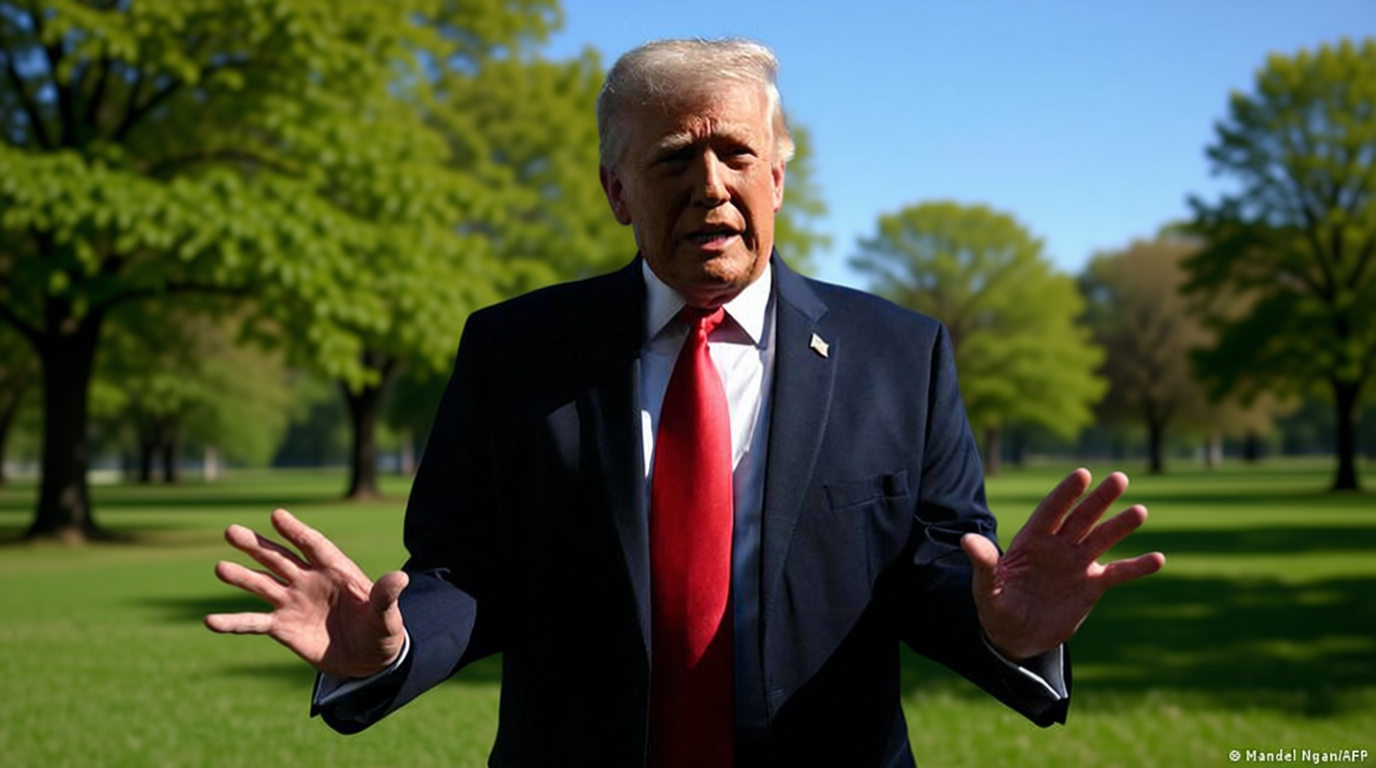
Can the 25th Amendment Remove Donald Trump from Office?
Samael.lol – Recent statements by Donald Trump, including his warning that “an entire civilization will die” if Iran did not retreat, have sparked renewed debates about his eligibility to hold the presidency. This comes as Democrats and a handful of Republicans scrutinize his leadership, citing his clashes with the pope and controversial social media posts that depict him as Jesus. These actions have intensified calls for action under the 25th Amendment, a provision in the US Constitution designed to address situations where a president or vice president cannot fulfill their duties.
The 25th Amendment: A Legal Safeguard
The 25th Amendment, ratified in 1967, was introduced to clarify procedures for presidential succession and temporary incapacity. While its first two sections outline how vice presidents can assume the presidency or replace a vice president, the fourth section remains the most contentious. It allows for the removal of a president from office if they are “unable to discharge the powers and duties of his office,” requiring the vice president and a majority of the principal executive officers to declare the president unfit.
Though section four has never been formally activated, it has been invoked in limited scenarios. President George W. Bush used it in 2002 and 2007 during brief health-related absences, and President Biden did so in 2021 during colonoscopies under anesthesia. Now, Democrats are positioning this section as a potential tool to address Trump’s alleged inability to govern, particularly after his recent remarks and handling of the Epstein files.
Political Shifts and Calls for Action
“We are at a dangerous precipice, and it is now a matter of national security for Congress to fulfill its responsibilities under the 25th Amendment to protect the American people,” stated Democrat Congressman Jamie Raskin on April 14.
Raskin, a Maryland representative, has proposed a congressional commission to assess Trump’s fitness, with 50 Democratic lawmakers endorsing the plan. However, the push isn’t limited to Democrats. Former Republican congresswoman Marjorie Taylor Greene, who resigned in January after a public rift with Trump, endorsed the amendment on X (formerly Twitter) following Trump’s threat to Iran. “We cannot kill an entire civilization. This is evil and madness,” she asserted.
Right-wing podcaster Candace Owens, once a prominent figure in the MAGA movement, also joined the chorus, urging Congress and the military to act. “Congress and military need to intervene,” she tweeted, labeling Trump a “genocidal lunatic.” Such support from the political right underscores the growing concern over Trump’s leadership capacity among the public.
A Poll of Public Opinion
A Reuters/Ipsos survey conducted in late February revealed that just 45% of Americans believe Trump remains “mentally sharp and able to deal with challenges.” This sentiment has fueled discussions about invoking the 25th Amendment, though the process remains politically charged. Democrats, currently in the minority in both chambers of Congress, face challenges in pushing for removal, especially with the Republican-majority House.
Trump’s second term has seen multiple calls for impeachment, yet the process has stalled. He is the only president in US history to be impeached twice, both times during his first term. The Senate, controlled by Republicans, acquitted him in both instances. Despite this, some lawmakers argue that the 25th Amendment could bypass the impeachment process entirely.
“A good deal of 25th Amendment talk is straight-out political,” noted Mark Graber, a law professor at the University of Maryland. “It’s designed to link the Republican Party with Trump, making it harder for them to distance themselves from his actions.” The amendment’s invocation would depend on the vice president and cabinet declaring Trump unfit, though he could contest this by submitting a written declaration to the contrary.