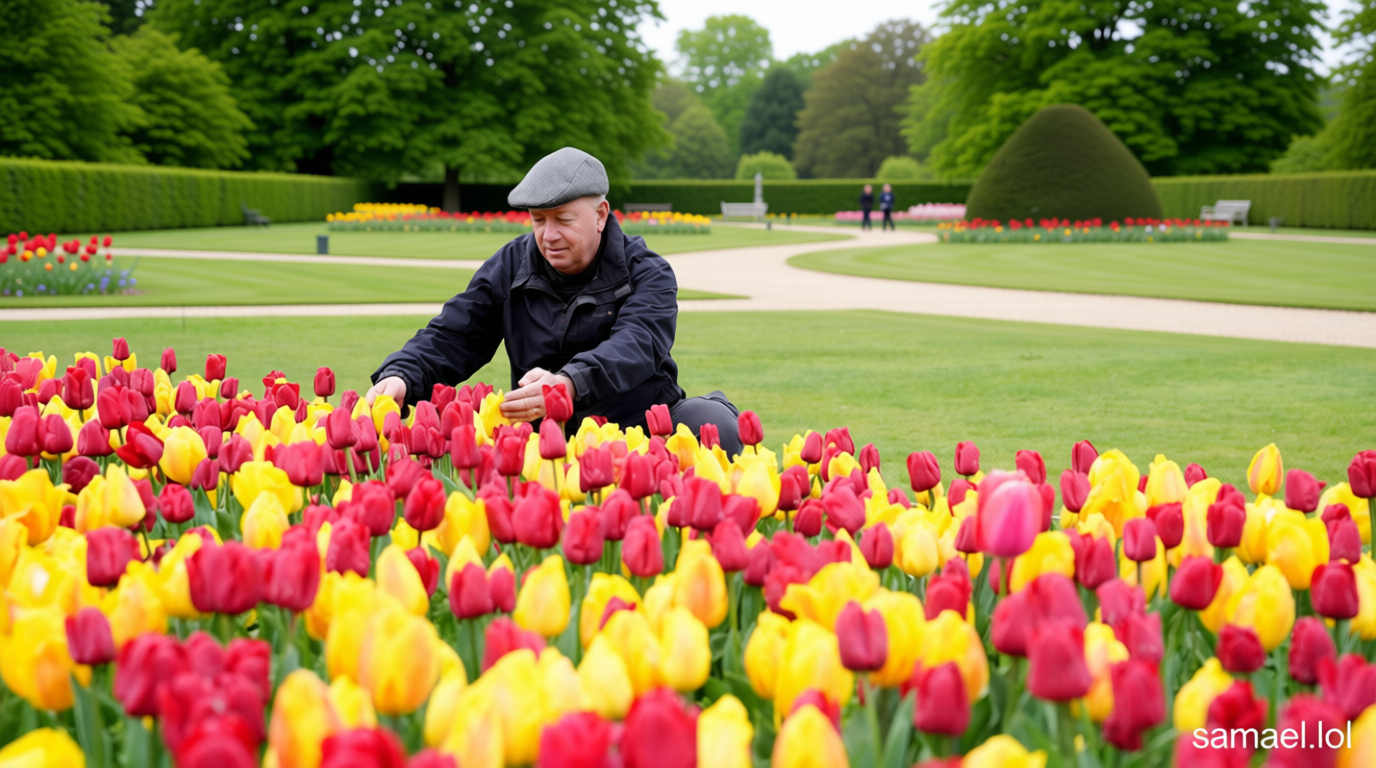
Vibrant spring flower displays due to warm spring sunshine and a wet winter
Samael.lol – The unusually warm climate this spring has prompted tulips at Hampton Court Palace to emerge earlier than typical. A mild, wet winter followed by a sunny start to the season has created ideal conditions for spring flowers to flourish in certain regions. Moist soil, abundant sunlight, and the absence of frost have allowed some plants to gain a noticeable lead in their blooming cycle.
Regional Weather Variations
While southern England has experienced an accelerated bloom, areas further north show a slower progression. Cooler and wetter conditions have delayed the transition into full spring in these regions. For instance, bluebells at Hole Park Gardens in Kent have appeared weeks ahead of schedule, according to Edward Barham, the garden’s owner. He described the display as “magnificent – probably one of the best of recent years,” noting that the flowers reached peak bloom due to the warm weather around Easter.
“This is certainly the earliest we have seen the bluebells come into flower – at least two weeks ahead of schedule,” Barham remarked to BBC Weather.
Spring’s Weather Contrasts
Since the start of meteorological spring on 1 March, the UK has shown a distinct north-south divide. Scotland, Northern Ireland, and northwest England have received excessive rain from low-pressure systems, while southern areas have remained drier. As of now, Kinlochewe in Scotland has recorded 110% of its expected spring rainfall, whereas Shoeburyness in Essex has only seen 11%. Temperatures also reflect this pattern, with Northern Ireland averaging -0.4C below the norm and England at 0.8C above.
Impact on Plant Cycles
Climate change is accelerating seasonal shifts, with spring becoming the UK’s most rapidly warming season. Average temperatures have risen by 1.8C since 1970, and research from the University of Cambridge (2022) indicates that UK plants are now blooming about a month earlier. This trend affects ecosystems, wildlife, and agricultural practices. Species that rely on specific plant cycles for migration or hibernation may face ecological mismatch as their timing becomes misaligned.
“Cherry blossoms there are in flower now with the main spectacular rhododendron display to follow,” said Tim Upson, RHS Director of Gardens and Horticulture.
At RHS Garden Harlow Carr in North Yorkshire, the season remains slightly behind due to cooler conditions. Meanwhile, plants like magnolias and rhododendrons in Edinburgh have benefited from last year’s dry and sunny weather, blooming up to 14 days earlier than usual. As spring progresses, these changes highlight the growing influence of climate patterns on natural and cultivated flora.