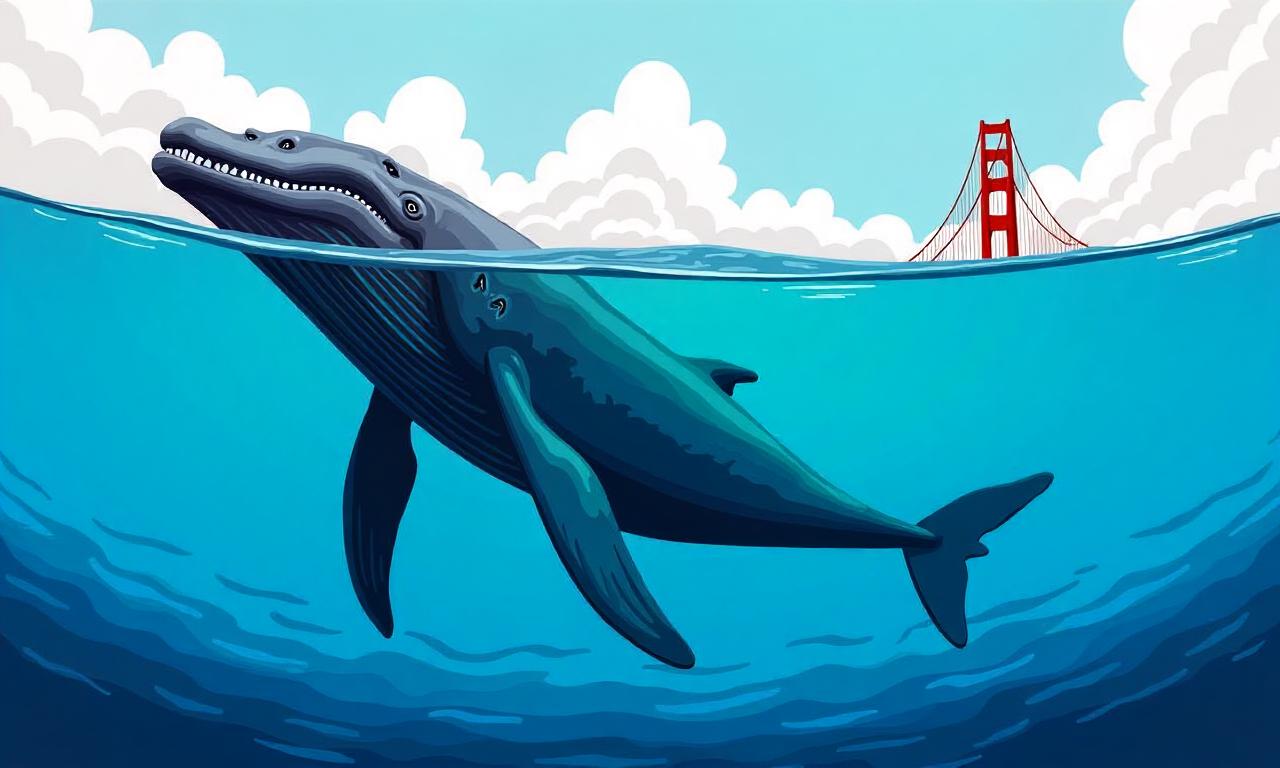
Why are gray whales dying in San Francisco’s waters? US scientists search for clues
Samael.lol – The San Francisco Bay, known for its turbulent waters and iconic landmarks, hosts the Golden Gate Bridge, bustling ports, and ferry systems. Yet in recent years, a different spectacle has captured local attention: the unexpected arrival of Eastern North Pacific gray whales. These massive creatures have become a focal point for both residents and researchers, offering a rare glimpse into their feeding, breeding, and social behaviors. However, their presence has sparked growing worry, as many appear undernourished and are succumbing to illness.
In 2025, a record 21 gray whales were found dead in the San Francisco Bay region. So far this year, seven have perished, attributed by scientists to a mix of factors including reduced prey availability, climate shifts, and human-related causes. The bay, spanning 4,140 square kilometers, is the largest estuary along the US West Coast. Josephine Slaathaug, who led a study on gray whale mortality in the area, noted that this species had previously bypassed the bay during its annual migration to Baja California and the Arctic.
Gray whales undertake the longest mammalian migration, covering 15,000 to 20,000 kilometers roundtrip. Slaathaug explained that the bay has become a new habitat they’ve selected for use, linked to years of prey shortages in the Arctic. Many observed whales are adult and juvenile males, thinner than usual for this time of year. “They don’t have the energy reserves to complete the full journey, so hunger may be driving them into the bay,” she said.
Dead or dying gray whales have also been reported in Washington state and Oregon. While these areas weren’t part of Slaathaug’s research, experts believe behavioral shifts could be interconnected. The study, published in Frontiers in Marine Science, analyzed hundreds of photographs and carcasses since 2018. “We’re seeing a very concerning high rate of death in San Francisco Bay,” Slaathaug told the BBC, emphasizing the whales’ vulnerability to vessel strikes.
Kathi George, who supported Slaathaug’s research with necropsies, highlighted the significance of whale deaths. “It’s sad to see a dead whale. It’s sadder to see one you’ve studied,” she said. Whales, she added, often serve as indicators of deeper oceanic changes. The timing of this year’s strandings—two in January, far earlier than typical April peaks—signals heightened distress. Slaathaug and her team also noted a sharp decline in calf counts, suggesting a low birth rate.
Despite the population of gray whales along the West Coast not being classified as endangered, numbers have plummeted from 27,000 in 2016 to 12,500 in 2025. The US National Oceanic and Atmospheric Administration has termed this decline an “unusual mortality event.” Moe Flannery, a co-author of the study, called it the first time in decades the issue feels urgent. “Scientists are learning how to make the waters from Alaska to Mexico safer for these animals,” she said. The findings, she added, mark a crucial step toward understanding and addressing the crisis.