Bulgaria: Pro-Russian Radev Takes Lead in Early Vote Count
Samael.lol – Bulgaria’s early election results indicate that Pro-Russian former President Rumen Radev’s Progressive Bulgaria party is leading, securing a strong mandate amid the nation’s ongoing political turmoil. The party’s performance, with 44.6% of the vote after 60% of ballots were counted, exceeds expectations and highlights a significant shift in public sentiment.
Political Context and Crisis
The election represents the country’s eighth ballot in five years, following the resignation of a conservative government amid widespread anti-corruption protests last December. Bulgaria, the EU’s poorest member, has faced political instability since 2021, when Boyko Borissov’s administration was toppled during mass demonstrations against corruption.
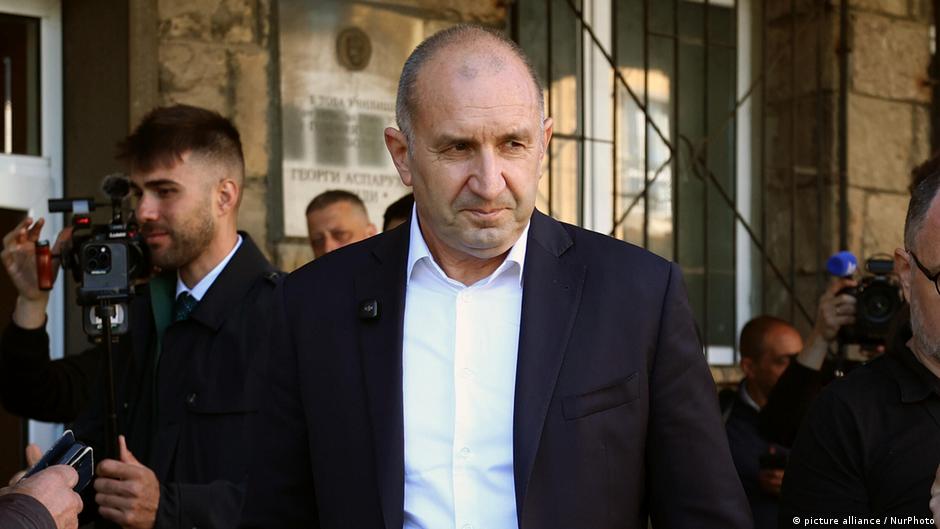
Pro-Russian former President Rumen Radev, a former fighter pilot, stepped down from his presidential role in January to contest the election. His Progressive Bulgaria party is positioned as a potential breakthrough in a nation long divided by ideological and regional tensions.
Radev’s Vision for Governance
We are ready to consider different options so that Bulgaria can have a regular and stable government.
Radev has pledged to challenge the “oligarchic governance model” and promote closer ties with Russia. However, he has also officially condemned Russia’s invasion of Ukraine, stating he would not block EU aid to Kyiv if elected. His stance on Russia contrasts with his criticism of military support for Ukraine, framing his political strategy as a balance between regional alignment and European integration.
Radev emphasized the importance of mass voter participation, calling it “the only way to drown vote-buying in a sea of free votes” after casting his ballot. This underscores his focus on transparency and public trust in the electoral process.
Borissov’s Coalition Strategy
Pro-European GERB, the party led by former Prime Minister Boyko Borissov, is projected to secure around 13% of the vote, trailing significantly behind Progressive Bulgaria. Early exit polls suggested GERB’s support could fall below the 20% threshold, though the party remains a key player in the political landscape.
I don’t see who we can enter a coalition with.
Borissov expressed uncertainty about forming alliances, stating that GERB would act as constructive opposition rather than a coalition partner. Despite this, he remains optimistic about the party’s role in shaping future policies, particularly in areas like national defense and geopolitical strategy.
The snap election follows a period of low voter turnout in the 2024 vote, where only 39% of Bulgarians participated. With polling stations open from 7 a.m. to 8 p.m. local time, electoral officials reported nearly 35% nationwide turnout by 4 p.m., signaling a more engaged electorate this time around.
Hope for Political Resolution
Many observers believe the outcome could resolve Bulgaria’s prolonged political stalemate. While the Progressive Bulgaria party’s lead offers a path to stability, the election’s result will ultimately depend on coalition negotiations and the ability to form a cohesive government.