Indian Politicians Use Fish as Campaign Symbol in West Bengal Elections
Samael.lol –
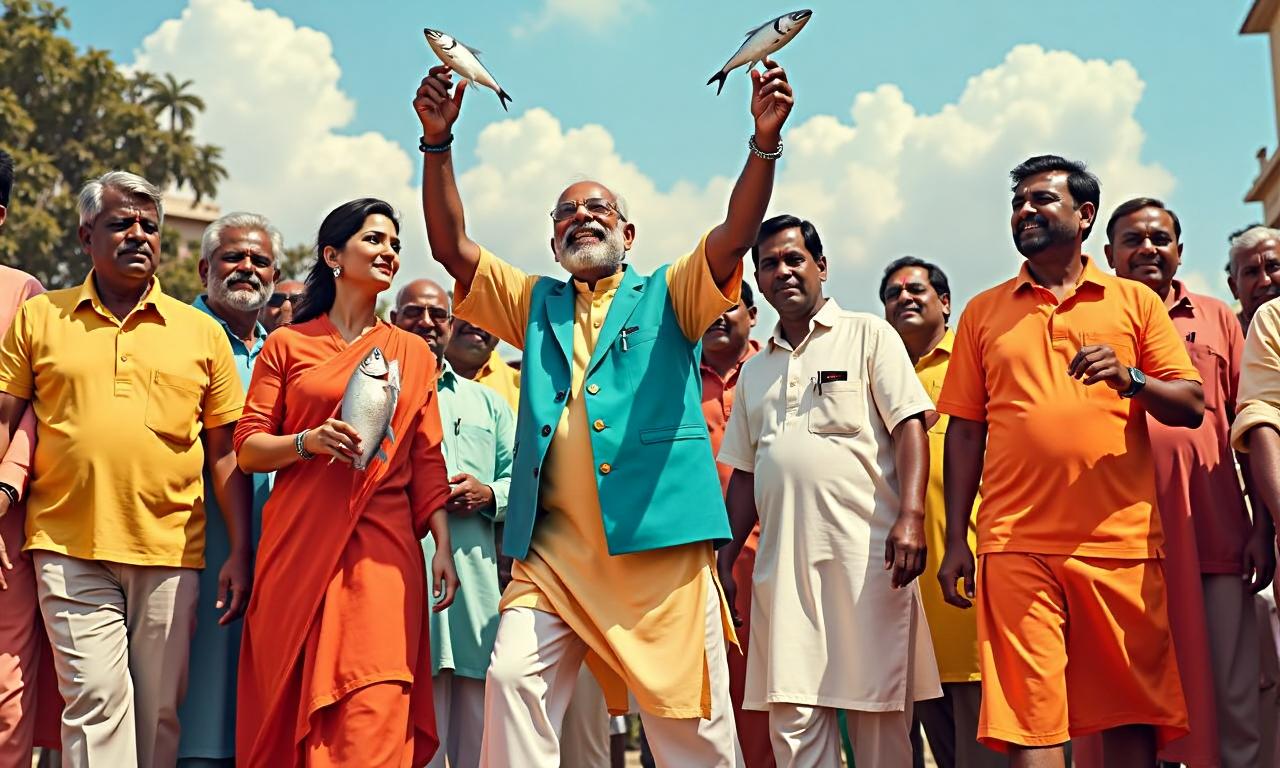
In the early morning of Kolkata, a humid city in eastern India, Koustav Bagchi, a former lawyer and BJP candidate from Barrackpore, moves through neighborhoods in a traditional white and red outfit, clutching a fish. Behind him, supporters drum and chant his name, reinforcing a visual message: unity with the people. This tactic, simple yet symbolic, bypasses policy discussions and emphasizes shared identity.
Meanwhile, in Kolkata’s port district, another BJP contender, Rakesh Singh, repeats the gesture. Dressed prominently and flanked by workers, he lifts a fish repeatedly, engaging early voters in a direct challenge against the city’s mayor, Firhad Hakim. The move is part of a broader effort to frame fish as a cultural emblem, countering accusations of cultural encroachment.
More Than Just Food: Fish as a Cultural Identifier
For Bengalis, fish is far more than sustenance—it is a cornerstone of identity, deeply entwined with tradition, memory, and daily life. In the context of the West Bengal assembly elections, this connection has transformed into political theater. Candidates now wield fish as a tool to address specific concerns, framing it as proof of cultural loyalty.
The BJP, often linked to vegetarianism, has faced criticism for imposing meat restrictions in states under its control and targeting cow protection. Despite India’s predominantly non-vegetarian diet, these policies have shaped perceptions of the party as a threat to regional cuisine. Banerjee’s Trinamool Congress has seized on this, accusing the BJP of endangering Bengal’s culinary heritage.
“The BJP will not allow you to eat fish. Nor will they allow you to eat meat or eggs,”
declared Mamata Banerjee, the ruling party’s leader, during a recent rally. She argued that the BJP’s stance jeopardizes the state’s way of life, contrasting it with the party’s own claims of cultural preservation.
In response, BJP leaders dismissed the allegations. Smriti Irani, campaigning in Bengal, called the accusations “a lie,” asserting that fish and rice are inseparable from the region’s culture. “Bengal and fish and rice are a part of its culture which will never end,” she stated.
Modi’s Role in the Fish Debate
Prime Minister Narendra Modi, a vegetarian, has also entered the fray. During his campaign in Bengal, he criticized the Trinamool Congress for failing to make the state self-sufficient in fish production. “Even after 15 years in power, the Trinamool Congress has failed to provide you with even something as basic as fish,” he claimed, suggesting the party’s governance is inadequate.
Banerjee retaliated swiftly, highlighting that 80% of Bengal’s fish demand is met locally. “You [BJP] do not allow fish consumption in Bihar, Uttar Pradesh and Rajasthan, states that you govern, and organise attacks on fish shops in Delhi. Aren’t you ashamed?” she challenged, framing the BJP as hypocritical in its dietary policies.
Statistics and Literary Context
India ranks 129th globally in per capita fish consumption, yet remains the world’s third-largest fish producer and second in aquaculture. In West Bengal, however, fish consumption is notably higher. A 2024 joint study by ICAR and WorldFish revealed that 65.7% of residents eat fish weekly, placing the state among regions with over 90% fish intake.
This cultural and culinary significance is echoed in literature. Manik Bandopadhyay’s novel *Padma Nadir Majhi* (The Boatman of the Padma) portrays fish as a symbol of fate and survival along the Ganges. Similarly, Amitav Ghosh’s *The Hungry Tide* ties fish to ecological vulnerability in the Sundarbans, illustrating its role in shaping regional narratives.
As the election intensifies, fish has become a battleground for cultural and economic rhetoric. For both parties, it represents not just a dietary choice but a claim over Bengal’s soul and future.