Israeli Ambassador: ‘Only a Strong Israel Can Achieve Peace’
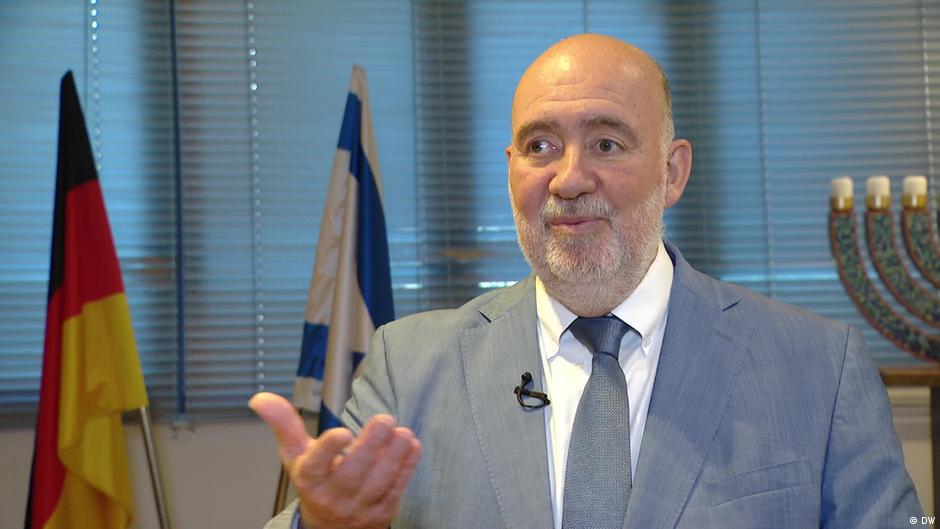
Samael.lol – During a recent conversation with DW, Ron Prosor, Israel’s envoy to Germany, defends his nation’s military strikes against Iran and Lebanon. He also urges Germany’s Chancellor Friedrich Merz to demonstrate more “tact” in his approach. The interview, held in Berlin, coincides with Israel’s annual commemoration of its fallen soldiers and the victims of terrorist attacks on April 21. This day holds particular significance, as Prosor highlights the persistent security threats Israel faces even 78 years after its founding.
Prosor begins by addressing the ongoing pressures on Israel, stating, “It’s a very special day today. Consider this: You entered the Israeli embassy here, and you saw the level of security surrounding us. It really underscores how embassies and diplomats must operate abroad under constant vigilance.” Since Israel’s establishment in 1948, the country has been engaged in near-continuous conflict, he notes. To view the accompanying video, JavaScript must be enabled, and a modern web browser supporting HTML5 is recommended.
“For years, Europe or the world has negotiated with Iranians. Yet, not only did it fail to halt their nuclear program, but it also allowed ballistic missiles to shift to Moscow,” Prosor explains. “Russia is now using them in Ukraine, endangering Europe’s backyard.” He emphasizes that Iran’s leadership poses an existential threat to Israel, describing their ideology as “deadly.” This mindset, he argues, is evident in groups like Hamas and Hezbollah.
Prosor evaluates the impact of military operations since October 7, 2023, when Hamas launched an attack on southern Israel. “Has this made the country safer? Yes,” he asserts. “In Lebanon, a government free of Hezbollah has emerged. Bashar Assad now drinks vodka in Moscow. The Iranian mullahs are weakened, Nasrallah is dead, and both Hamas and Hezbollah are less powerful. We now have the chance to reshape the region.”
Despite tensions, Prosor acknowledges the complexities of Israel-Germany relations. The last government consultations between the two nations occurred eight years ago, and Berlin has frequently criticized Israeli actions in Gaza, Lebanon, and the violence by Jewish settlers in the Occupied West Bank. “There are many disagreements,” he says. “But we can choose to focus on the positive aspects.” He points to German leaders who visited Israel post-October 7, noting their presence as “unlike other European countries.”
When asked about the two-state solution, Prosor critiques its repeated use as a mantra. “Politicians often recite it without depth,” he remarks. During his time as head of Israel’s Foreign Service (2004–2007), he supported the 2005 unilateral Gaza withdrawal, believing in a peaceful resolution. “I believed in it,” he recalls. “Many Israelis shared that hope.” However, the October 7 attacks shifted his perspective. “We will reach out to those who seek peace while holding the Shield of David tightly,” he concludes, emphasizing the necessity of a strong Israel for lasting security.