South Korean Detained at Yasukuni Shrine Ceremony Amid Tensions Over War Dead
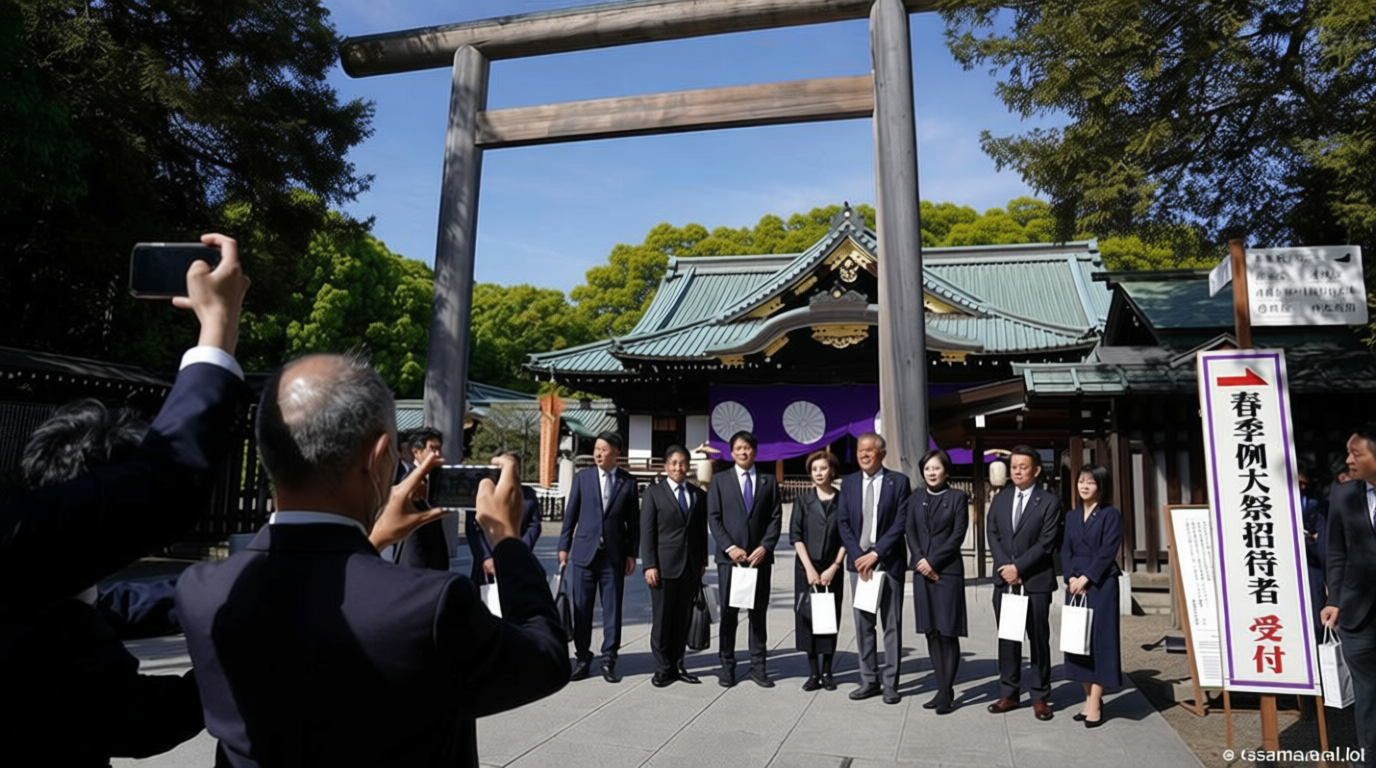
Samael.lol – Japanese police apprehended a South Korean national during the annual spring event at Tokyo’s Yasukuni Shrine, which commemorates 2.5 million Japanese war casualties, including those convicted of wartime crimes. The individual was holding a banner with political content, allegedly disrupting the ceremony. Prime Minister Sanae Takaichi, a conservative, did not attend in person but dispatched religious offerings for the second time as a substitute.
Historical Significance and Criticism
The shrine, a focal point of historical debate, is seen by many as a symbol of Japan’s wartime aggression. Victims of Japanese imperialism, particularly in China and the Korean Peninsula, often regard shrine visits as a sign of insufficient reflection on past atrocities. The arrested man displayed two banners: one calling on “war criminals” to cease praying there, and another asserting territorial claims over a disputed island shared by Japan and South Korea.
“Our government urges Japan’s responsible leaders to face history squarely and to demonstrate, through action, a humble reflection on and a sincere remorse for its past,” stated South Korean Foreign Ministry spokesperson Park Il.
“A Chinese Foreign Ministry representative called the shrine a ‘spiritual instrument and symbol of the wars of aggression launched by Japanese militarism,’ emphasizing its role in historical grievances.”
During the ceremony, the man stood at the shrine’s main entrance, facing vehicles transporting imperial messengers. The shrine’s website noted that these messengers were delivering offerings from the emperor, who did not attend the politically charged event. Takaichi’s decision to send a religious ornament instead of participating in person has drawn criticism from both China and South Korea.
Since 2013, no prime minister has visited the shrine following Shinzo Abe’s controversial attendance, which sparked fierce backlash from Beijing and Seoul, as well as a rare US rebuke. However, lawmakers from Japan’s ruling Liberal Democratic Party continue to honor the war dead annually. Over 120 legislators attended the three-day festival, with Cabinet member Minoru Kiuchi also present, expressing “sincere gratitude, with deep reverence, to the spirits of heroes who gave their precious lives for the nation.”
A veteran LDP representative, Ichiro Aisawa, led the group and remarked, “The many war dead laid the foundation for a peaceful and prosperous Japan. We must firmly pass down the memories and records of war to keep them from fading.”
Current Context of Military Reforms
This year’s ceremony occurs as Japan, under Takaichi’s leadership, advances policies to ease restrictions on military activities, weapons exports, and other post-war measures. The ongoing shift reflects broader efforts to redefine Japan’s wartime legacy in contemporary political discourse.