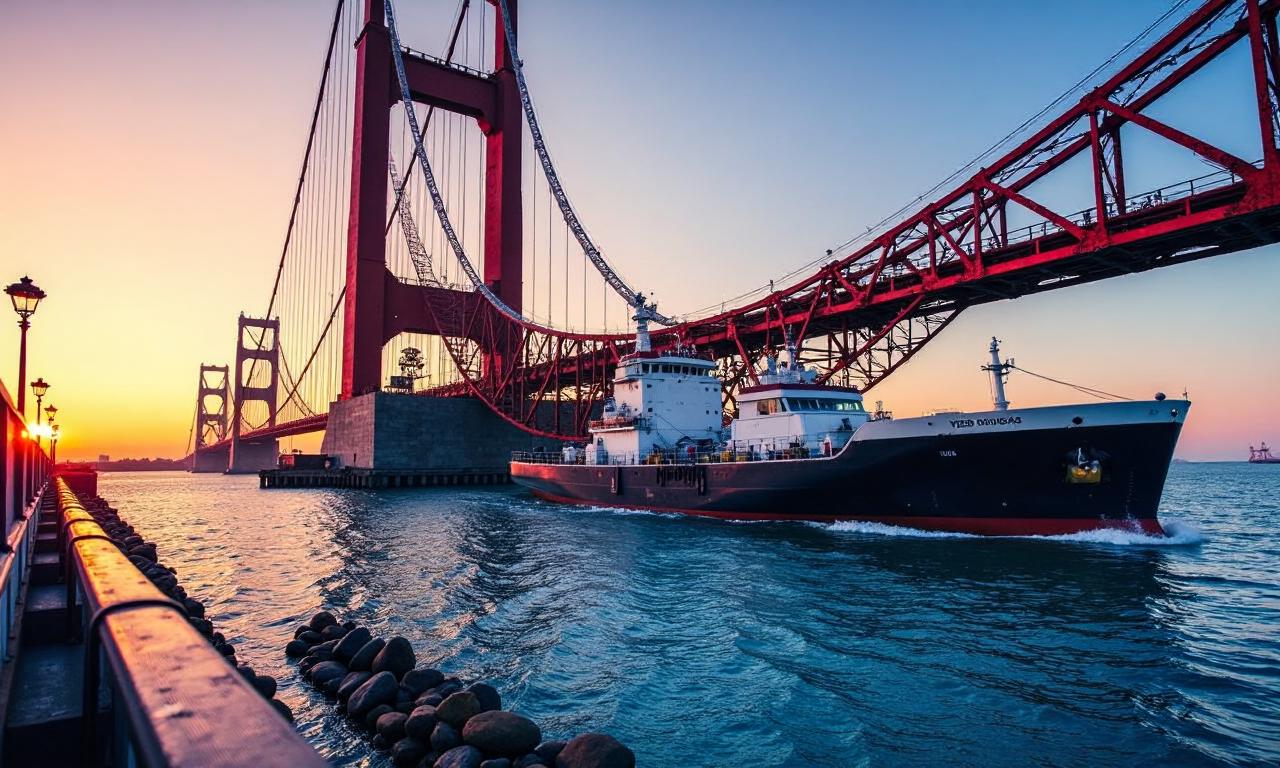
Dali Ship Operator Charged over Deadly Baltimore Bridge Collapse
Samael.lol – Two years after the M/V Dali container ship collided with Baltimore’s Key Bridge, federal prosecutors have formally charged the company that operated the vessel. The incident, which led to the bridge’s collapse and the deaths of six workers, has now drawn criminal allegations against Synergy Marine, the ship’s owner, and one of its employees. The charges include conspiracy, obstruction of justice, and misconduct resulting in death, among other offenses.
Criminal Allegations and Company Response
The indictment, unsealed on Tuesday, accuses Synergy Marine of misleading investigators about the ship’s operational conditions and failing to inform the US Coast Guard of potential safety risks. Prosecutors claim the company concealed critical information, such as the improper use of a fuel pump system, which they say contributed to the disaster. Synergy Marine has stated it will “defend against these allegations with vigor,” arguing the charges are unfounded and unrelated to the accident.
“DOJ is criminalising a tragic accident,” the company said in a statement to the BBC. “The allegations in the indictment are baseless and have nothing to do with the DALI’s allision with the Francis Scott Key Bridge.”
The charges also extend to Synergy’s operations in Singapore and India, highlighting the global reach of the company’s alleged negligence. Radhakrishnan Karthik Nair, the Dali’s technical supervisor, is among those facing criminal accusations. According to the court filing, the ship lost power twice within a four-minute window, directly leading to the bridge’s collapse. The first outage was attributed to a loose wire in the switchboard, while the second blackout resulted from the crew relying on a flushing pump to supply fuel to two generators.
NTSB Report Highlights Technical Failures
The National Transportation Safety Board (NTSB) has identified several contributing factors to the disaster, including the loss of electrical power, issues with the ship’s fuel pump, and inadequate measures to prevent the bridge from collapsing. The report details how the Dali’s power failure, compounded by the improper use of the flushing pump, left the vessel unable to maneuver in time. Prosecutors argue that the pump was not designed to automatically restart after a blackout, a critical oversight that the company knew about.
“This indictment is a critical step toward holding accountable those whose reckless disregard for maritime safety regulations caused this disaster,” said Acting Attorney General Todd Blanche in a statement. “The collapse of the span was a preventable tragedy of enormous consequence.”
Synergy Marine disputes the claim, asserting that the use of the flushing pump was “wholly irrelevant to the cause” of the crash. The company maintains that the accident was a result of external factors rather than internal mismanagement. However, prosecutors insist that the crew’s reliance on the unapproved pump system was a deliberate choice to overlook safety protocols, which they say were known to the company’s employees.
Civil Settlements and Financial Implications
Alongside the criminal charges, Synergy Marine has settled a separate civil case with Maryland for $2.25 billion. The agreement resolves a lawsuit filed in 2024, which sought compensation for damages caused by the bridge’s destruction, environmental harm, lost toll revenues, and other economic losses. The company had previously paid the justice department over $100 million to settle a civil claim related to the bridge damage, as well as $350 million to Maryland’s insurance company.
The economic fallout from the collapse has been substantial. Shipping operations in the region were halted for an extended period, disrupting global trade and causing significant financial strain. The city of Baltimore is still working to rebuild the Key Bridge, a process expected to take years and cost billions of dollars in repairs and infrastructure upgrades. The NTSB’s findings have sparked debates about the adequacy of maritime safety regulations and the role of corporate accountability in preventing such incidents.
Reconstructing the Bridge and the Path Forward
As reconstruction efforts continue, the collapse of the Key Bridge serves as a stark reminder of the vulnerability of critical infrastructure to maritime accidents. The NTSB emphasized that the incident was not solely due to mechanical failures but also a failure in the company’s adherence to safety standards. Its report underscores the importance of proper maintenance, crew training, and the implementation of countermeasures to mitigate risks.
The legal battle over the disaster has drawn attention to the intersection of corporate responsibility and regulatory oversight in the shipping industry. Synergy Marine’s defense hinges on the argument that the ship’s allision with the bridge was an unavoidable event, with no direct link to the company’s alleged misconduct. However, the indictment suggests a pattern of behavior where Synergy employees intentionally obscured the truth to avoid accountability.
While the criminal charges focus on negligence and intentional concealment, the civil settlements reflect the broader financial and economic toll of the incident. Maryland’s $2.25 billion payout highlights the state’s commitment to recovering damages from the ship operator. The case has also raised questions about the effectiveness of current safety measures and the need for stricter enforcement of maritime regulations.
The Dali’s collision with the bridge, which occurred in the early hours of 26 March, remains a pivotal moment in the city’s history. The loss of life and the disruption to daily operations have left lasting impacts, both on the local community and the shipping industry. As the legal proceedings unfold, the case is being watched closely by stakeholders who seek clarity on the responsibilities of ship operators and the measures required to prevent future tragedies.
With the charges now in the public eye, the Dali incident has become a symbol of corporate accountability in maritime safety. The NTSB’s detailed report and the indictment’s focus on procedural oversights have prompted calls for improved oversight and transparency in shipping operations. While Synergy Marine continues to defend its actions, the legal and financial consequences of the disaster underscore the gravity of the situation and the need for a thorough examination of the company’s practices.
As Baltimore moves forward with rebuilding the Key Bridge, the case also serves as a reminder of the human cost of industrial accidents. The six construction workers who lost their lives were part of a workforce essential to the city’s infrastructure development. Their families and the community continue to demand justice, both in the courtroom and in the implementation of new safety protocols. The ongoing legal and financial discussions are expected to shape future regulations and set a precedent for maritime safety standards across the industry.