How Putin Became Master of the Image
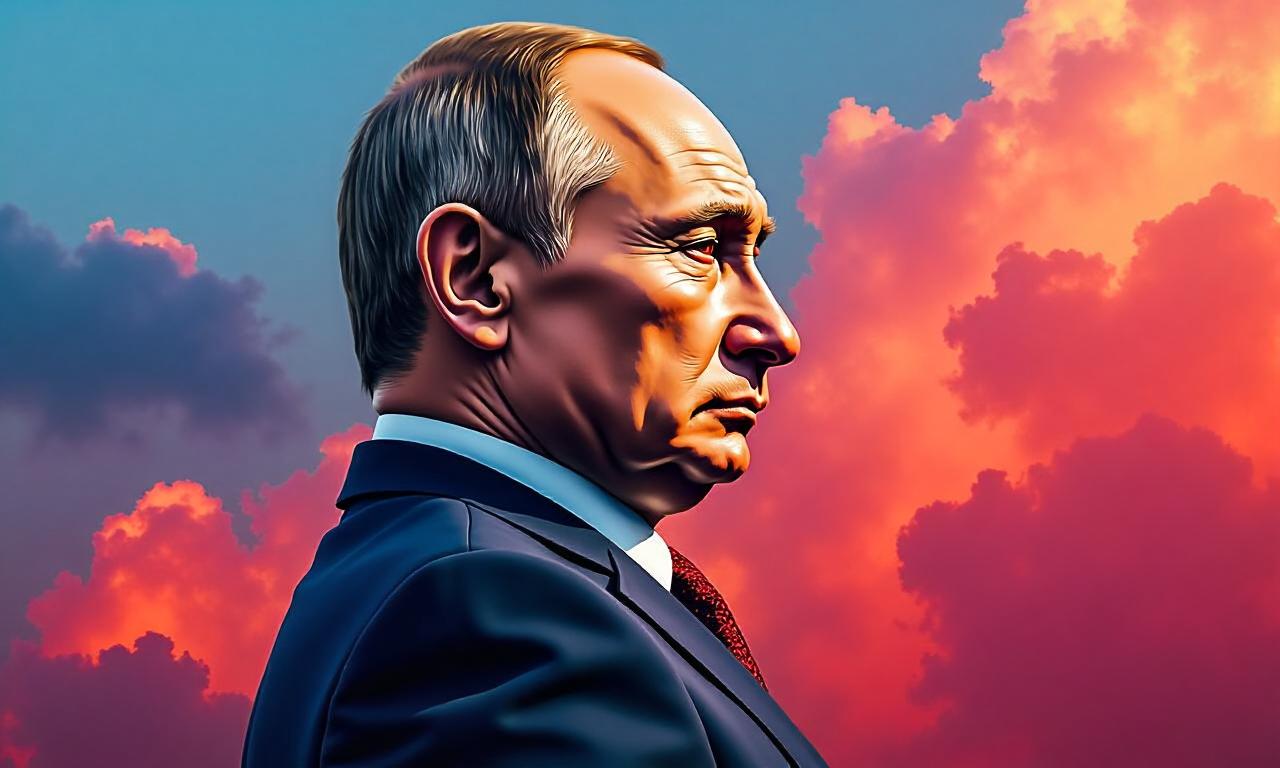
Samael.lol – Vladimir Putin’s journey to political dominance has been as much about mastering the art of visual storytelling as it has been about policy and power. From the moment he assumed the presidency, Putin understood that the way he was perceived by the public could shape his legacy as much as his actions. This awareness was evident even in his earliest public appearances, where small details were meticulously curated to project a specific image. One such instance occurred during his first press conference in 2001, when an aide swiftly removed the water glasses from the table before the cameras started rolling. “Why did you do that?” the journalist asked. “We wouldn’t want anyone to think they were for vodka,” the aide replied, underscoring the strategic importance of even the simplest visual cues. “Television is a nuclear bomb when it comes to publicity,” the aide added, a metaphor that highlights the transformative power of media in Putin’s political career.
Political commentator and author Peter Pomerantsev notes that Putin’s grasp of visual politics was not accidental but deeply intentional. “Everyone in Russia, but especially Putin, realized that TV was the key to consolidating power,” he explains. Over the years, Putin’s leadership transformed the country from a nascent democracy into an authoritarian regime centered on his persona. Yet, this evolution was not merely about political control—it was also a personal transformation. Early photographs depicted him as a reserved, slightly frail figure, his gaze often avoiding the camera as if uncertain of its presence. How did this quiet, self-effacing bureaucrat become a commanding figure in the spotlight?
Putin’s fascination with image-making began long before his presidency. As a young boy in the 1960s and 1970s, he grew up in an era where television was a primary medium for shaping national identity. The Soviet state’s propaganda machine had already instilled in him the value of visual symbolism, and its heroics left a lasting impression. “The spy heroes of Soviet TV and film were the ones who inspired me,” Putin once said, revealing his early admiration for the stoic, silent agents who fought for the motherland. This admiration translated into a career choice: he joined the KGB, the Soviet Union’s intelligence agency, where his role required discretion and an ability to project composure under pressure.
The Shift from Camouflage to Command
While working as a KGB operative, Putin remained in the background, his presence often overshadowed by the larger-than-life figures of Soviet politics. But this changed when he transitioned from intelligence to politics. In 1999, he was thrust into the role of acting president, a position that demanded not only political acumen but also a new kind of visibility. His election as president that same year marked a pivotal moment, and from then on, his image became a central tool in his strategy. “His PR team was acutely aware of the importance of visual identity in shaping his persona,” Pomerantsev observes. The goal was clear: to distinguish Putin from his predecessor, Boris Yeltsin, whose erratic behavior and public drunkenness had humiliated many Russians.
To achieve this, Putin’s image was carefully crafted. During meetings with foreign experts at the Valdai Discussion Club, he would drink only tea with honey, while the guests were served wine. “He was a teetotaller in front of cameras,” says Pomerantsev, emphasizing the deliberate contrast. Even when he did indulge, his handlers worked to keep the moments private. A museum custodian once recounted an anecdote: “We sat down to enjoy some Russian pancakes smeared with vodka. But don’t tell anyone—they were very strict about it. I might get into terrible trouble.” These small acts of restraint were part of a broader effort to position Putin as a disciplined, rational leader.
Yet, the image was not purely about restraint. It was also about vitality and strength. Putin’s PR team orchestrated a series of high-impact visuals to project a man of action, not a frail politician. One such example was his appearance in a pilot’s helmet, flying a fighter jet. Another was his demonstration of judo skills, reinforcing his image as a physically and mentally robust figure. These images were designed to counter the perception of weakness that had lingered since the Soviet era. As Pomerantsev puts it, “He was playing a traditional Soviet leadership role, but in an age of reality TV and MTV.” The blend of old-world authority with modern media sensibilities became a hallmark of his public persona.
Theatricality and National Identity
Perhaps the most iconic of these visual strategies was the series of photos that emerged in 2007. In one, Putin is shown bare-chested, riding a horse with the poise of a Russian Marlboro Man. In another, he is depicted fly-fishing by a river, and in yet another, he is captured in a vigorous butterfly stroke, muscles taut and confident. These images were not just for show—they were calculated to reinforce a narrative of national strength and personal charisma. “For one audience, this was crass, but we did it with irony so it felt cool,” Pomerantsev explains. “For another, it was about Russia being led by a traditional hardman hero.”
These visuals resonated with both domestic and international audiences. Domestically, they served to rally support for Putin’s vision of a strong, unified Russia. Internationally, they signaled that the country was no longer a weak, post-Soviet state but a formidable power. As Putin once put it, “Russia is a bear with teeth and claws,” a metaphor that captured the essence of his image as a leader who could protect the nation’s interests. The theatricality of these moments also appealed to a younger generation that had grown up in the age of reality shows, where image often mattered more than substance.
Other displays of Putin’s image-building prowess included more surreal elements, such as scuba diving to “discover” submerged relics in the Black Sea or being harnessed into a motorized hang glider while flanked by endangered cranes. These images were not just for entertainment; they were part of a larger campaign to associate Putin with a sense of adventure and national pride. Even the act of petting a Siberian tiger cub was carefully staged, reinforcing the idea of a leader who could command both human and animal loyalty. “The point was to raise environmental awareness,” Putin claimed, but the underlying message was more about projecting an image of strength and control.
Fiona Hill, a Russia specialist and former adviser to U.S. presidents, highlights the broader cultural impact of Putin’s image. “He shaped the first image of a populist president in the 21st century,” she says. “He wasn’t just a leader—he became a trendsetter, blending Soviet ideals with contemporary media sensibilities.” This duality allowed him to appeal to a wide range of audiences: the older generation, nostalgic for the Soviet era, and the younger, tech-savvy population drawn to the drama and spectacle of modern politics.
Putin’s mastery of image-making is a testament to his understanding of how media shapes perception. From the early days of his presidency to the present, he has consistently used visual storytelling to reinforce his authority and connect with the public. Whether it was the deliberate removal of water glasses, the staged displays of athleticism, or the theatrical flair of his outdoor activities, each element was part of a calculated effort to build a persona that was both familiar and new. In doing so, Putin not only solidified his position as Russia’s leader but also redefined the role of the modern president in an age where appearance often precedes action.