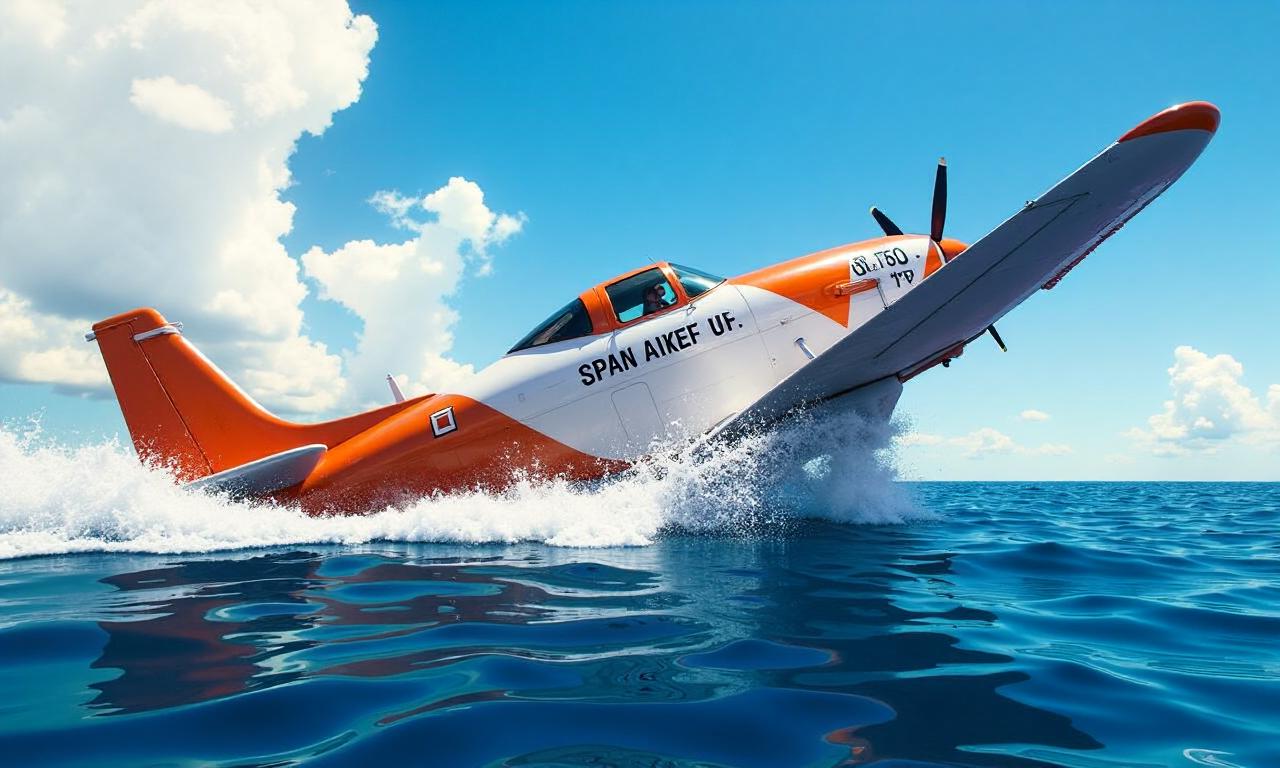
A Pretty Miraculous Rescue: Pilot Ditches Plane in Atlantic, 11 Survivors Found
Samael.lol – When pilot Ian Nixon and 10 passengers found themselves stranded in the Atlantic Ocean after a dramatic ditching of their aircraft, the situation could have easily turned into a tragic disaster. However, the sequence of events that unfolded—marked by mechanical failures and an unrelenting struggle for survival—became a pretty miraculous story of resilience, teamwork, and luck. The incident, which occurred off the coast of Florida, highlights the unpredictable nature of aviation emergencies and the critical role of quick decision-making in saving lives.
The Unforeseen Chain of Failures
On Tuesday, during what was intended to be a short 20-minute flight between two islands in the Bahamas, Nixon faced an escalating crisis. The plane, en route from Marsh Harbour in the Abaco Islands to Freeport, Grand Bahama, encountered a series of catastrophic failures: the navigation system went offline, the radio signal was lost, and one engine failed, followed by the second. "I wasn’t able to reach anybody on the radio for a while," Nixon recalled, his voice steady but tinged with disbelief. The pilot, accustomed to handling routine flights, was thrust into an emergency that tested his skills and composure to the limit.
Emergency Ditching and the Raft Ordeal
With no viable landing options, Nixon executed a last-resort ditching maneuver in waters approximately 175 miles (289km) north of Miami. The plane, now submerged, left the crew and passengers to fend for themselves on a life raft. "Once I hit the water, my first thought was: ‘We didn’t die,’" Nixon said, capturing the raw emotion of the moment. The group endured an hours-long ordeal, battling the elements and uncertainty as they awaited rescue. Despite the chaos, Nixon’s calm leadership kept morale intact, even as the situation seemed dire.
As the crew clung to the raft, Nixon’s words offered a glimmer of hope. "I told them: ‘In the next 10 minutes, a plane is going to come,’" he recounted. The passengers, however, were not entirely convinced, with one person even questioning if they had heard a sound—a moment that turned out to be the distant hum of a helicopter from the US Air Force 920th Rescue Wing. This unexpected intervention marked the beginning of the group’s salvation, though the journey to safety would test their endurance.
The Rescue Mission: A Race Against Time
The US Air Force unit, on a routine training mission, was quickly diverted to assist in the search and rescue operation after an emergency locator transmitter signal alerted the US Coast Guard to the distress situation. Capt Rory Whipple, who led the rescue effort, described the scene as one of stark survival. "They had already been in the raft for about five hours, and you could tell just by looking at them that they were in distress—physically, mentally and emotionally," he said. The rescuers had to work swiftly to ensure all 11 individuals were safely aboard before refueling became a necessary priority.
The pretty miraculous nature of the rescue was underscored by the time it took for help to arrive. While the pilot and passengers had been adrift for hours, the coordination between the Coast Guard and the Air Force unit exemplified the effectiveness of emergency response systems. "I have not known anyone to survive a ditching in the ocean," said Maj Elizabeth Piowaty, an aircraft commander involved in the operation. "And, from what I’ve seen, I mean, for all those people to survive is pretty miraculous." Her words reflected both the rarity of such a rescue and the awe of those who witnessed it.
Aftermath and Lessons Learned
After being rescued, the 11 individuals were transported to a Florida hospital, where three were treated for minor injuries. The event has since become a case study in aviation safety, emphasizing the importance of emergency protocols and the unpredictability of mechanical failures. While the cause of the crash is still under investigation by Bahamian authorities, the incident has sparked discussions about preparedness and the human spirit’s ability to endure even the most dire circumstances.
"Everybody was rejoicing to know that we get saved because we thought we were going to die," said Olympia Outten, a passenger who described the ordeal as "just like it was a movie." Her testimony, alongside the pilot’s account, illustrates the emotional toll of such a crisis and the relief that came with survival. As the details of the incident are pieced together, the pretty miraculous story of the ditching and subsequent rescue continues to captivate and inspire those who hear it.