Spurs avoid humiliation but elation of fans will soon turn to anger
Samael.lol – As the final whistle blew at Tottenham Hotspur’s match against Everton, the North London club secured its place in the Premier League for another season. The dramatic escape from relegation, which seemed uncertain just weeks earlier, brought a wave of relief to players and fans alike. Yet, the euphoria was tinged with frustration, as the celebration of survival overshadowed the growing discontent among supporters who had endured a season of underperformance. The echoes of the old “Glory, Glory” anthem, a symbol of Spurs’ historic pride, were heard once more in the stadium, but this time, they accompanied a sense of urgency rather than triumph.
A Narrow Escape from Relegation
The win against Everton on the final day of the season was a critical moment in Tottenham’s survival bid. After a campaign marked by inconsistency, the result ensured the club would remain in the top flight, sending West Ham United into the Championship instead. However, the victory did little to quell the murmurs of discontent among fans, who had grown weary of the club’s struggles. A massive banner, unfurled by supporters during the match, read:
“Promised Success. Delivering Failure. ENIC out.”
This display of frustration reflected the belief that the club’s owners, ENIC, had failed to deliver on their promises. For a team that had hoped for a more stable season, the last-minute reprieve was both a relief and a reminder of how close they had come to disaster.
While the players celebrated their narrow survival, the emotional weight of the moment lingered. Many fans, who had witnessed only three home league wins this season, felt their patience was being tested. The atmosphere inside the stadium, though festive, carried an undercurrent of dissatisfaction. The chant “We Are Staying Up” was a stark contrast to the previous months of despair, and its repetition highlighted the fragile optimism surrounding the club. As the Spurs faithful left the stadium, the reality of their team’s performance loomed large, setting the stage for an in-depth examination of the club’s management and coaching choices.
The Struggles of a Turbulent Season
The path to survival was anything but straightforward. Tottenham had entered the season with high hopes, but the reality quickly set in as their form faltered. The club’s top brass, including chief executive Vinai Venkatesham and sporting director Johan Lange, were present for the final match, seemingly ready to face the consequences of a campaign that had left many questioning their decisions. The struggles of the season were not just on the pitch; they had also been a source of tension off it, with the club’s leadership constantly under scrutiny.
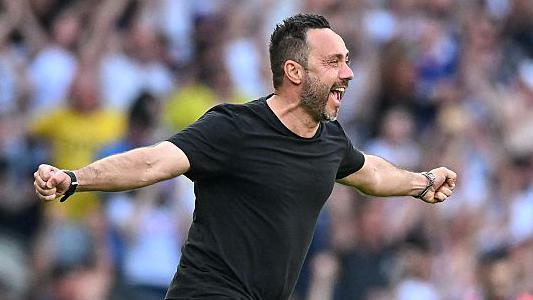
The coaching changes had been a point of contention throughout the year. Roberto de Zerbi, the current manager, was appointed as a last-minute savior, stepping in after the failed tenures of Thomas Frank and Igor Tudor. The decision to bring in de Zerbi, rather than wait until the final standings were known, was a gamble that paid off. His tactical acumen and ability to galvanize the team were evident in the tense, hard-fought victory over Everton. Yet, the success of his reign came at the expense of the previous managers, whose approaches had not aligned with the club’s needs.
Thomas Frank, who had guided Brentford to success, was seen as a logical choice for Tottenham. However, his time at the club proved to be short-lived. Frank’s eight-month stint was marred by a lack of progress, and his departure paved the way for Igor Tudor, a name that quickly became synonymous with chaos. Tudor’s appointment, which some viewed as a farewell gift from former sporting director Fabio Paratici, failed to bring the stability the club required. His rigid methods and inability to connect with the squad were evident early on, as his tenure ended in just 44 days after a disastrous start to the season.
The Human Cost of Poor Performance
One of the most symbolic moments of Tudor’s short reign came during a Champions League clash against Atletico Madrid. In the first leg, Tudor removed young goalkeeper Antonin Kinsky after just 17 minutes, following two costly mistakes that led to goals. The decision, which left Kinsky visibly heartbroken, was met with mixed reactions. While some saw it as a necessary tactical move, others viewed it as a reflection of the manager’s lack of empathy. The episode underscored the tension between the club’s leadership and its players, as well as the pressure mounting on the management team.
The fans, who had already endured a year of mediocrity, were quick to voice their frustrations. With Tottenham finishing 17th for the second consecutive season, the sense of disappointment was palpable. The club’s previous success, including a Europa League triumph, had given them a brief reprieve, but the subsequent sacking of Ange Postecoglou exposed the underlying instability. The management’s confidence in Tudor, despite his evident shortcomings, had been a source of controversy, and the season’s conclusion only intensified the criticism.
As the dust settled, the focus shifted to the new manager, Roberto de Zerbi, whose role in steering the team to survival was undeniable. His ability to inspire the squad during a crucial moment was a testament to his leadership. However, the win over Everton was not just a relief for the players—it was a critical test of the club’s resilience. De Zerbi’s success in this emergency appointment highlighted the importance of having the right personnel in place, even as the broader questions about Tottenham’s management and ownership remained unanswered.
The Future of Tottenham’s Leadership
With the season behind them, the spotlight now turns to the club’s top brass. The presence of Vivienne Lewis, representing the family who own Spurs, and her son-in-law Nick Beucher, a key figure in the club’s management, at the final match signaled their commitment to addressing the challenges ahead. Non-executive chairman Peter Charrington and chief operating and finance officer Matthew Collecott were also in attendance, likely prepared to evaluate the decisions that had led to the current situation. The pressure on Venkatesham and Lange has never been greater, as they face the task of rebuilding trust with the fans and ensuring a more successful campaign in the future.
For now, the relief of survival is a small victory against the backdrop of a season that tested the limits of patience. The fans, who once sang “Glory, Glory” with pride, now find themselves in a position of scrutiny. Their celebrations may be short-lived, as the next few weeks will be spent analyzing the factors that led to this narrow escape. The club’s leadership, once a source of stability, now stands at the center of a storm, with their decisions under intense examination. The path to recovery is clear, but the question remains: will they be able to walk it before the next season’s discontent reaches a boiling point?