A Big Ask in Paris – Will a Stronger Raducanu Emerge at Wimbledon?
Raducanu’s Early Struggles at Roland Garros
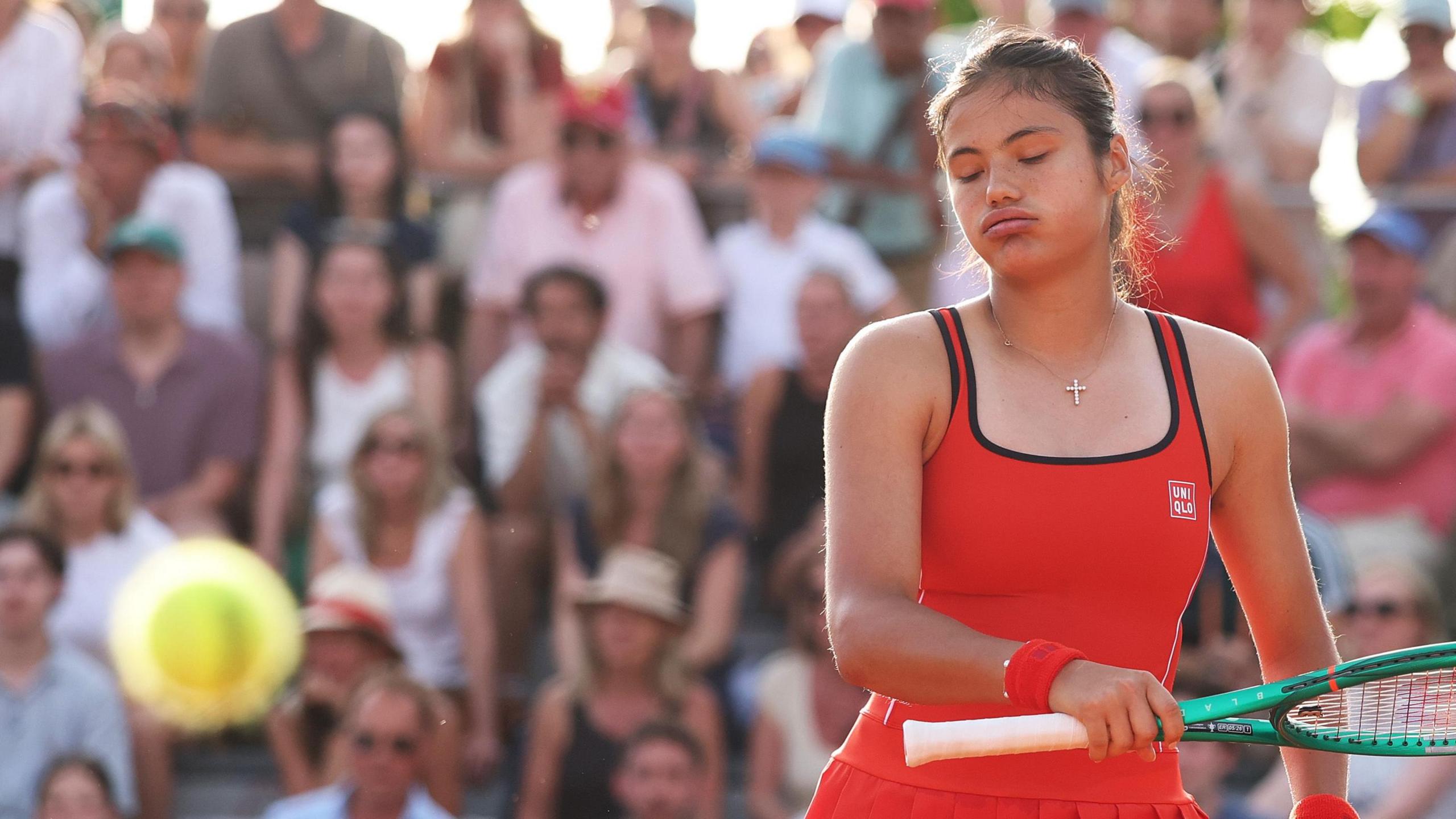
Samael.lol – Emma Raducanu’s 6-0, 7-6 (7-4) loss to Solana Sierra in the first round of the French Open marked her third Grand Slam defeat in a career that has been defined by high-stakes breakthroughs. The British number one, who had only surrendered a set 6-0 once before at a major tournament, faced a stark challenge on the clay courts of Paris. Her performance, characterized by a lack of rhythm and a sluggish pace, highlighted the difficulties of returning to competitive play after a prolonged absence. The match lasted just 23 minutes for the first set, a telling indicator of her struggle to adapt to the surface and the physical toll of her recent recovery.
Raducanu’s decision to skip the clay-court season was a calculated risk, one that raised questions about her readiness for the demanding conditions of Roland Garros. The 23-year-old had been battling the aftermath of a viral illness that disrupted her 2026 season, leaving her with limited match experience and a sense of unpreparedness. Her return to action was limited to a single match since March, a straight-set loss to France’s Diane Parry in Strasbourg, which underscored her precarious position. Despite her world ranking of 39, the gap between her and her peers had widened, particularly on surfaces that require a different style of play.
The Impact of Missing Match Practice
Raducanu’s absence from the tour has left her with a noticeable deficit in match sharpness. The first set against Sierra was a microcosm of this, as her aggressive approach—hitting early and forcing rallies—fought against the surface’s demands. The 30°C heat in Paris compounded her difficulties, pushing her to prioritize quick points. Yet, her timing was off, resulting in a cascade of unforced errors and a lack of control over her shots. “The conditions were extremely lively, and I wasn’t able to trust my shots,” she admitted afterward. “It was a really difficult setup for me to step into, having not had many matches.”
Her physical state was evident throughout the match. Raducanu was visibly exhausted, coughing between points and moving with a stiffness that suggested lingering effects of her illness. In contrast, Sierra displayed a commanding presence, her energy and rhythm in full flow. The Argentine player, who had been competing on clay for years, capitalized on Raducanu’s hesitancy, dictating the pace of play with precise baseline work and strategic movement. Raducanu’s attempts to push forward were often met with resistance, as her explosive power faltered under the pressure of the surface.
Coaching and Recovery: A New Chapter
Raducanu’s rehiring of coach Andrew Richardson signaled a renewed focus on rebuilding her game. The decision to skip Roland Garros allowed her to dedicate time to practice, addressing weaknesses in her technique and mental resilience. Richardson, who wore a blue cap and t-shirt in the front row during the match, has committed to supporting her through the remainder of the season. This partnership comes at a critical juncture, as Raducanu seeks to strengthen her foundation for Wimbledon, where her preferred aggressive style is more naturally suited.
Richardson’s return to her team is a testament to his belief in Raducanu’s potential. The coach’s methods, which emphasize precision and adaptability, will be crucial in helping her navigate the challenges of the clay season. However, the pressure of competing at the top level without sufficient preparation has tested her resolve. Raducanu acknowledged the toll of the decision, but she remains steadfast in her commitment to the plan. “I think the only way to face—and improve—how I’m feeling is to go through the tough parts,” she explained. “The pain of it, and hopefully come out on the other side better and stronger.”
A Reckoning with the Surface
Sierra’s victory over Raducanu was not entirely unexpected, given the latter’s recent struggles. The 21-year-old Argentine had demonstrated her prowess earlier in the year, challenging reigning French Open champion Coco Gauff in Rome. Her ability to control rallies and exploit Raducanu’s mobility shortcomings was evident. The drop-shot, a weapon in Sierra’s arsenal, disrupted Raducanu’s rhythm and exposed her lack of confidence on clay. The British player’s body language—head bowed, stoic expression, and muted reactions—reflected her internal battle with the surface.
While Raducanu’s tactics of aggressive hitting and early pressure are effective on grass, they proved less viable against Sierra’s methodical approach. The 30C heat and her body’s unfamiliarity with the demands of clay created a perfect storm of challenges. Yet, Raducanu’s performance also revealed moments of determination, as she attempted to regain control in the second set. Though she eventually succumbed to her opponent’s strategy, her willingness to push through adversity was a positive sign for her resilience.
Looking Ahead: The Road to Wimbledon
Raducanu’s loss in Paris has set the stage for a pivotal Wimbledon campaign. The tournament, which begins in late June, will offer her the ideal environment to showcase her strengths. Her aggressive style, which thrives on the faster surfaces of grass, is likely to be more comfortable in London. However, the question remains: will the setbacks of the clay season be enough to hinder her progress, or will this serve as a catalyst for growth?
Raducanu’s decision to bypass the clay courts was based on the belief that her energy would be better conserved for Wimbledon. The first round, however, has been a sobering reminder of the challenges she faces. While her physical condition and mental fortitude will be tested, the experience has also provided valuable insights. “I didn’t necessarily do as well as I’d like to this year,” she said. “But I think the only way to face—and improve—how I’m feeling is to go through the tough parts, to go through the pain of it, and hopefully come out on the other side better and stronger.”
As the tennis world watches Raducanu’s progress, her journey from Paris to Wimbledon will be a defining test of her adaptability. The early struggles at Roland Garros are a stark contrast to the breakthroughs that have marked her career, but they also highlight the resilience required to sustain success. With Richardson’s guidance and a focused approach, Raducanu aims to transform these setbacks into opportunities for growth. The road ahead is uncertain, but her determination to overcome the challenges remains unwavering.
“Having not had many matches, I think probably just a bit light on matches, a bit light on confidence coming into the tournament.”
Raducanu’s experience in Paris is a critical chapter in her comeback. While the loss is a setback, it also underscores the importance of preparation and adaptability. The British player’s path to Wimbledon will be shaped by the lessons learned in Paris, as well as the support of her team. The tennis world will be watching closely to see if this early test can lead to a stronger, more resilient performance on the grass courts. For Raducanu, the focus is on recovery, refinement, and the hope of reclaiming her place among the elite players. The journey is far from over, but the foundation for a successful Wimbledon campaign is beginning to take shape.