Trump says US studying troop cuts in Germany, after Merz criticises war
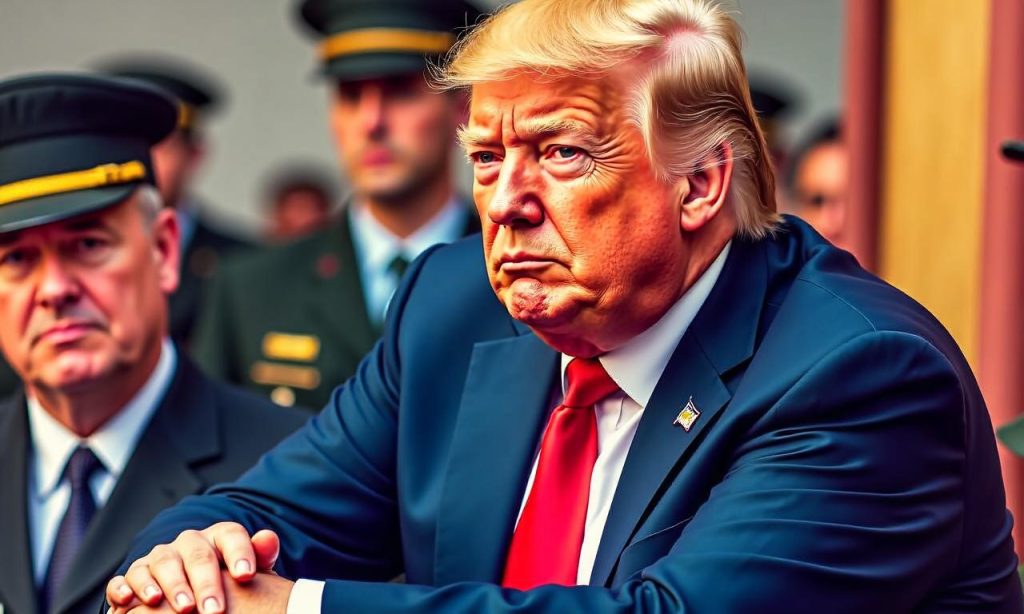
Trump Considers Troop Reductions in Germany Amid Criticism of Iran Strategy
Announcement Sparks Debate Over US Military Presence
Trump says US studying troop cuts – President Donald Trump has declared that the United States is examining the potential downsizing of its extensive military deployment in Germany. The statement, shared on social media, highlights a recent shift in the administration’s approach to European alliances. This move follows sharp criticism from German Chancellor Friedrich Merz, who expressed dissatisfaction with Trump’s handling of the conflict in Iran. Merz argued that the US had been “humiliated” by Iranian negotiators, a sentiment that has fueled tensions between the two leaders.
Merz’s remarks came during a speech to university students in Marsberg, where he emphasized the lack of a coherent strategy by the American administration. “The Americans clearly have no strategy,” he stated, pointing out the Iranian leadership’s apparent skill in maneuvering through diplomatic talks. According to Merz, the US had made the journey to Islamabad without achieving tangible outcomes, leaving its allies in Europe feeling sidelined. He further contended that the entire nation was being “humiliated” by the Iranian side, underscoring his frustration with the current state of negotiations.
“The Iranians are obviously very skilled at negotiating, or rather, very skilful at not negotiating, letting the Americans travel to Islamabad and then leave again without any result,” Merz remarked. “The entire nation was being ‘humiliated’ by the Iranian leadership’s actions.”
Trump swiftly responded to Merz’s critique with a post on Truth Social. He accused the German leader of failing to recognize the significance of Iran’s nuclear ambitions, suggesting that Merz was “OK for Iran to have a Nuclear Weapon” and “doesn’t know what he’s talking about.” The president also highlighted Germany’s economic struggles, stating, “No wonder Germany is doing so poorly, both Economically, and otherwise!” This exchange underscores the growing friction between the US and its European partners over military and strategic priorities.
Strategic Implications of Troop Reductions
The US maintains a substantial military presence in Germany, with over 36,000 active-duty troops stationed across various bases as of December. This deployment, which includes key installations like the Ramstein air base near Kaiserslautern, has long been a cornerstone of American strategy in Europe. However, Trump’s recent announcement has raised questions about the future of this commitment. The president’s statement, while not a definitive decision, signals a potential reevaluation of the scale and purpose of the US military footprint in the region.
Merz, in a press conference on Wednesday, defended his relationship with Trump, stating that “the personal relationship between the American president and myself remains just as good as before.” Despite this, he has yet to directly address Trump’s suggestion of troop reductions. The chancellery’s stance on the issue appears cautious, balancing criticism of US policy with a desire to maintain diplomatic ties. The debate over troop levels reflects broader disagreements on the role of European allies in global conflicts, particularly the war in Iran.
While the US military presence in Germany is its largest in Europe, the number of troops in other NATO countries is significantly smaller. Italy hosts around 12,000 US forces, and the UK has approximately 10,000. These figures highlight the strategic emphasis on Germany, which has historically served as a critical hub for US operations in Europe. The Ramstein base, in particular, plays a vital role in logistics and airpower, making it a symbol of the US commitment to the region.
Historical Context and Recent Shifts
Trump’s current proposal is not the first time he has considered cutting troops in Germany. In 2020, he proposed relocating 12,000 US soldiers from Germany to other NATO countries or back to the United States. However, the plan faced opposition from Congress and was later reversed by President Joe Biden. At the time, Trump accused Germany of being “delinquent” due to its military spending falling short of NATO’s 2% GDP target. This criticism marked a turning point in the relationship between the US and its European allies.
Under the Merz government, Germany has taken a different approach. The country is projected to allocate €105.8 billion (£91 billion) to defense in 2027, with total military expenditure reaching 3.1% of GDP. This represents a significant increase from previous years and signals a shift in Germany’s commitment to NATO and its role in regional security. Merz has also noted that Germany’s support for the US in the war in Iran has grown, particularly in light of the economic consequences of the Strait of Hormuz closure.
Merz previously stated that Trump had assured him the US would maintain its military presence in Germany during talks in Washington in March. He described this assurance as a key part of their agreement, though he has not yet commented on the possibility of reductions. The German leader’s position contrasts with Trump’s recent rhetoric, which has grown increasingly hostile toward NATO allies. Over the past two months, the US president has repeatedly threatened to withdraw from the alliance, calling it a “paper tiger” and a “one-way street.”
This frustration has been compounded by the response of European allies to the war in Iran. While some nations have supported US efforts, others have hesitated, prompting Trump to question their loyalty. A leaked Pentagon email in early April detailed potential measures to penalize allies perceived as insufficiently committed, including the possibility of suspending Spain’s NATO membership. However, a NATO official clarified that the alliance’s founding treaty does not provide for the suspension or expulsion of members, leaving the issue open to interpretation.
The ongoing debate over troop reductions in Germany is emblematic of a larger struggle within NATO. As the US seeks to realign its military and strategic priorities, European allies are forced to navigate between supporting American interests and asserting their own policy goals. The situation highlights the evolving dynamics of the alliance, where economic and political considerations increasingly influence military decisions. For now, the path forward remains uncertain, with both Trump and Merz poised to shape the future of US-German relations in the context of global conflicts.