Zelensky says failure of US envoys to visit Kyiv is ‘disrespectful’
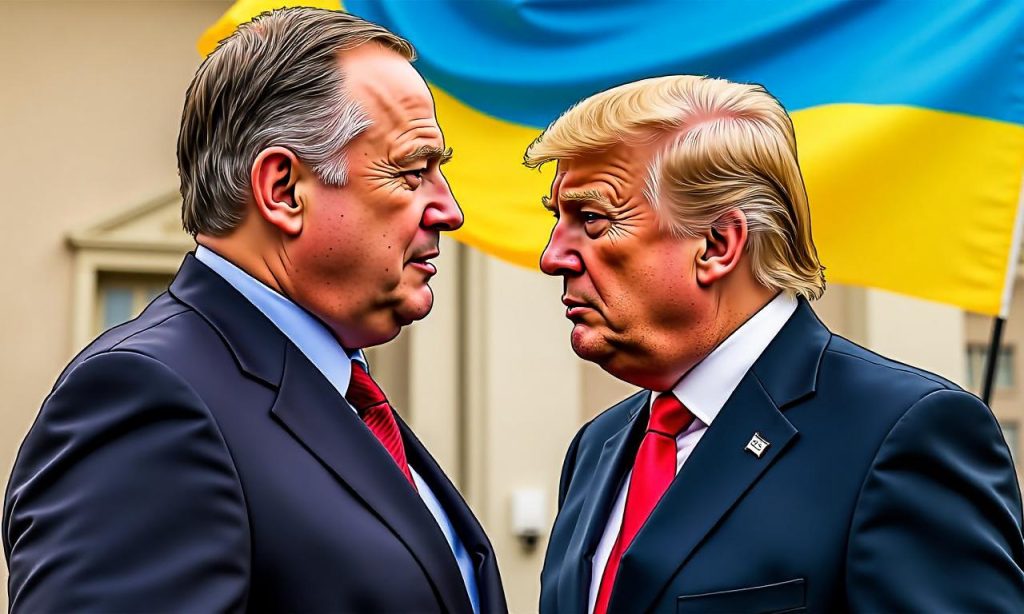
Zelensky Condemns US Envoys’ Absence in Kyiv as ‘Disrespectful’
President Volodymyr Zelensky criticized the decision by US envoys Steve Witkoff and Jared Kushner to travel to Moscow instead of Kyiv, calling it “disrespectful.” The pair made multiple trips to the Russian capital during the winter months, participating in ceasefire discussions as the conflict in Ukraine entered its fourth year. However, they have yet to visit the Ukrainian capital in an official role, a fact Zelensky highlighted in a recent interview with a Ukrainian news outlet.
Witkoff, a former real estate developer, serves as Donald Trump’s special envoy, while Kushner, the president’s son-in-law, has been a key negotiator. Despite their frequent Moscow visits, neither has set foot in Kyiv. Zelensky noted the logistical challenges but emphasized that the absence of their presence in Ukraine was still a matter of concern. “It’s disrespectful [for them] to come to Moscow and not Kyiv, it’s just disrespectful,” he stated. “We understand the complexity of logistics… If they don’t want to, we can meet in other countries,” he added.
Shift in Focus to the Middle East
Zelensky acknowledged the US had prioritized Middle Eastern affairs, particularly the ongoing war between Israel and Iran, which delayed their planned visit to Ukraine. The last trilateral summit between Russia, the US, and Ukraine took place in mid-February, just days before the US-Israel strike on Iran. This focus on the region diverted attention from resolving the Ukraine conflict, which has persisted since Russia’s full-scale invasion in 2022.
Witkoff and Kushner were part of a US delegation traveling to Pakistan for talks with Iran, according to Zelensky. While he recognized the strategic importance of their mission, he stressed that the lack of engagement with Kyiv was significant. “But… in any case, for us it is important to continue cooperating with the Americans,” he noted, underscoring the need for ongoing dialogue despite the challenges.
Unresolved Terms in Ceasefire Talks
Peace negotiations accelerated in autumn 2025 when Russian and US officials unveiled a draft plan to end the war. The proposal, however, included terms Kyiv found unfavorable, such as potential concessions on the Donbas region. While both sides agreed on some military aspects, like front-line positioning and ceasefire monitoring, key disputes remain. These include Ukraine’s demand for the return of deported children and Russia’s push for regime change in Kyiv.
The Donbas region’s status remains a sticking point, with Moscow insisting on retaining control of the area in exchange for a truce. Kyiv, meanwhile, views this as unacceptable. Kyrylo Budanov, Zelensky’s chief of staff, described the situation as a “compromise between two completely polar positions,” adding that no resolution had yet been reached. “We will have to acknowledge one of two things: either we find a solution and end this war, or we all equally take responsibility for admitting we didn’t find a solution and continue to kill one another,” Budanov said.
War’s Impact on Ukraine and Russia
The conflict, which began with Russia’s invasion of Ukraine in 2022, has become an enduring reality for millions. Russian forces control large portions of eastern Ukraine, from Luhansk to Kherson, while frontline battles continue. Cities face relentless aerial assaults, with hundreds of drones and missiles targeting civilian areas and infrastructure. Last week, Russia launched over 700 attacks in multiple waves, killing at least 18 people in a single night.
Ukraine has responded with intensified strikes on Russian energy facilities, using long-range drones to hit ports, factories, and oil terminals deep within Russian territory. Reuters estimates that by early April, at least 20% of Russia’s total export capacity was disrupted due to these attacks. While the energy crisis has boosted Russia’s oil revenues, the country’s GDP continues to decline, highlighting the war’s dual impact on both nations.