A record-breaking semi-final – the antidote to modern football?
A Record-Breaking Semi-Final – The Antidote to Modern Football?
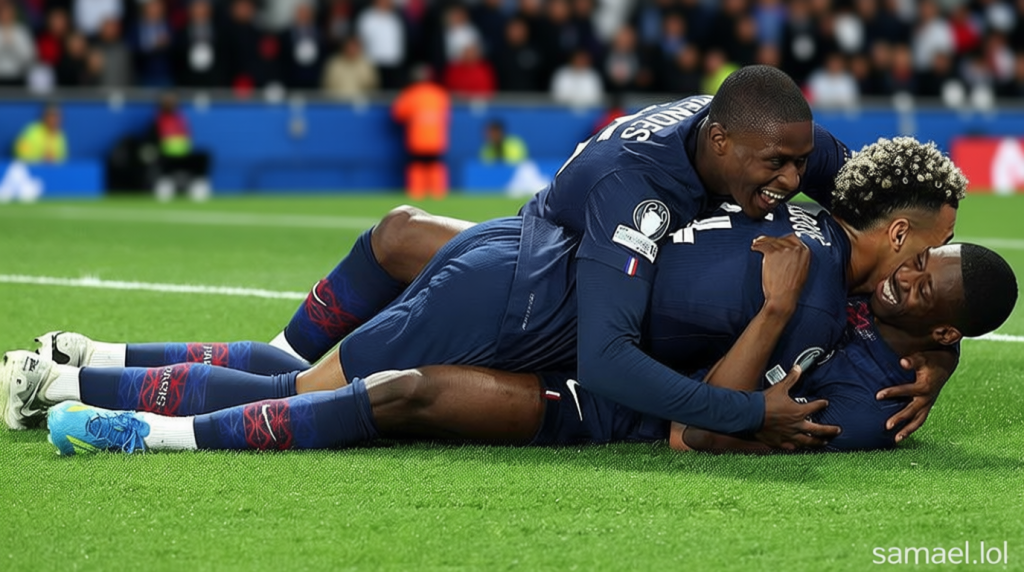
A record breaking semi final – Football’s essence is often overshadowed by the tactical intricacies and defensive pragmatism that dominate today’s game. However, Paris St-Germain’s stunning 5-4 Champions League semi-final triumph over Bayern Munich reignited the spirit of attacking football. This match, which saw a record nine goals in a single leg, offered a rare glimpse into the sport’s original charm—speed, flair, and unrelenting ambition. It was the highest-scoring semi-final since Eintracht Frankfurt’s 6-3 European Cup clash with Rangers in the 1959-60 season, and it will be remembered as a thrilling spectacle that defied contemporary trends.
A Clash of Attacking Titans
The encounter between Europe’s top-scoring teams this season underscored the rivalry between two elite squads. PSG, who have netted 43 goals in the Champions League campaign, faced Bayern Munich, boasting 42 goals themselves. This match marked the first time in history that both sides in a knockout tie scored more than 40 goals in the same competition. The Parc des Princes buzzed with energy as fans from both clubs displayed giant banners—PSG’s declaring ‘the conquest of Europe’ and Bayern’s urging their players to ‘give everything’—setting the stage for a breathtaking display of skill.
From the outset, the game was a whirlwind of movement and creativity. In the first half, the attacking flair of both teams was on full show. Harry Kane’s penalty, awarded after Alphonso Davies handled an Ousmane Dembele cross, was quickly canceled by Khvicha Kvaratskhelia’s precise finish. Joao Neves then added a moment of brilliance with a glancing header, before Michael Olise’s individual play carved out a leveller. The back-and-forth nature of the match left fans on the edge of their seats, with neither side willing to back down.
The Drama of a Nine-Goal Thriller
Despite the early chaos, the match was far from over. Bayern’s resilience shone through as they clawed back, reducing PSG’s lead to just one goal. The hosts, however, managed to push the advantage to three, with Kvaratskhelia and Dembele once again proving their lethal combination. At halftime, PSG held a 3-2 edge, but the second half delivered even more drama. The German champions responded with a ferocious display, fueled by Dayot Upamecano’s header and a goal from Diaz that left the home crowd stunned.
As the clock ticked down, the tension was palpable. With PSG’s players showing signs of fatigue, Bayern’s attack continued to press. The final whistle brought a scoreline that echoed the intensity of the contest—a testament to the raw talent on display. For fans, it was a reminder that football can still be a game of pure spectacle, where the objective is not just to dominate but to dazzle.
Quotes from the Battlefield
“It was amazing. I think it was the best match I have ever managed as a coach,” said Luis Enrique, PSG’s manager, after the game. “It had amazing rhythm, trying to play offensive football, trying to show their quality. I think everybody had fun watching the match. I’m happy because we won.”
The drama of the encounter also drew praise from former England captain Alan Shearer, who described the game as a ‘greatest half of football’ he had ever witnessed. Speaking on Amazon Prime, Shearer remarked: “I can’t stop smiling at how open and bonkers this game is. It’s one of the greatest games I’ve ever been to. Two teams that believe in their own ability to outscore their opponent.”
Shearer’s words capture the essence of what made this match so special. In a season where set-pieces have become the lifeblood of many European campaigns, this game was a refreshing contrast. It highlighted the power of direct attacking play, where composure, speed, and clinical finishing took center stage. The unpredictability of the result also reflected the high stakes of the competition, with both teams vying for a place in the final in Budapest.
The Future of the Beautiful Game?
As the final whistle blew, the match left a lasting impression on football fans and pundits alike. It was a rare moment where the focus wasn’t on defensive strategies or the tactical nuances of the game, but on the sheer joy of watching players create and score. The attacking lineups of both teams, with their dynamic interplay, set the stage for an unforgettable showdown. For PSG, the victory solidified their position in the final, while Bayern’s ability to mount a comeback demonstrated their fighting spirit.
The match also raised questions about the direction of modern football. With the long throw-in making a resurgence and defensive interventions being celebrated like goals, the game has often leaned towards caution. Yet, this semi-final served as a reminder of football’s original appeal. The attacking duels, the individual brilliance, and the sheer unpredictability of the result all pointed to a return to the roots of the sport. As the season progresses, this match may be remembered not just for its scoreline, but for its role in reigniting the passion for attacking football.
Historical Significance and Tactical Insights
This nine-goal thriller also holds historical significance. It was the first time in any major European semi-final that both teams had netted at least four goals, a feat that added to its uniqueness. The previous record for the highest-scoring semi-final was held by the 1959-60 European Cup clash, which saw Eintracht Frankfurt and Rangers meet in a 6-3 encounter. Now, the 2024 Champions League tie has surpassed that, showcasing the evolution of attacking strategies in Europe.
PSG’s success in the first leg can be attributed to their fluid attacking system. Vitinha’s composure and pace, Dembele’s ability to finish from tight spaces, and Kvaratskhelia’s magic moments made them a formidable force. Bayern, on the other hand, relied on Olise’s explosive energy, Diaz’s clinical finishing, and Kane’s goal-scoring prowess. The trio’s combined tally of over 100 goals across all competitions further emphasized the depth of talent in the competition.
The match’s conclusion will be a topic of discussion for weeks to come. With PSG holding a slender lead, the return leg in Munich promises to be another high-octane affair. For now, though, the first leg has already secured its place in history as a celebration of football’s most captivating moments. It was a reminder that the beautiful game is not just about the mechanics of play but the passion, creativity, and unpredictability that make it so enthralling.
As the dust settles, this semi-final will be cited as a case study in how to maximize attacking potential. It was a game where the players’ ability to take chances and trust their instincts overshadowed the need for elaborate tactics. In a season where the emphasis has shifted towards set-pieces and defensive discipline, this match offered a rare glimpse of what football once was—a game of pure imagination and relentless drive.