French broadcaster hits back at Bath’s TMO criticism
French Broadcaster Defends TMO Decisions Amid Bath Criticism
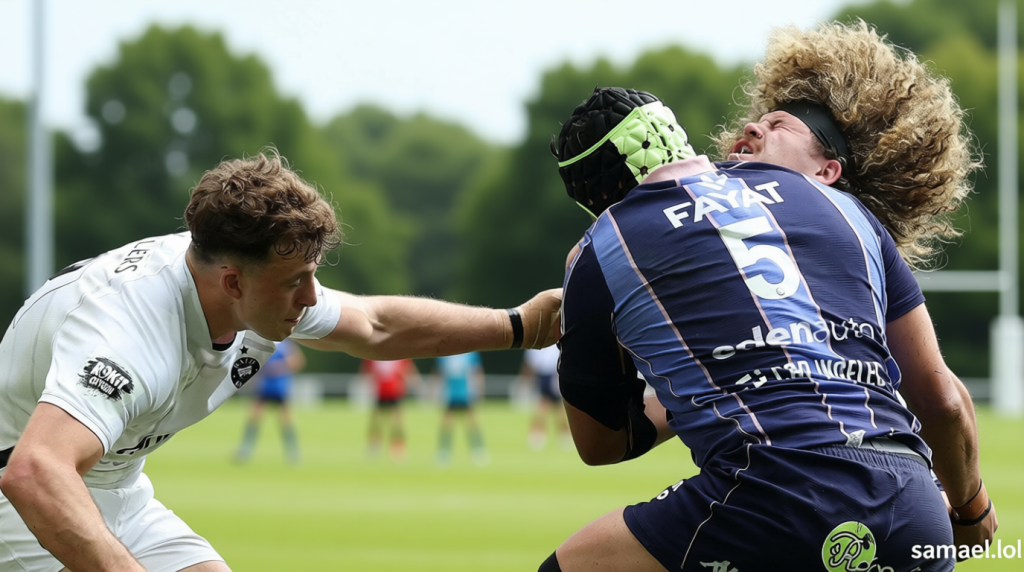
French broadcaster hits back at Bath – The French television broadcaster has firmly defended its television match official (TMO) decisions following criticism from Bath Rugby head coach Johann van Graan. Van Graan, who recently expressed concerns over the consistency of replays shown to officials during Bath’s semi-final loss to Bordeaux-Begles, accused the TMO of missing three direct head contacts involving his team’s Alfie Barbeary. However, the French broadcaster has countered these claims, emphasizing that all available footage was presented to the TMO for review. This exchange highlights the ongoing debate over officiating decisions in high-stakes rugby matches, particularly in international competitions like the Champions Cup.
Bath’s TMO Dispute and the Controversy
Bath’s defeat in the semi-final against Bordeaux-Begles sparked a heated discussion about the role of technology in modern rugby. Van Graan argued that the TMO failed to consistently review key moments, leading to potentially unfair outcomes. His critique focused on the three carries by Alfie Barbeary, where he claimed the TMO overlooked direct head contact. The French broadcaster, however, stated that the footage was shared correctly and that the TMO had full access to all angles during the match. This dispute underscores the challenges of interpreting rugby plays under pressure, especially when decisions can affect the outcome of a crucial game.
“French broadcaster hits back at Bath’s TMO criticism, saying the video referee is the master of what he wants to see,” said Cedric Beaudou, France Televisions’ rugby editor. “Until he makes his decisions, we leave him to see what he wants to see. It’s impossible to hide footage.”
Van Graan, who accepted his team was outplayed in the 38-26 semi-final loss, acknowledged the importance of the TMO’s role but stressed the need for better consistency in replay decisions. He highlighted that certain incidents, such as those occurring during away games in France, might not be captured as effectively due to the unique conditions of the match environment. This raises questions about the reliability of replays in different settings and the potential for subjective interpretations to influence the game’s outcome.
EPCR Clarifies the Role of Television Match Officials
The European Professional Club Rugby (EPCR) organisation, which oversees the Champions Cup, has provided further clarification on how TMO decisions are made. According to EPCR, the television broadcast plays a critical role in assisting the TMO, with two screens used during matches: one for live viewing and another with a five-second delay for analysis. This system allows officials to review incidents in real-time, ensuring that the TMO can make informed decisions based on the best available footage.
EPCR explained that the TMO is responsible for identifying incidents that require review, and the broadcast team supports this process by sharing relevant footage. The organisation also noted that every TMO intervention is subject to a formal review, which can occur during or after the match. This process aims to maintain fairness and transparency, even as coaches and players continue to scrutinize decisions. The upcoming Champions Cup final on 23 May, where Bordeaux-Begles will face Leinster, will be a key test of this system’s effectiveness under intense media and public pressure.
The French broadcaster’s defense of the TMO decisions has sparked a broader conversation about the balance between human judgment and technological support in rugby. While some argue that the TMO should have greater autonomy to interpret plays without external constraints, others believe the broadcast team’s role is essential in ensuring consistency and accuracy. As the sport continues to evolve, the debate over how replays are used and who controls their interpretation will likely remain a central topic in discussions about officiating standards.