RFU backs Borthwick but flags multiple Six Nations failings
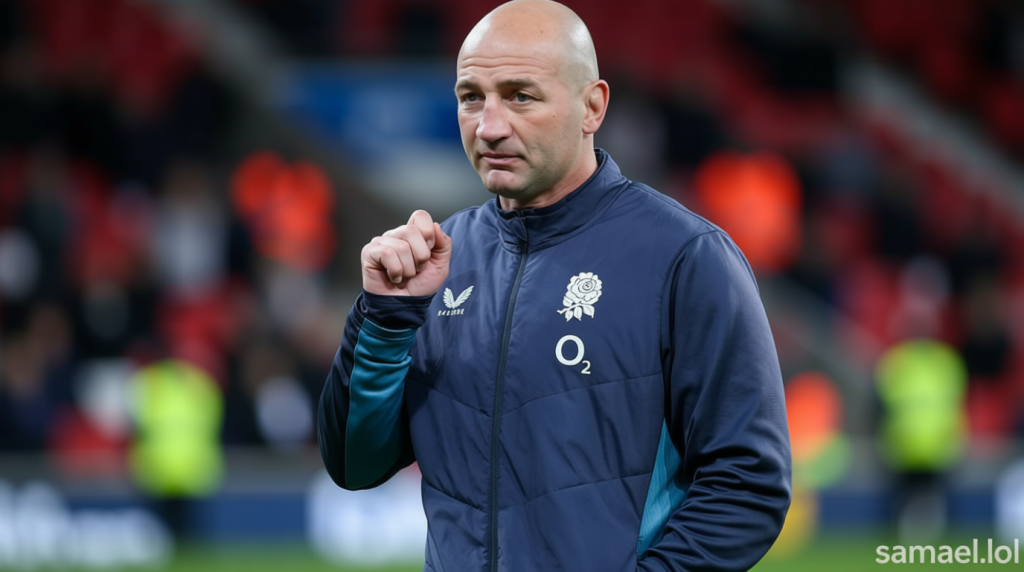
RFU Supports Borthwick Amid Six Nations Performance Concerns
RFU backs Borthwick but flags multiple – Following a challenging Six Nations campaign, the Rugby Football Union (RFU) has reaffirmed its confidence in head coach Steve Borthwick, despite identifying several areas for improvement. Borthwick, who assumed the role in December 2022 after Eddie Jones departed, guided England to the 2023 Rugby World Cup semi-finals. However, the RFU’s internal assessment highlighted significant shortcomings that impacted their results during the recent tournament.
Performance Review and Key Findings
The review, conducted by a panel of rugby experts, revealed that England’s underperformance stemmed from a combination of factors rather than a single issue. Discipline, accuracy, and execution were among the primary concerns, with the team’s struggles in these areas contributing to a lackluster campaign. While the RFU did not disclose the full details of their findings, they emphasized that the analysis was comprehensive and aimed at pinpointing the root causes of England’s inconsistent form.
“This has been a thorough and honest review, and it is clear that improvement will come from addressing several areas rather than chasing one simple answer,” said RFU chief executive Bill Sweeney. “This is a young England team that is still growing and developing, and we understand progress in international sport is rarely linear.”
Sweeney also noted that Borthwick had demonstrated openness throughout the process and had developed a clear strategy to tackle the identified weaknesses. “Steve has engaged in this process with full openness and has clear plans in place to address these findings,” he added. “We are all behind him and his coaching team going into the Nations Championship and the series of matches leading into Rugby World Cup 2027.”
Statistical Insights into England’s Struggles
The RFU’s analysis included a breakdown of England’s performance metrics, which painted a concerning picture. During the Six Nations, the team received a total of eight yellow cards, with two of these leading to Henry Arundell’s 20-minute red card against Scotland. This disciplinary lapse was the most severe in a tournament campaign since Italy’s controversial 2002 display, where similar issues plagued their performance.
England also recorded the second-highest number of entries into the opposition’s 22m (22-meter line) at 53, but their efficiency in these situations was poor. They averaged just 2.7 points per 22m entry, a figure worse than Italy’s 1.6. This inefficiency, combined with a lack of variety in their gameplan, frustrated fans and analysts alike. Despite Borthwick’s insistence that his team had the freedom to innovate and play instinctively, the results suggested otherwise.
One notable moment was England’s narrow defeat by France in the final round of the Six Nations, where they managed to score seven tries. This performance hinted at potential, but it was overshadowed by the broader struggles throughout the tournament. “The way in which the team aspires to play was clear throughout the review,” added the RFU. “However, translating that vision into consistent results remains a challenge.”
Confidentiality and Future Prospects
The RFU acknowledged that maintaining performance confidentiality in a competitive sporting environment made it difficult to reveal all the details of their shortcomings. Nonetheless, they confirmed that the review pointed to multiple areas needing attention. Borthwick’s case, however, was bolstered by the fact that England had compiled a 12-game winning streak before the dip in form, indicating that the team was capable of high-level performance when focused.
With the next match set in Johannesburg against world champions South Africa on 4 July, the RFU’s support for Borthwick appears crucial. The Springboks have already recruited assistant coach Felix Jones and analyst Joe Lewis from Borthwick’s coaching staff, ensuring they will have insight into England’s strategies and weaknesses. This move suggests that the RFU is not only defending Borthwick but also preparing for future challenges.
Looking ahead, England’s first match at the Rugby World Cup will be a pool-stage encounter with Tonga in Brisbane, less than 16 months away. The RFU statement signals that Borthwick has received qualified support from his superiors, with the team’s overall performance in the Six Nations serving as a foundation for future development. The coach’s ability to adapt and improve, as highlighted in the review, will be key to England’s success in the upcoming World Cup.
While the RFU’s review has bolstered Borthwick’s position, it also leaves room for further scrutiny. The detailed and robust assessment underscores the need for sustained effort in addressing the interconnected issues affecting England’s performance. As the team prepares for high-stakes matches, the pressure to deliver results will continue, with the RFU’s backing providing a vital boost to their ambitions.