Has tide turned for troubled Spurs under De Zerbi?
Has tide turned for troubled Spurs under De Zerbi?
Aston Villa defeat sparks renewed hope for Tottenham
Has tide turned for troubled Spurs – A decisive 2-1 victory over Aston Villa propelled Tottenham Hotspur out of the Premier League relegation zone, signaling a potential turning point under new manager Roberto De Zerbi. The Italian coach, who had urged the team to silence internal criticism, aimed to reverse their fortunes as the season neared its most challenging phase. This win, described as one of the most emphatic of the campaign, showcased a stark contrast to the earlier struggles that had plagued the club. Fans and analysts alike were left questioning whether this performance marked the beginning of a new era for Spurs.
Spurs’ transformation under De Zerbi has been nothing short of remarkable. The coach’s emotional plea for unity and determination resonated deeply with his players, who delivered a cohesive display that defied expectations. With West Ham’s 3-0 loss to Brentford earlier in the week, the door for survival had opened, and Spurs seized the opportunity with ruthless efficiency. The match against Villa was not just a tactical victory but a psychological one, as the players embraced their roles with renewed vigor. This was a team that had long seemed disoriented, yet now appeared focused and resolute.
Emotional leadership and tactical overhaul
De Zerbi’s arrival in March had been met with skepticism, but his ability to galvanize the squad has been a revelation. The coach’s strategy emphasized pressing high and maintaining defensive solidity, a shift that has redefined Spurs’ identity this season. His halftime address to the players, delivered with fervor, underscored the urgency of the moment. “We have to die on the pitch,” he declared, “not yet. We have to play, we have to fight.” These words became a rallying cry, igniting a performance that left Villa’s fans stunned.
The tactical adjustments made by De Zerbi were immediately evident. While Unai Emery’s Aston Villa side, which had already faced seven changes from their previous match, struggled to contain Spurs’ intensity, the visitors’ midfield duo of Joao Palhinha and Rodrigo Bentancur dominated proceedings. Their ability to transition seamlessly between attack and defense provided the backbone of Tottenham’s resurgence. The players’ body language reflected a newfound confidence, with Bentancur and Palhinha celebrating with unmistakable enthusiasm after key moments in the game.
One of the most telling scenes came in the first half when Palhinha’s defensive work prevented Villa’s keeper, Emi Martinez, from clearing a dangerous ball. This led to a chance for Richarlison, who capitalized with a clinical finish. The goal was a testament to the team’s sharpness, a far cry from the disjointed displays that had characterized earlier games. De Zerbi’s emphasis on physicality and positioning was evident, as Spurs’ midfielders controlled the tempo and limited Villa’s options. The visitors’ defense, bolstered by the presence of defensive trio Ezri Konsa, Pau Torres, and Lucas Digne, held firm, despite being outmaneuvered in the final third.
A new era of resilience
The victory over Villa was not just a statement of intent but a demonstration of the team’s ability to adapt. After a season filled with turmoil, Spurs had finally found a rhythm that matched their ambition. The contrast with their previous performances was stark: a team that had often looked lost, divided, and out of sync now moved with purpose. This shift was particularly notable in their ability to maintain composure under pressure, a trait that had eluded them for much of the campaign.
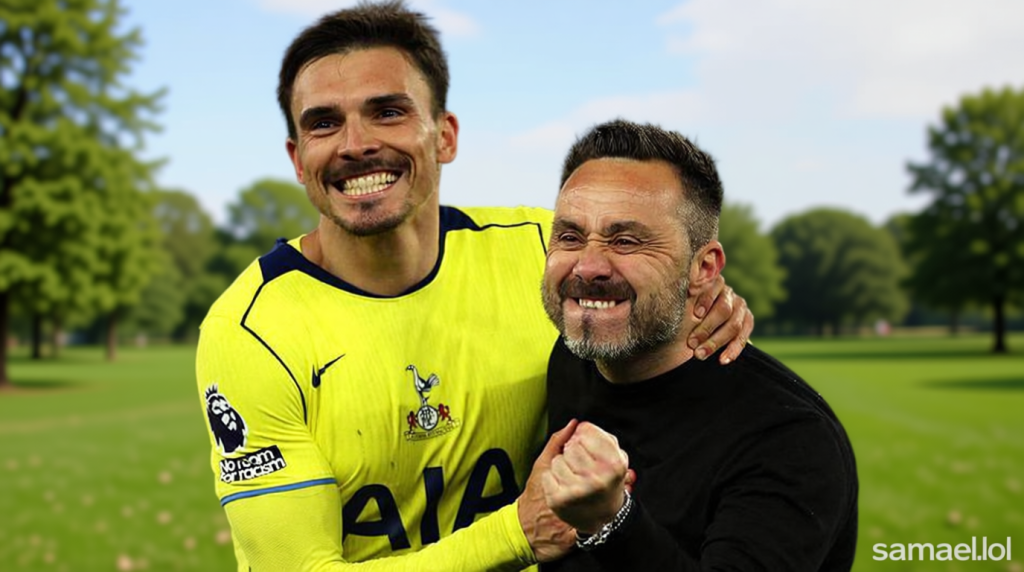
De Zerbi’s influence on the squad has been transformative. Players who had previously seemed directionless now displayed a shared vision, as seen in the post-match celebrations. Bentancur, after winning a crucial foul in his own penalty area, raised his clenched fist in triumph, while Palhinha’s similar gesture was met with a warm embrace from striker Randal Kolo Muani. These moments, captured on camera, were a source of pride for the coach, who praised their passion: “I love Palhinha like this. I don’t ask players to do it, but when I see this passion, I become crazy.” Such gestures symbolized a team that had reclaimed its identity.
The match also highlighted Spurs’ aggressive pressing, a strategy that had been criticized earlier in the season but now appeared effective. Micah Richards, a vocal supporter of the approach, noted that the team’s intensity had become a defining feature. “They’ve been brave with their high press,” he remarked, “and it’s paid off.” This method, combined with De Zerbi’s emphasis on unity, created a formidable combination that left Villa reeling. The hosts’ fans, who had initially greeted the team with boos, found themselves on the edge of their seats as Spurs closed the gap in the race for survival.
Pressure and progress
Despite the encouraging result, De Zerbi remained cautious. Speaking to BBC Sport’s Match of the Day, he said: “Now I don’t want to hear the positive voice. We have to stay focu.” This mindset reflects the coach’s relentless drive, as he seeks to ensure that the team’s momentum is not fleeting. The victory over Villa, while significant, is just one step in a longer journey. Spurs must now sustain this form to avoid the prospect of an embarrassing relegation, a fate that had loomed large in recent weeks.
The emotional toll of the season had been palpable, with players often appearing fatigued or disheartened. De Zerbi’s arrival brought a fresh perspective, one that prioritized grit and determination over technical flair. His players, once hesitant, now exude a sense of purpose that has been missing for much of the campaign. The result against Villa was a clear indication that this approach is working, as the team’s ability to compete at the top end of the table has improved dramatically.
However, challenges remain. The Spurs’ midfield, while formidable, has faced criticism for inconsistency, particularly in key matches. The pairing of Palhinha and Bentancur, which has only started 12 games together this season, has shown promise but needs to translate into sustained success. De Zerbi’s focus on building a cohesive unit is evident, and the coach’s ability to foster such unity has been a crucial factor in their recent turnaround.
Looking ahead
As Spurs move out of the relegation zone, the focus shifts to maintaining this momentum. The victory over Villa has reignited discussions about their potential for a mid-table finish, a goal that seemed increasingly distant earlier in the season. De Zerbi’s influence, both on and off the pitch, has been instrumental in this revival. His ability to communicate with players and instill a sense of direction has transformed the team’s dynamics, even in the face of adversity.
The players’ response to De Zerbi’s call to arms was a defining moment. What had once been a team struggling to find its footing is now a unit that plays with collective purpose. This is not just a tactical shift but a cultural one, as Spurs embrace a mindset of resilience and determination. The next few matches will be critical in determining whether this change is permanent or merely a fleeting surge. For now, though, the tide has turned, and the Spurs’ fans can breathe a little easier as their team steps back onto the pitch with renewed confidence.