Run a marathon? Try 100 in 100 days
Run a Marathon? Try 100 in 100 Days
A Unique Challenge
Hannah Cox’s running shoes bear the marks of a grueling journey. Their soles are patched with fragments of a car tyre and streaked with dust, hinting at a far greater distance than a single marathon. While many finishers of Sunday’s London Marathon might be struggling to climb stairs, declaring they’ll never attempt it again, Cox’s story is one of relentless determination. The idea of completing 100 marathons in 100 consecutive days—spanning 4,200km across India—was her bold vision. And though she had never run before 18 months ago, she embraced the challenge with unshakable resolve.
The Journey Begins
Cox’s ambition was ignited after her father’s passing in 2011. Inspired by her Indian roots, she became captivated by a 19th-century British route designed to enforce a controversial salt tax, which featured the Great Hedge of India. A summer conversation with a friend in 2024, where he quipped, “I think you should run it,” sparked the idea. She joined a Manchester running club, gradually building her stamina from 30-minute sessions to back-to-back runs, mastering the endurance needed for the task.
Preparation and Progress
To tackle the challenge, Cox quit her job, gathered a support team, and secured a van for transportation. Her training included intense workouts like “20 20 20”—20km runs every weekday for 20 days—and seven marathons in seven days across the UK. These efforts proved the feasibility of “Project Salt Run,” which also aimed to raise £1m for environmental charities. Though physically ready, she underestimated the mental and physical toll of the terrain and the unpredictable conditions she’d face.
Navigating the Terrain
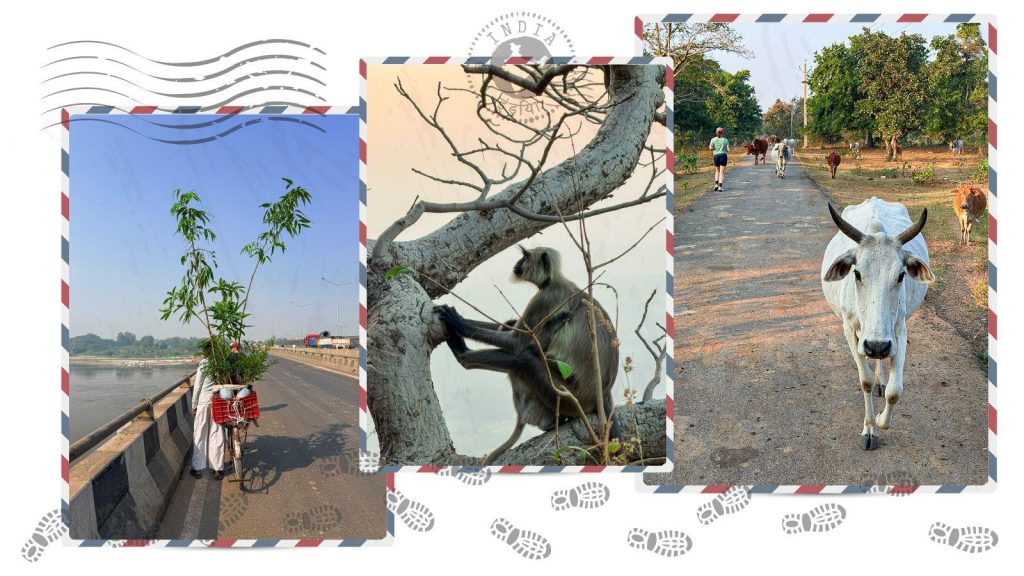
The route took Cox from the Attari-Wagah border between Pakistan and India to Kolkata, near her father’s birthplace. Some days demanded 42km on highways, while others involved trails through nature reserves, canals, and farmlands. The roadways were often chaotic, with vehicles weaving through traffic and animals like cows, snakes, and goats crossing unexpectedly. A motorbike collision left a scar on her right leg, and in tiger-prone areas, she relied on police escorts for safety. The climate, too, posed a trial: scorching heat, dust, and smog tested her resilience, even after acclimating in a heat chamber for two weeks.
A Memorable Encounter
“On day 24, I met Richard Branson at the Taj Mahal. He was hosting a charity cycling event, and I was feeling awful. The night before, he invited me for dinner at a luxury hotel. I had one sip of an Old Fashioned cocktail, and suddenly I was on the verge of vomiting.”
Despite the setback, Cox pushed forward, completing a marathon the next day. The event’s participants joined her, creating an unexpected camaraderie. The encounter was surreal, but her determination never wavered. Her refueling routine involved eating, running 15km, eating again, and repeating this pattern, with shorter runs and rest periods as the days progressed. Breakfast was porridge with bananas and peanut butter, while lunch typically featured a hearty plate of food.