Why Wolves’ relegation had been coming after slow decline
Why Wolves’ relegation had been coming after slow decline
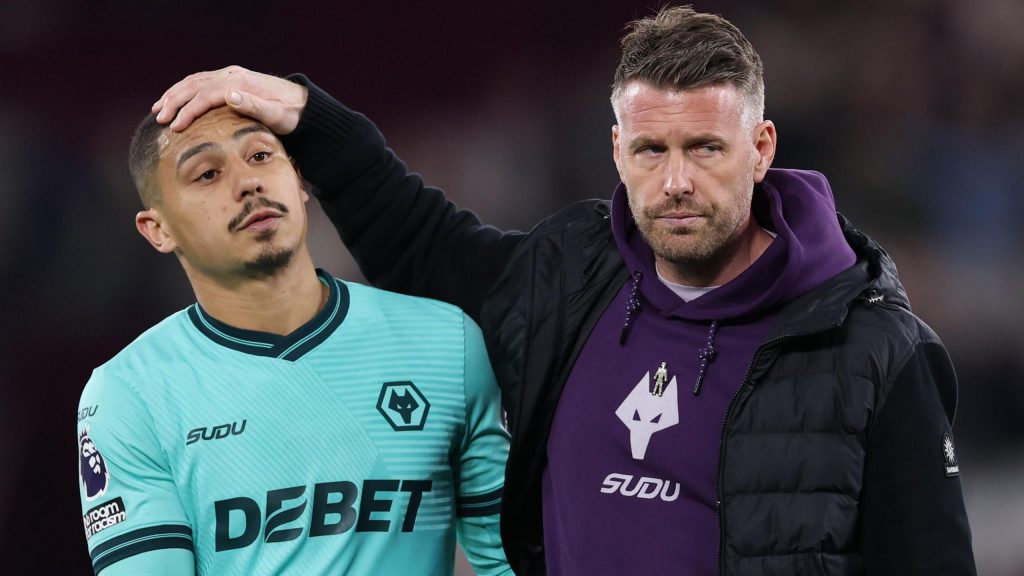
Rob Edwards has guided Wolves to three victories in 22 Premier League matches, a statistic that highlights the team’s struggles this season. A metaphor for their plight emerged one Friday afternoon when the front doors at Compton broke, locking out staff before repairs were completed. This incident mirrored the club’s broader crisis, as Edwards has worked tirelessly to stabilize Wolves since November.
Relegation was finalized following West Ham’s 0-0 draw at Crystal Palace on Monday. Wolves have lingered at the bottom of the table since week three of the campaign, securing just three wins. Yet, despite the poor performance, a sense of optimism persists within the club, with hopes for a brighter future. This positivity contrasts with the gradual decline that has brought them to this point.
Protests against owners Fosun and former executive chairman Jeff Shi revealed deep divisions at the club, which have simmered for years. These tensions spilled onto the terraces as Wolves began their dismal season. The club’s downward trajectory has continued, and they are set to return to the Championship for the first time since 2018. A key factor in their fall has been the inability to replace star players after offloading Raul Jimenez, Diogo Jota, Ruben Neves, Matheus Cunha, and Rayan Ait-Nouri in recent years.
You’ve sold the team – now sell the club
Summer 2024 signings failed to deliver consistent performers, with only Rodrigo Gomes and Sam Johnstone appearing regularly. New additions like Emmanuel Agbadou, Nasser Djiga, and Marshall Munetsi joined in January 2025, but Agbadou was sold to Besiktas last month, while Djiga and Munetsi were loaned out. Last summer’s transfers, including Jhon Arias and Fer Lopez, also fell short, with Arias leaving for £20m and Lopez returning to Celta Vigo. The loss of Cunha to Manchester United and Ait-Nouri to Manchester City, alongside Nelson Semedo and Pablo Sarabia’s free transfers, underscored the regret over the transfer strategy.
Former director Domenico Teti, who left shortly after Victor Pereira’s dismissal, endorsed the signings despite their shortcomings. Pereira had expressed frustration over the slow pace of transfers, feeling he didn’t secure his preferred players. Though he approved the moves, he later regretted staying on after signing a new contract. Wolves initially believed in the European market, but loans like Ladislav Krejci from Girona proved their most successful move. Others, such as David Moller Wolfe, Tolu Arokodare, and Jackson Tchatchoua, arrived for a combined £45m but had minimal impact.
Wolves’ owners remain steadfast, even as they seek investment through talks with former Crystal Palace co-owner John Textor in October. There is anticipation that funds will be allocated to secure a swift return to the Premier League. However, supporters may struggle to forgive past decisions, especially after Shi’s interview in December, where he downplayed the relegation risk. His departure after nearly a decade removed a contentious figure, yet tensions with Fosun endure. With six permanent managers since Nuno Espirito Santo’s exit in 2021—seven in total, including Steve Davis’ interim spell in 2022—the club has faced constant upheaval. Early success, including Nuno’s 2018 promotion and top-seven finishes, has given way to a steady decline, culminating in their current relegation crisis.