Desert power: The promise and paradox of solar
Desert power: The promise and paradox of solar
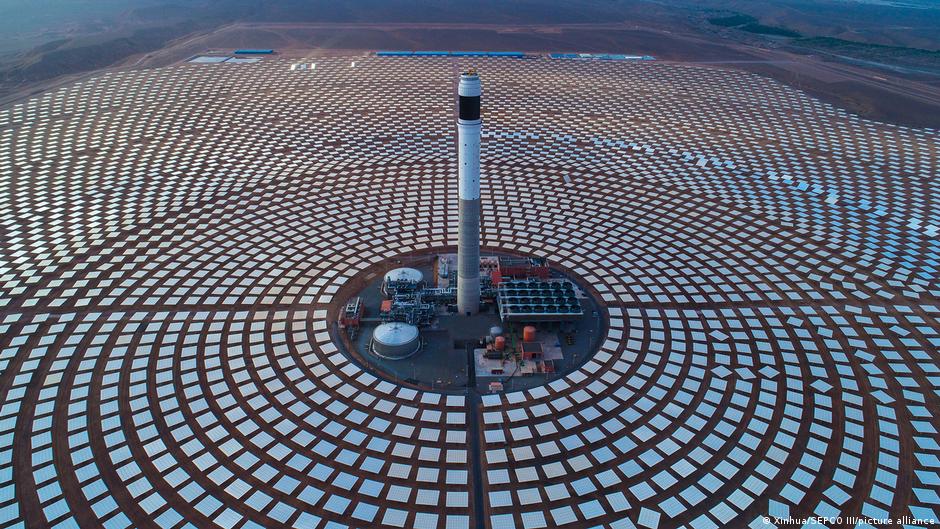
Near the Moroccan city of Ouarzazate—a gateway to the Sahara and home to iconic film studios that have hosted blockbusters like “The Mummy” and “Game of Thrones”—a groundbreaking solar project is emerging. This ambitious venture, known as Noor, is one of the world’s largest solar power facilities, spanning nearly 500 hectares. Its unique design sets it apart from traditional solar farms, leveraging concentrated solar power to generate energy beyond daylight hours.
The Desert’s Solar Vision
Noor’s innovation lies in its use of millions of mirrors to direct sunlight toward a 247-meter tower. This concentrated energy melts molten salt to 600°C (1,112°F), creating steam that powers turbines. Such technology allows the plant to produce electricity even after the sun sets, offering a solution to the challenge of intermittent solar energy. Yet, despite this progress, the local community still faces high electricity costs, relying primarily on butane gas rather than renewable sources.
“Fossil fuel-generated electricity accounts for nearly half of Morocco’s greenhouse gas emissions,” said Intissar Fakir, a senior fellow at the Middle East Institute in Washington D.C. She highlighted how the nation’s heavy reliance on coal, oil, and gas has slowed its transition to clean energy, despite its growing investments in renewables.
Challenges in Transition
Moroccans spend approximately $110 of their $550 monthly income on electricity, a significant burden in a country where summer temperatures regularly exceed 40°C. The demand for cooling systems has risen sharply since the 1970s, compounding energy expenses. While Morocco imports 90% of its fossil fuels, its renewable potential is vast, with ample sunlight and coastal winds.
Although the Noor plant is a flagship project, it is part of a broader network of two dozen solar, wind, and hydro mega-projects already operational. Additional developments are underway, and the nation aims to phase out coal by 2040. Still, progress is uneven. In 2023, Morocco’s renewable capacity reached just over 46% of its total electricity generation, falling short of its 2030 target of 52%.
The Path Forward
Fakir emphasized that Morocco needs to expand grid infrastructure to fully integrate renewable energy into daily use. This includes storage solutions to manage energy output during peak demand. She also pointed out that while solar panels and wind turbines have become more affordable, large-scale projects like Noor require substantial upfront investment, a hurdle for low-income nations.
Critics argue that the focus on mega-projects has overshadowed decentralized alternatives, such as rooftop solar panels for homes and farms. These smaller systems could offer more accessible solutions, yet they remain underdeveloped. As Morocco strives to meet its clean energy goals, balancing centralized infrastructure with community-based initiatives will be critical to achieving sustainability.