German economy growth forecasts halved
German Economy’s Growth Projections Cut in Half
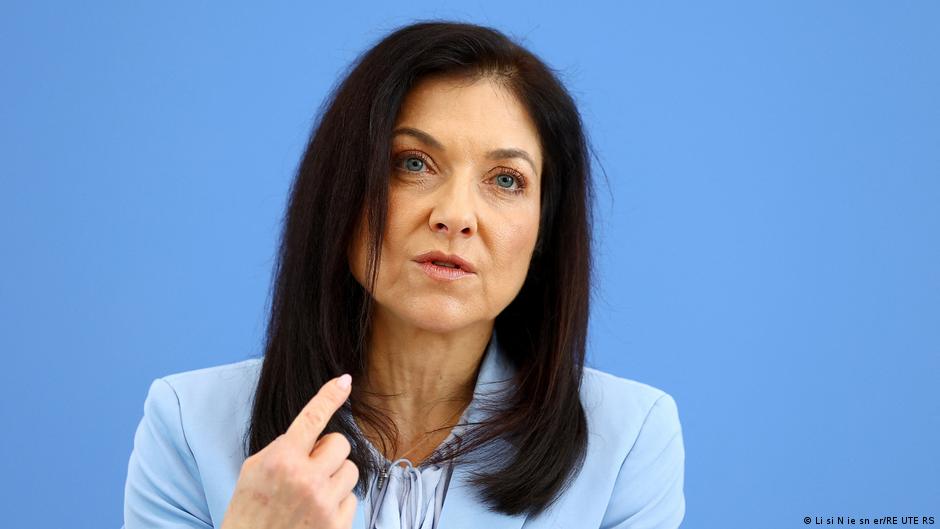
Germany’s economic outlook has taken a sharp turn due to the impact of rising energy costs. Federal Economy Minister Katherina Reiche, a member of the Christian Democratic Union (CDU), has revised her growth expectations significantly following the escalation of hostilities in the Persian Gulf. During a press briefing in Berlin, she acknowledged the challenges posed by the ongoing conflict, stating that the country’s expansion is now projected to reach just 0.5% this year.
The minister’s January report, which predicted a gradual economic rebound, is no longer valid. At the time, she anticipated a steady recovery after three years of stagnation, but the war has disrupted this trajectory. The Economy Ministry has outlined two possible scenarios: one where the Gulf conflict persists, blocking the Strait of Hormuz, and another where tensions ease, restoring normal trade flows. Reiche admitted that forecasting which path will dominate is uncertain.
“The conflict has economically set us back, and the situation remains highly unstable,” Reiche said.
Reiche highlighted that inflation is expected to climb to 2.8%, driven by surging expenses for fuel, oil, gas, and electricity. She warned that food prices will also increase, adding pressure on households. The minister emphasized that the Middle East war has created uncontrollable energy price shocks, which are now a major drag on the German economy.
Structural reforms to enhance corporate competitiveness are now more critical than ever, according to Reiche. “Our long-term growth potential is too low, and we must strengthen it,” she stated. The Economy Ministry’s analysis reveals that Germany’s potential growth rate, measured against its GDP, stands at only 0.5%. This, she argued, jeopardizes future economic stability.
Reiche criticized the SPD’s proposals, including a special tax on oil industry profits, calling them risky. “Such measures could push refineries out of Germany,” she said, contrasting her stance with Finance Minister Lars Klingbeil, who supports targeted interventions. She stressed that state aid must be funded through earned revenue, not just handed out without thought.
The European Commission echoed Reiche’s concerns, noting that Germany remains Europe’s weakest performer in growth. The bloc is also reviewing an EU-wide excess profits tax, a policy previously implemented during Russia’s invasion of Ukraine. Legal disputes over that tax, which generated €2.5 billion for Germany, are still unresolved in Luxembourg.
Earlier this spring, leading economic research institutions had already predicted a slowdown, aligning with Reiche’s updated forecast. Timo Wollmersheim of the Ifo Institute in Munich noted that government spending financed by debt is fueling minimal growth, but this strategy carries long-term risks. With energy costs climbing and global supply chains strained, Germany’s path to recovery grows more precarious.