Germany news: Lufthansa scraps 20,000 flights
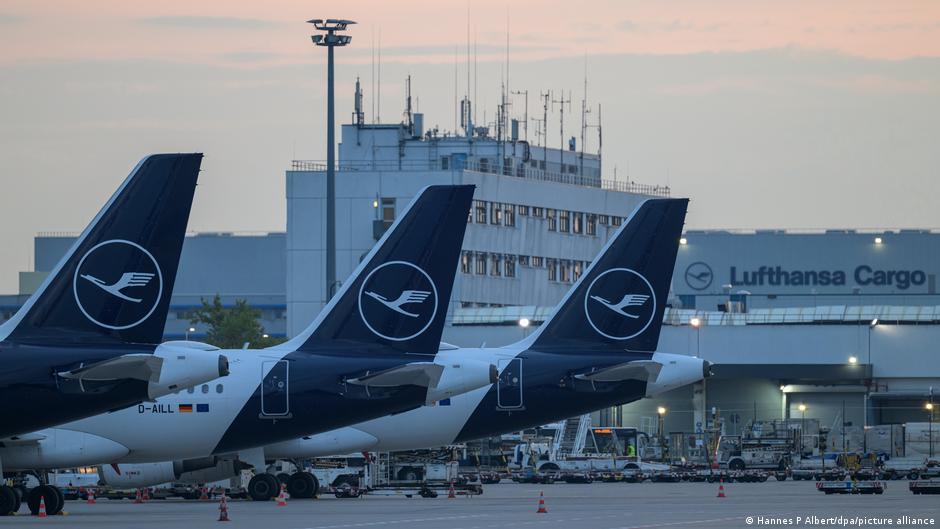
Germany News: Lufthansa Cancels 20,000 Flights
Frankfurt Airport’s New Terminal Unveiled
Frankfurt International Airport’s Terminal 3 officially opened on Wednesday, slightly delayed and marginally over budget. The state-of-the-art facility is designed to accommodate approximately 19 million passengers annually, with expansion plans to reach 25 million. This capacity would surpass that of Düsseldorf Airport, the fourth-largest in Germany, which handles around 24 million travelers yearly.
Originally slated for 2022, the terminal’s construction faced setbacks primarily due to the pandemic. Despite this, its completion was notably smoother than the infamous delays and cost overruns plaguing Berlin Brandenburg Airport in the 2010s. Harald Rohr, head of Fraport’s expansion project, attributed the success to a compartmentalized building approach, involving over 300 separate projects and a design freeze managed by seasoned leaders.
Stephanie Pudwitz, another project leader, highlighted her experience in Berlin’s diplomatic sector and the European Central Bank’s Frankfurt headquarters. Critics, however, pointed to the terminal as a symbol of mismanagement and environmental impact, with the IKUL Initiative condemning it as an example of “megalomania” and “environmental destruction.”
Lufthansa’s Flight Cuts
Following the announcement to discontinue its CityLine subsidiary last week, Lufthansa confirmed on Wednesday that 20,000 flights would be canceled by October. These cuts target unprofitable short-haul routes, including connections from Frankfurt to Bydgoszcz and Rzeszow in Poland, Stavanger in Norway, and others.
“Uneconomical” routes are being temporarily suspended,” stated the airline.
Additionally, ten more routes will be redirected through other hubs like Munich, Vienna, and Brussels. Lufthansa plans to release more details about its “flight optimization strategy” by the end of April, citing that current cancellations will save over 40,000 tons of kerosene—a fuel type that has nearly doubled in price since the US-Israeli conflict over Iran began.
The airline remains optimistic about stable fuel supplies for its summer schedule, despite the ongoing economic pressures. This move reflects a broader effort to streamline operations and adapt to rising operational costs.
Bundeswehr Strategy Unveiled
Germany’s Defense Minister Boris Pistorius outlined the Bundeswehr’s future direction, emphasizing the need to build “the strongest conventional army in Europe.” Russia is identified as a primary threat, with Pistorius noting its rearmament efforts aimed at preparing for a potential NATO confrontation.
“With its rearmament, Russia is positioning itself for military engagement with NATO and views force as a legitimate tool to assert its interests,” he stated in a policy document.
The minister also highlighted Moscow’s use of hybrid warfare tactics, such as cyber-attacks and disinformation campaigns. His strategy includes immediate enhancements to defense readiness, medium-term capacity expansions, and long-term goals to achieve technological dominance in military capabilities.