India: Parliament votes on women’s quota amid opposition row
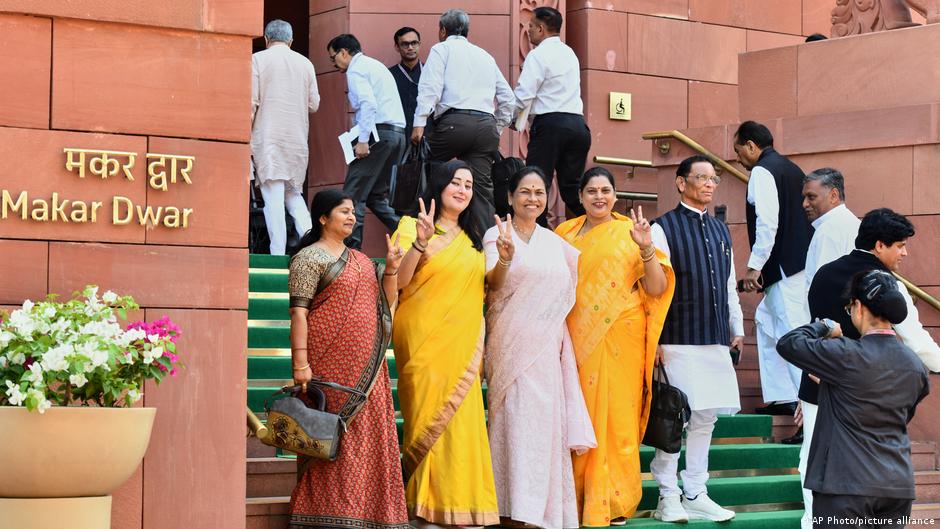
India: Parliament Votes on Women’s Quota Amid Opposition Row
India’s parliament is set to debate three critical bills on Friday, which could alter the structure of legislative seats and introduce a 33% quota for women in national and state assemblies starting from the 2029 elections. The proposals have sparked controversy, with opposition parties questioning the government’s motives and the broader implications of the changes.
Key Bills and Quota Implementation
The government of Prime Minister Narendra Modi submitted the amendment bills during a Thursday parliamentary session. These measures aim to expand the Lok Sabha’s seat count from 543 to approximately 850, with 815 seats allocated to states and 35 to Union Territories. The Delimitation Bill 2026, which is linked to the women’s quota, seeks to adjust constituency boundaries based on the 2011 census, a move that has drawn significant debate.
The Union Territories Laws (Amendment) Bill 2026 complements the other proposals by extending the women’s reservation to legislative assemblies in Union Territories such as Delhi, Jammu & Kashmir, and Puducherry. Officials noted that the Women’s Reservation Act 2023 became effective on Thursday, marking a “technical” step toward its implementation.
Opposition Concerns
Opposition leaders argue that the quota for women is being used as a political strategy to secure more votes ahead of the 2029 elections. They also highlight concerns about the Delimitation Bill’s impact on proportional representation, fearing it may advantage northern states with higher population growth over southern regions that have managed better population control and economic progress.
During a 12-hour parliamentary discussion, both the ruling BJP and opposition parties exchanged sharp criticisms. Congress leader Priyanka Gandhi advocated for the women’s quota to be applied to the existing 543 Lok Sabha seats, noting that women currently make up 14% of the lower house. Meanwhile, Modi emphasized the reforms as a step toward enhancing women’s involvement in governance, stating,
“We are providing a new direction to the country. We are trying to create a positive impact. This will shape a new direction in the political sphere. I feel fortunate to be part of a moment that brings half of the population into policy-making.”
Home Affairs Minister Amit Shah provided reassurances that the delimitation process would not disadvantage southern states, claiming their current representation would remain largely unaffected. However, Tamil Nadu Chief Minister MK Stalin dismissed these claims, labeling the bill a “calculated deception” and vowing to oppose it.
The debate underscores a tension between cross-party support for the women’s quota and concerns over its integration with population-based seat redistribution. As deliberations continue, the government faces scrutiny over its approach to balancing representation and policy-making in India’s political landscape.