Merz: Climate protection must not hold economy back
Merz: Climate Protection Must Not Hold Economy Back
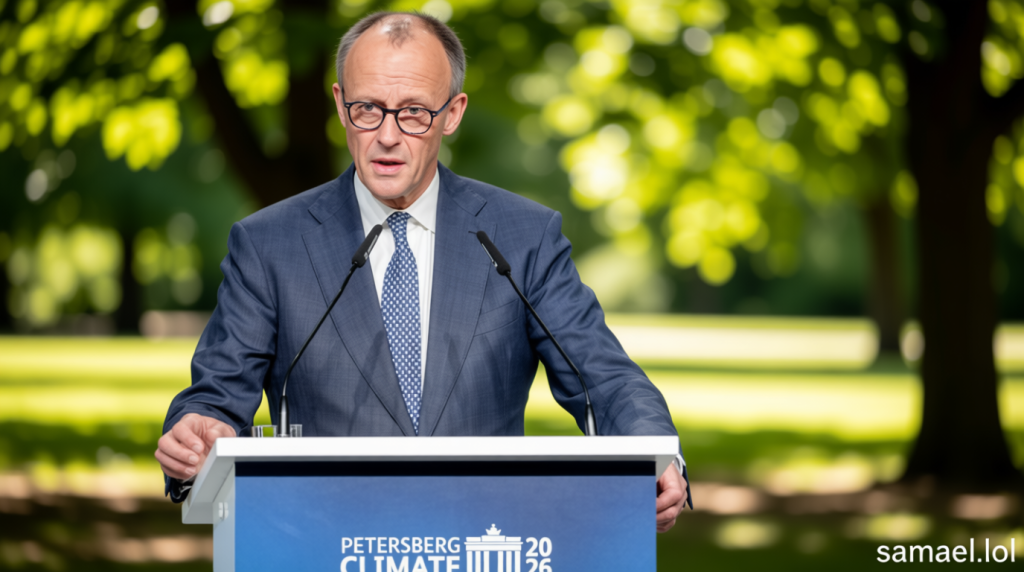
German Chancellor Friedrich Merz argued that climate initiatives should not compromise industrial development, cautioning that overly strict measures could impede progress and innovation. During the Petersberg Climate Dialogue (PCD) in Berlin, he stressed the importance of balancing environmental goals with economic growth, asserting that Germany remains committed to reducing emissions without sacrificing its industrial strength.
Merz underscored the need for climate strategies to be “multilateral, ambitious, and effective” to maintain public backing while fostering economic expansion. He warned that a shift toward deindustrialization would face resistance, stating that such a path would ultimately stifle technological advancement. Despite these concerns, he affirmed Germany’s role as a key supporter of global climate action.
“Clean energy has become a driver of growth,” Merz noted. “In Germany, the clean-tech sector has expanded 50% faster than the overall economy since 2010.”
The Petersberg Climate Dialogue, which has been held in Berlin since 2010, originally began in Petersberg near Bonn. Merz highlighted the potential of green technology investments, predicting the global market for sustainable solutions will nearly triple by 2035, reaching $2 billion (€1.7 billion). He positioned clean energy as a critical component of Germany’s economic future.
Merz, who leads the Christian Democratic Union (CDU), also endorsed emissions trading as a “market-based and technology-neutral” approach. However, he called for revisions to the EU’s ETS rules to ensure competitiveness and relevance for future challenges. The ETS, established in 2005, limits greenhouse gas emissions by allowing companies to trade allowances, with heavy polluters required to buy permits.
Germany aims to achieve climate neutrality by 2045, a target Merz claims the nation will meet. Nonetheless, environmental advocates have criticized his administration for weakening green policies, including proposals to relax the EU’s ban on combustion engines and promote gas-fired power plants.
To view this video please enable JavaScript, and consider upgrading to a web browser that supports HTML5 video