Mines in the Strait of Hormuz: How dangerous are they?
Mines in the Strait of Hormuz: How Dangerous Are They?
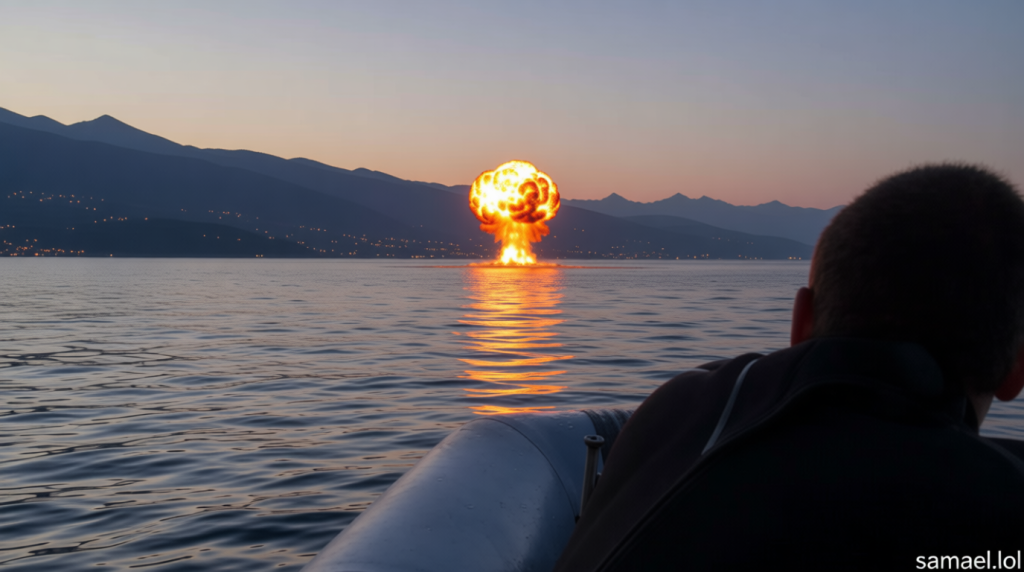
Iran has deployed mines in the Strait of Hormuz to deter independent shipping, according to reports. The strategic waterway, vital for global oil transport, faces potential threats from these underwater explosives. However, the risk to maritime traffic remains uncertain, as Iranian officials have not confirmed the presence of mines in the region. This ambiguity has led to debates about the actual danger posed by the mines.
International Response to the Threat
German Chancellor Friedrich Merz announced his country’s readiness to assist in mine clearance and maritime surveillance efforts to protect the strait. “We could provide mine-clearance vessels—our expertise lies in that area,” Merz stated, emphasizing the need for a legal framework to justify such actions. His remarks followed discussions with European allies about a potential joint mission to safeguard the waterway amid ongoing conflict.
“We aren’t even certain that there are mines [in the Strait of Hormuz],” said Johannes Peters, a security policy expert at Kiel University. “But the threat itself is enough to discourage passage. For now, no one in the war zone can actually verify it.”
On the same day, Iran’s top diplomat, Abbas Araghchi, claimed the strait was “completely open” during the Israel-Lebanon ceasefire. U.S. President Donald Trump echoed this, stating the waterway was “ready for full passage.” Yet, just one day later, Iran reversed its stance, closing the strait again. This inconsistency highlights the evolving nature of the threat.
The Mechanics of Naval Mines
Naval mines are cost-effective underwater explosives designed to detonate upon contact or specific triggers. Modern versions differ from historical models, such as the British moored mines used in World War II, which relied on physical contact. “Modern mines have little in common with those,” Peters explained, noting that today’s devices can be activated by magnetic fields, sound waves, or pressure changes from passing ships.
Firing mechanisms now allow mines to target specific vessels. “Submarines can identify the acoustic signature of enemy ships,” Peters added. “This means hostile ships will trigger the mines, while friendly vessels can navigate the area safely.”
Efforts to Clear the Threat
Clearing mines involves a two-step process: hunting and sweeping. This requires locating suspicious objects and assessing their risk, which can be time-consuming. Options include retrieving the mine, disabling it, or detonating it in a controlled manner. Peters likened this to “an underwater ordnance clearing service.”
Recent advancements have introduced drones as a safer alternative. Ukrainian mine sweeper Mykola described using drones to detect and eliminate mines in the Black Sea, where Russia had placed them. Similarly, the German navy has adopted autonomous systems to scan the seafloor, reducing the need for human risk. “We now use drones to search for objects, then analyze and neutralize them,” said Frigate Captain Andreas, whose full name is withheld for security reasons.
While drones enhance efficiency, they still rely on human interpretation. “We review footage to distinguish harmless debris from dangerous mines,” Andreas noted. “Despite the technology, removing all mines from a war-torn area could take decades, or longer.”