UNIFIL: Why are UN peacekeepers in Lebanon?
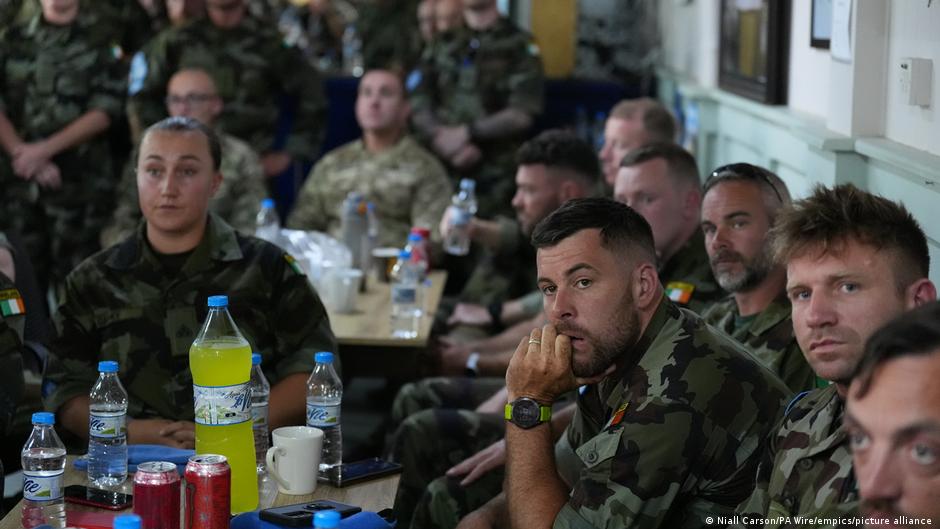
A French UN peacekeeper has been killed in Lebanon, highlighting rising risks for UNIFIL. The UN mission has been in the country for nearly 50 years — DW looks at its mandate, role and growing criticism. A French soldier with the multinational United Nations Interim Force in Lebanon , or UNIFIL, was killed on Friday in an ambush.
Three others were wounded, two of whom severely, in what UNIFIL and French officials called a "deliberate attack". "Everything suggests that responsibility for this attack lies with Hezbollah," French President Emmanuel Macron wrote in a statement on social media, urging Lebanese authorities to bring those responsible to justice. Hezbollah has denied responsibility for the attack.
The armed group is designated as a terrorist organization by several countries, including the United States and Germany, while the EU classifies only its armed wing as a terrorist group. The UN peacekeeping force has found itself amid the fighting between Israel and Hezbollah. The latest fighting began on March 2 when Hezbollah launched rockets into Israel, days after Israel and the US had started their joint attack on Iran.
Since then, Israel launched incursions into parts of southern Lebanon. Nearly 2,300 people have been killed in Lebanon, and more than 1 million people have been displaced. To view this video please enable JavaScript, and consider upgrading to a web browser that supports HTML5 video UNIFIL's mission in southern Lebanon is considered very dangerous.
Several weeks ago, six Indonesian UNIFIL troops were killed in three different incidents. The United Nations Interim Force in Lebanon began its mission in March 1978, after Israel's invasion earlier that month. At the end of March 2026, it consisted of about 7,500 peacekeepers from 47 countries, according to UNIFIL.
The largest contributors of troops are Indonesia (755), Italy (754), Spain and India (642). The UN peacekeeping forces are deployed across dozens of bases throughout 1,060 square kilometers (about 410 square miles) that cover the area between the internationally recognized Israeli-Lebanese border and Lebanon's Litani River , some 30 kilometers (18.6 miles) north of the border. UNIFIL's headquarters is in the town of Naqoura.
In 1978, the UN Security Council set up UNIFIL to oversee the withdrawal of Israeli troops from southern Lebanon, to restore peace and security and assist the Lebanese government in regaining authority in the area. Since then, the mandate has been renewed on an annual basis by the Security Council. In June 2000, UNIFIL's mandate was expanded.
The United Nations established the Blue Line, a buffer zone between Lebanon and Israel, and put it under the control of UNIFIL. While the Blue Line is not meant to be the current or future border between the countries, unauthorized crossing is not permitted. UNIFIL's mission was further extended in 2006.
An inconclusive war between Israel and Hezbollah ended when both sides agreed on the Security Council Resolution 1701. Resolution 1701 called for disarming all armed groups near the border, including Hezbollah, deploying the Lebanese army in southern Lebanon as well as specifying that only the Lebanese military, and not the Iran-backed Hezbollah militia, were to possess arms in Lebanon. Most recently, the UN Security Council, through Resolution 2790, extended the mandate of UNIFIL in August 2025, through the end of 2026 – after which it’s supposed to end.
Since late 2025, the troop contingent has been reduced by around 25%. The gradual withdrawal of the peacekeepers is scheduled to be completed by the end of 2027, following nearly five decades of UN presence in southern Lebanon. UNIFIL mainly has an observer role.
This includes patrols by foot and vehicles between the Blue Line and Litani River, as well as patrolling the area near the coast with its naval peacekeeping force, the UNIFIL Maritime Task Force. In case of violations of Resolution 1701, UNIFIL reports them to the UN Security Council. "Whenever there is an incident across the Blue Line, UNIFIL immediately deploys additional troops to that location if needed to avoid a direct conflict between the two sides and to ensure that the situation is contained," the peacekeepers describe their approach on the UNIFIL website.
They also liaise with the Lebanese army and the Israeli military as a non-partisan intermediary to avoid any escalation, they explain. However, the peacekeepers are only allowed a gradual use of force for self-defense, under certain circumstances, and only to "ensure that its area of operations is not utilized for hostile activities." Israel and the United States believe the costly UNIFIL mission has not been effective in preventing Hezbollah from operating and stockpiling weapons in southern Lebanon. In 2018, a Hezbollah tunnel was detected that ran below the Blue Line into Israel.
Lebanon's governments have repeatedly said UNIFIL failed to stop Israeli violations of Lebanon's airspace. Hezbollah leaders have accused UNIFIL of spying for Israel, and said its presence is violating Lebanon's sovereignty. This article was originally published on October 11, 2024.
It was updated on March 18, 2026. Edited by: Andreas Illmer