Senegal: The Goethe-Institut Unveils Its New Earth-Centered Structure in Dakar
Samael.lol – The Goethe-Institut’s latest project in Dakar, Senegal, marks a significant shift toward eco-conscious design. The new building, constructed using earth-based materials, reflects a commitment to sustainability while honoring traditional African building practices. Central to its creation is the work of Francis Kere, a Burkinabé architect celebrated globally for his innovative use of local resources.
A Fusion of Heritage and Modernity
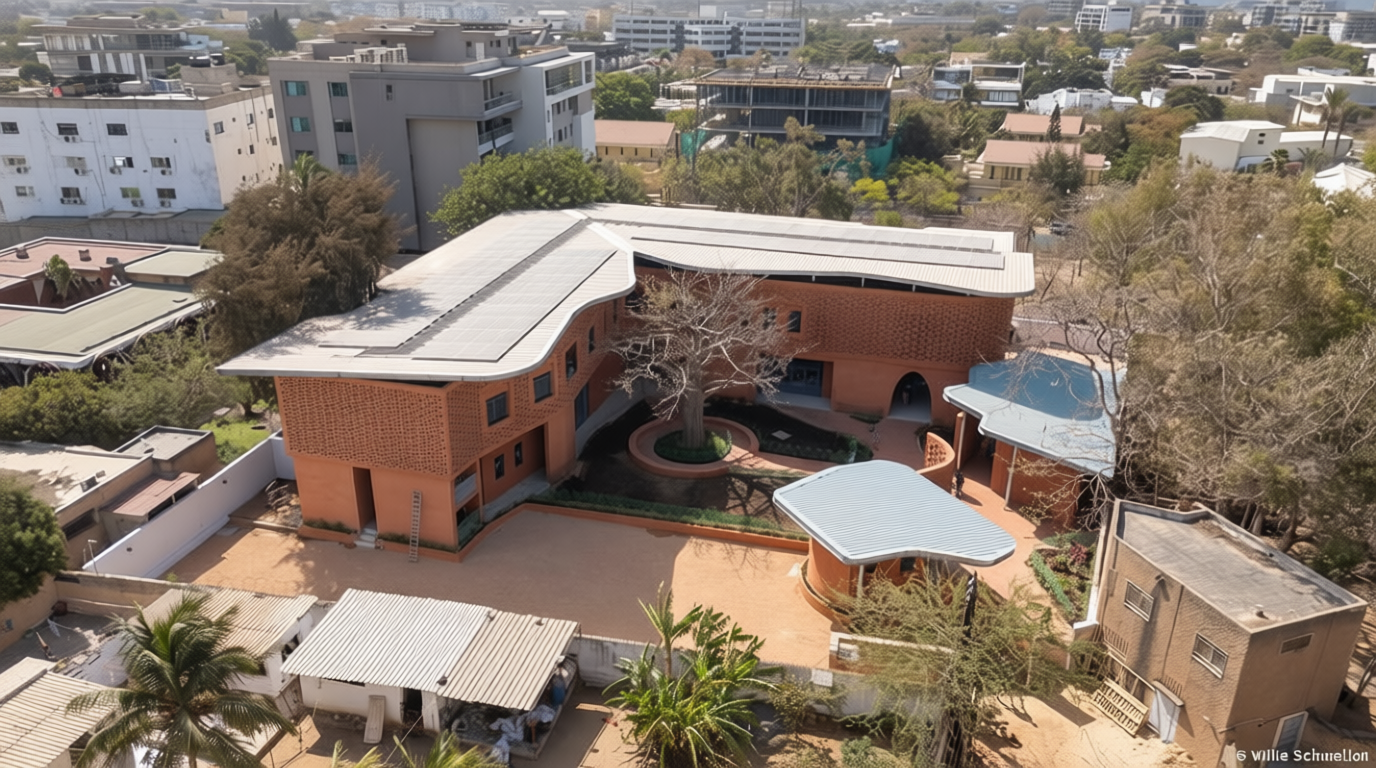
Kere’s vision for the institute in Dakar combines contemporary architecture with the cultural wisdom of the region. By integrating Senegal’s native red soil into bricks with minimal cement, the structure achieves natural cooling and energy efficiency. This approach not only reduces reliance on conventional materials but also ensures a seamless blend with the surrounding landscape.
“I adjusted the clay’s properties to craft uniform bricks, resulting in a design that feels both modern and rooted in tradition,” Kere explained to DW.
The building’s design features shaded exteriors, interconnected spaces, and passive ventilation, minimizing the need for artificial climate control. Only a few structural supports use reinforced concrete, while the majority rely on earth as a primary material. This method echoes age-old techniques from the Sahel region, where thick walls have long been used to maintain cool interiors.
A Cultural Beacon and Environmental Statement
Surrounded by a baobab tree, the institute’s open-air spaces foster cultural dialogue and educational programs. Its opening on April 18, 2026, will serve as a testament to the possibility of large-scale sustainable development amid global challenges. As Africa’s urban centers grow rapidly, the project highlights a critical need for alternatives to energy-intensive construction methods.
“Here, I can feel the ocean breeze,” said Nzinga Mboup of Dakar-based firm Worofila. “Building with earth has an inherent power—it connects the body to the material in a way that can’t be described, only felt.”
Worofila, the firm behind the design, specializes in bioclimatic architecture, prioritizing passive cooling and local materials. The institute’s use of clay not only aligns with traditional practices but also offers a sustainable solution to rising temperatures and CO₂ emissions in fast-expanding cities like Dakar.
Leadership and Legacy
Kere, who won the Pritzker Prize in 2022 and the Praemium Imperiale from Japan, has long advocated for designs that bridge heritage and innovation. His work underscores the importance of cultural relevance in architecture, ensuring communities feel seen and valued. As Ghanaian scholar Lesley Lokko pointed out, Africa’s swift urbanization demands immediate action: “We don’t have a hundred years. We need to think and act now.”
The Goethe-Institut Senegal, which also operates in The Gambia, Cape Verde, and Guinea-Bissau, aims to inspire a new era of building. By merging ancient knowledge with modern technology, the Dakar project signals that the future of cities could be shaped by sustainability, social responsibility, and the enduring strength of earth as a building material.