
Pope Leo’s Africa trip pushes peace and unity
Pope Leo’s Africa trip pushes peace and unity
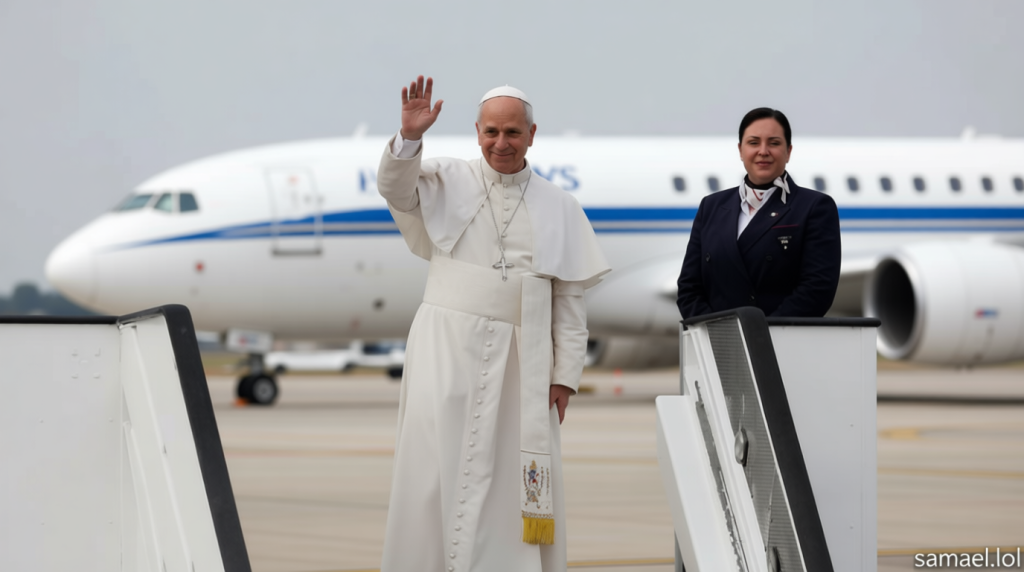
In a four-country tour across Africa, Pope Leo XIV emphasized peace, unity, and dialogue. His journey highlighted the need to address war, corruption, and inequality, urging leaders to prioritize the well-being of citizens. This mission, his inaugural visit to the continent, aimed to demonstrate a commitment to global harmony and set a powerful example for nations grappling with internal strife.
The pontiff’s visit to Cameroon, Nigeria, Algeria, and the Democratic Republic of the Congo marked a significant moment for interfaith and intercommunal engagement. In Douala, his Mass at the Japoma Stadium drew enthusiastic crowds, underscoring the widespread support for his message. Franck Fokou, a political scientist from Cameroon, praised the pope’s willingness to tackle governance challenges head-on.
“We understood the Holy Father’s appeal as a reminder to the government to respect human rights. He pointed out that we must not use violence to harass the population, but must remember that violence must serve peace,”
Fokou told DW.
Cameroon, led by 93-year-old President Paul Biya in his eighth term, faces persistent tensions between separatist groups in the English-speaking Northwest and Southwest regions and the French-speaking central government in Yaounde. During the pope’s stay, separatists announced a temporary ceasefire, allowing the visit to proceed. In his sermon, the pope delivered sharp criticism to the warring factions, which was met with approval from the audience.
“The warlords act as if they do not know that a single moment is enough to destroy; but that often a whole lifetime is not enough to rebuild,”
he remarked.
Pope Leo XIV’s focus on peace resonated deeply with civil society advocates. Sophie Estelle Gouleu, president of the Policemen’s Wives Association in Cameroon, viewed the message as a guiding principle for the future.
“The Holy Father said: The world has had enough of wars. Women, young people, and civil society play a decisive role in maintaining social cohesion,”
she noted. The visit also fostered positive exchanges with Muslim communities, as highlighted by Daniel Bilong, a Cameroonian priest.
“The pope’s visit means a lot to us in Cameroon, not only for Catholics but also for people of other faiths. The encounters with Muslims, in particular, were very promising,”
Bilong stated.
Leo’s mission echoed themes from his predecessors. He referenced John Paul II’s role as a beacon of hope and Benedict XVI’s emphasis on justice, drawing parallels to current challenges.
“We can therefore ask ourselves: Where do we stand? What remains to be done?”
he posed, reflecting on the path forward. The trip began in Algeria, a country where the pope engaged with Muslim leaders, advocating for mutual respect between faiths.
Fredson Guilengue, a political scientist at the Rosa Luxemburg Foundation in Johannesburg, observed that the pope’s visit aimed to strengthen the Catholic Church’s influence on the continent.
“The pope’s visit to the African continent aims to consolidate the Catholic Church’s presence here. Twenty percent of the world’s 1.4 billion Catholics reside on the continent, and this number continues to grow,”
Guilengue explained. In Angola and Equatorial Guinea, similar themes of peace and stability were addressed, with the pope condemning elite exploitation and corruption. Despite the country’s wealth in oil and diamonds, half of its 38 million people live in poverty, sparking ongoing protests against Prime Minister Joao Lourenco.
Leo’s journey underscored the importance of dialogue across divides, whether religious or political. By connecting past teachings to present struggles, he positioned the Church as a unifying force in a region often divided by conflict and disparity.