
‘I was a prisoner in my home’: Drug gangs ‘cuckooing’ hundreds of homes a week, police warn
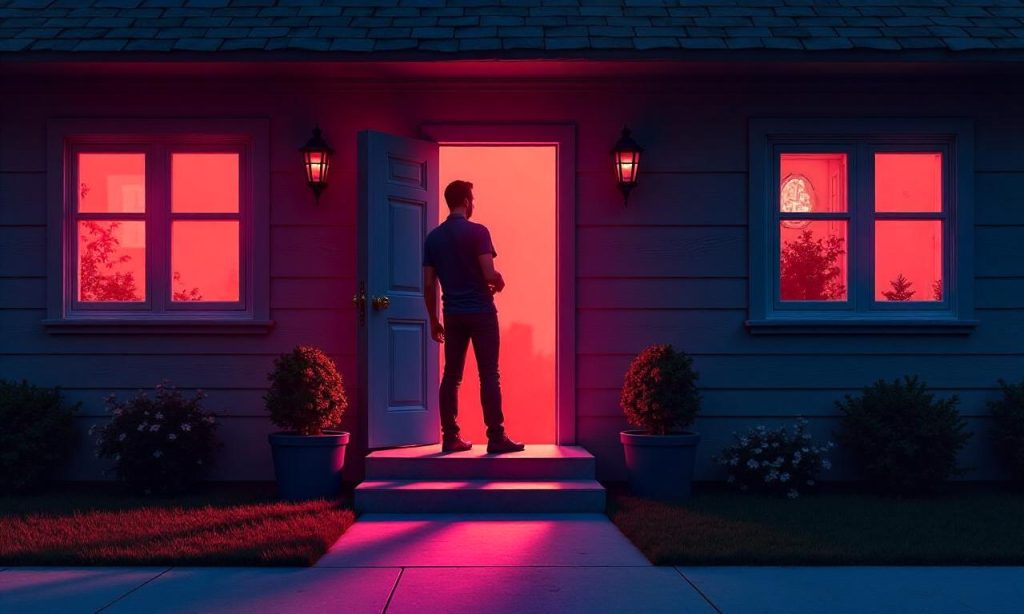
“I was a prisoner in my home”: Drug gangs ‘cuckooing’ hundreds of homes a week, police warn
I was a prisoner in my home – Across the UK, criminal networks are increasingly infiltrating private residences, transforming them into drug dens and storage spaces. Police leaders have disclosed to the BBC that such home invasions occur regularly, with estimates suggesting hundreds, if not thousands, of properties are affected weekly. The term “cuckooing”—a metaphor derived from cuckoos that lay eggs in other birds’ nests—has gained notoriety as law enforcement grapples with the growing scale of this issue. The practice involves perpetrators moving into homes without consent, often exploiting residents’ vulnerabilities to maintain control and commit crimes.
Exploitation and Hidden Dangers
Victims, particularly the elderly and those with disabilities, are frequently targeted by these gangs. Once inside, they are forced to endure illegal activities, including drug dealing and storage, while being subjected to psychological and physical abuse. In some instances, individuals are coerced into performing degrading tasks, such as eating dog excrement or engaging in sexual acts, which are later weaponized as blackmail. The NPCC has highlighted that these tactics are designed to isolate victims, making it difficult for them to seek help or escape.
“We’ve had cases where they’ve been forced to eat dog excrement or perform sexual acts, and those will be recorded and then used as a form of blackmail for the perpetrator to say ‘if you don’t do as I say, then ultimately we’ll share this with friends and we’ll put this on social media’.”
According to Kirsten Dent, a spokesperson for the National Police Chiefs’ Council (NPCC), the crime is often concealed within domestic spaces, complicating detection. “It’s hidden and in people’s homes, it’s not always easy to detect,” she said. While cuckooing is set to become a specific criminal offence by the end of 2026, the government has yet to release statutory guidance for police to enforce the law effectively. This lack of clarity means that current incidents remain underreported and unclassified, obscuring the full extent of the problem.
Shocking Scenes and Personal Accounts
Recent investigations by the BBC revealed harrowing conditions in cuckooed properties. During a visit to London, Metropolitan Police officers toured suspected locations, uncovering evidence of extreme squalor and control. Victims described feeling trapped, with one individual likening their experience to being imprisoned in their own home. “They robbed my clothes,” said Jamie, 34, who suffers from brain damage after being attacked with a glass bottle. “They started taking everything worth taking at my house, like stealing it without you knowing. And when I did realise it was them, they would deny it.”
“People went from being really nice and sound to me, to just taking whatever they can,” Jamie said. “One of the most demeaning things was being slapped by a teenager who was much younger than me. I couldn’t fight, I couldn’t argue.”
Jamie’s condition made him an easy target, as the gang exploited his inability to assert himself. He recounted how they befriended him before moving in, using his flat as a base for drug operations. “I had to stay in my bedroom,” he added, “occasionally he might say ‘I’ll buy you chicken and chips or something’ but it was very rare.” After months of living under such conditions, Jamie managed to flee to another part of the country, escaping the gang’s grip. His story underscores the psychological toll of cuckooing, where victims are not only physically confined but also emotionally manipulated.
County Lines and the Link to Cuckooing
The NPCC has identified a strong connection between cuckooing and county lines operations—drug trafficking that moves narcotics from urban centers to rural areas. Officers noted that dealers often seek secure, hidden locations to operate, making homes ideal targets. During a survey in early March 2026, the NPCC examined 683 suspected cuckooed properties, revealing how these tactics are embedded in the broader drug trade network. “We suspect hundreds, if not thousands, of properties are being cuckooed across the country every week,” Dent emphasized.
Jackie, a former heroin and cocaine addict, shared her ordeal with the BBC. She described how her dealer exploited her financial desperation, adding £2,000 to her debt after she failed to repay. “I had to have a dealer living with me until I could clear the money,” she said. This arrangement left her confined to her bedroom for months, with the intruder barring her from other parts of the house. “I asked him to leave so many times and he said: ‘My guy said I’ve got to stay here’.” The experience pushed Jackie to the brink, prompting her to seek treatment and now advocate for awareness campaigns.
“I became a prisoner in my own home,” Jackie said. “It just meant that I had to stay in one room. I tried to get access to the front room and the kitchen and he just went, ‘no, you’re not coming in’.”
Both Jamie and Jackie illustrate the diverse ways cuckooing affects individuals. For Jamie, it was physical abuse and stolen belongings; for Jackie, it was financial coercion and restricted movement. Their accounts highlight the vulnerability of those in unstable situations, who may not have the resources or strength to resist. As the new law comes into effect, police hope it will provide a clearer framework to address the issue. However, with the absence of statutory guidance, enforcement remains challenging, leaving many victims to endure the ordeal in silence.
Cuckooing has become a symbol of the increasing encroachment of criminal activity into everyday life. The practice not only disrupts families but also perpetuates cycles of exploitation, particularly among those already struggling with addiction or physical impairments. With the upcoming legislation, authorities aim to reduce the number of incidents and offer victims a legal pathway to reclaim their homes. Yet, the emotional and psychological scars of such experiences will take time to heal, as those affected continue to navigate the aftermath of being trapped in their own spaces.