Infantino’s ‘hot dog & Coke’ pledge over $2m ticket
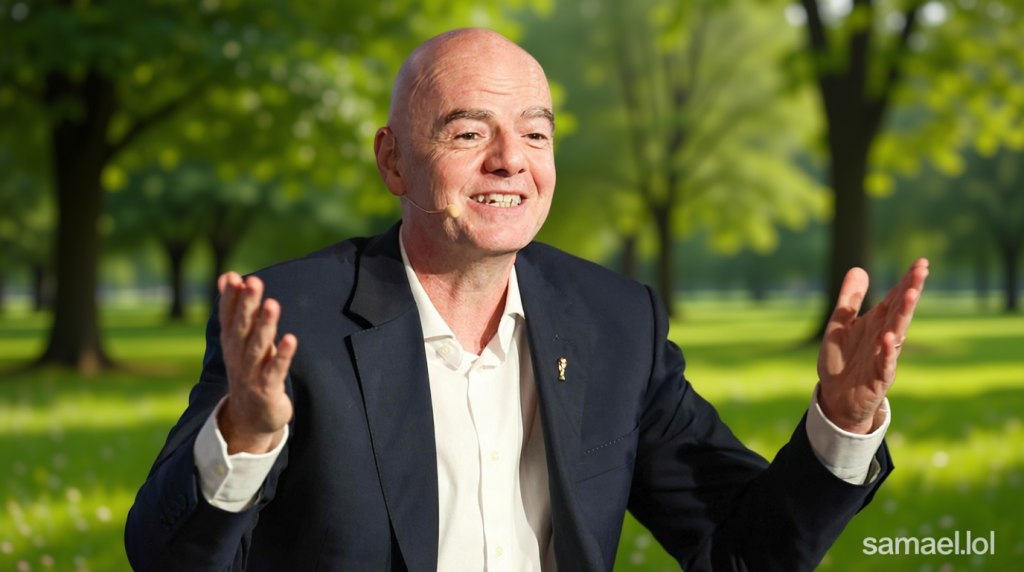
Gianni Infantino’s World Cup Pricing Defense and the $2 Million Ticket Controversy
Infantino s hot dog Coke pledge – FIFA President Gianni Infantino has responded to growing concerns about the cost of World Cup tickets, particularly those priced at over $2 million for the final match of the 2026 tournament. The event, scheduled to run from June 11 to July 19, has sparked debates over its ticketing strategy, with Infantino offering a lighthearted assurance that he would personally deliver a hot dog and a Coca-Cola to anyone who splurges on such an expensive pass. The president’s remark comes amid mounting pressure from fans and analysts who argue that the prices are too steep, especially when compared to the broader ticketing market.
The high cost of tickets for this summer’s World Cup has drawn sharp criticism, with many questioning whether the pricing justifies the experience. Infantino, however, has dismissed such concerns, suggesting that even if a ticket is sold for $2 million, it doesn’t mean the actual cost is that high. He further added that the exorbitant prices are a result of the resale market, where demand can drive up prices beyond the face value. “If some people put on the resale market some tickets for the final at $2m, number one, it doesn’t mean that the tickets cost $2m, and number two, it doesn’t mean that somebody will buy these tickets,” he said, highlighting the disparity between official prices and secondary market rates.
“In the US, it is permitted to resell tickets as well, so if you were to sell tickets at the price which is too low, these tickets will be resold at a much higher price,” Infantino explained during a speech at the Milken Institute Global Conference in Beverly Hills. “And as a matter of fact, even though some people are saying that the ticket prices we have are high, they still end up on the resale market at an even higher price, more than double our price.”
Infantino emphasized that the pricing strategy aligns with other major sporting events in the United States, where ticket resales are common. He pointed to the 25% of group stage tickets that can be purchased for less than $300, comparing this to attending a “college game” in the US, which he claims is a more affordable alternative. “This is the World Cup,” he added, implying that the pricing reflects the global event’s prestige and the demand it generates.
Resale Price Caps in Toronto and the Ontario Government’s Role
As part of its efforts to address public backlash, FIFA recently updated its ticket resale platform to restrict the sale of World Cup matches in Toronto to their original prices. This change was implemented in response to the Ontario government’s 2026 “Putting Fans First Act,” which prohibits the resale of event tickets above face value. The regulation came into effect last week, prompting FIFA to remove all Toronto-based matches from the official marketplace to comply with the new rules.
The Ontario government’s decision has created a divide in ticket pricing across venues. While matches in Toronto are now limited to their base cost, fans in other 15 locations can still list tickets for significantly higher amounts on the resale platform. This policy has raised questions about fairness, as some fans in Toronto may have previously paid inflated prices for access to games. However, the cap aims to ensure that the cost of attending matches in the Canadian province remains transparent and equitable.
Global Fan Costs and the Inflation of Expenses
Traveling to the World Cup in the United States has become a costly endeavor for many supporters, with tickets, accommodation, and transportation all experiencing sharp price increases. BBC Sport reported that an English fan would need to spend approximately £6,500 to attend their country’s group stage matches, illustrating the financial burden on international attendees. This figure includes not only the ticket price but also the expenses associated with travel and lodging during the tournament’s duration.
Infantino’s comments on the pricing strategy have been met with mixed reactions. While he maintains that the fees are reasonable when compared to other major sports events in the US, critics argue that the high prices may alienate fans who cannot afford to pay millions for a single game. The president’s pledge to personally deliver a hot dog and Coke to those who pay $2 million for a final ticket has been seen as an attempt to humanize the pricing model, but it hasn’t fully alleviated concerns about accessibility.
Additionally, the case of four goal-side tickets in New Jersey being listed for just under $2.3 million each has drawn particular attention. These prices, which are far above the original cost, underscore the extent to which the resale market can inflate ticket prices. Infantino’s defense of the pricing structure has been consistent, but the examples of extreme pricing have forced him to address the issue more directly. “It doesn’t mean that the tickets cost $2m,” he reiterated, “but it does show the demand for the World Cup.”
Despite the controversy, Infantino remains confident that the pricing model is sustainable and reflects the value of the event. He has highlighted the competitive nature of the US market, where ticket resales are not only allowed but also expected. The president’s argument is that the World Cup’s global appeal justifies the high prices, as fans are willing to pay more for the chance to witness the tournament. However, the challenge lies in balancing profitability with fan satisfaction, particularly in a market where expectations for affordability are high.
As the World Cup approaches, the debate over ticket prices is likely to intensify. While Infantino’s approach has been to justify the costs through market dynamics, the implementation of price caps in Toronto may serve as a model for other regions. The president’s statement also raises broader questions about the role of ticket resales in shaping the financial landscape of major sporting events. For now, the World Cup remains a symbol of both global unity and the economic forces that drive its costs.