Bulgaria: Pro-Russia Rumen Radev on course to win election
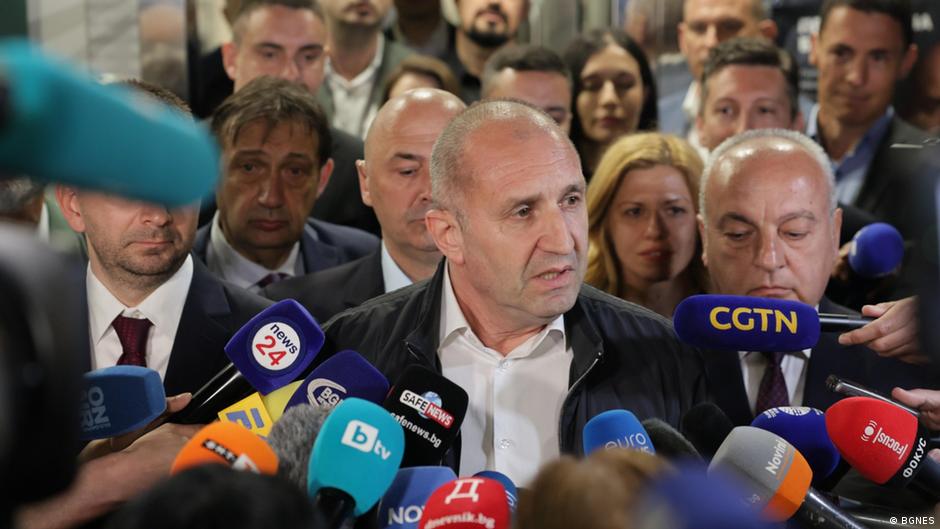
Bulgaria: Pro-Russia Rumen Radev on Course to Win Election
Bulgaria’s upcoming general election has seen the newly formed center-left party Progressive Bulgaria, led by former President Rumen Radev, securing a significant lead. With 91.7% of votes counted, the party has amassed 44.7% of the total, suggesting it will claim around 130 seats in the 240-member parliament. This outcome marks a notable shift in the nation’s political landscape, with Radev’s alliance emerging as the strongest in recent years.
The snap election followed the collapse of a conservative government, which had been ousted in December amid widespread anti-corruption protests. Bulgaria, the EU’s poorest member, has faced prolonged political instability since 2021 when Boyko Borissov’s administration was toppled by similar demonstrations. This latest vote is the country’s eighth parliamentary election in five years, intensifying calls for a resolution to its ongoing governance challenges.
Radev, a former air force general who served as president from 2017 to 2022, has positioned himself as a key figure in Bulgaria’s political realignment. His party’s success signals a broader appeal, particularly in its alignment with Russian interests. Despite his pro-Moscow stance, Radev has publicly denounced Russia’s invasion of Ukraine and pledged to support EU aid to Kyiv if elected.
“We will do everything possible not to allow us to go (to elections) again. It is ruinous for Bulgaria,” Radev stated after polls closed.
Radev has also criticized the EU’s green energy initiatives, calling them simplistic in a world lacking clear rules. His vision includes reinvigorating Bulgaria’s ties with Russia while advocating for a more pragmatic foreign policy. This balance between European integration and Russian alignment has resonated with many voters, particularly in regions skeptical of EU reforms.
Former Prime Minister Boyko Borissov, whose center-right GERB party has dominated politics for years, expressed cautious optimism after the results. He emphasized that GERB would avoid coalitions, instead functioning as a constructive opposition focused on defense and economic stability. “Winning the election is one thing; governing is quite another,” he noted, highlighting the importance of negotiations in shaping the next government.
Borissov, who has led Bulgaria for three terms, highlighted his party’s achievements, including Bulgaria’s recent accession to the eurozone and entry into the Schengen area. These milestones, he argued, reflect progress toward the aspirations of the 1990s. However, his party’s vote share fell short of expectations, underscoring the changing dynamics in Bulgarian politics.
To view this video, enable JavaScript and upgrade to an HTML5-compatible web browser.
To view this video, enable JavaScript and upgrade to an HTML5-compatible web browser.
Edited by: Sean Sinico and Wesley Dockery