Lebanon ought be part of peace deal, EU’s von der Leyen says
Lebanon Should Be Included in Iran Peace Deal, Says EU’s Ursula von der Leyen
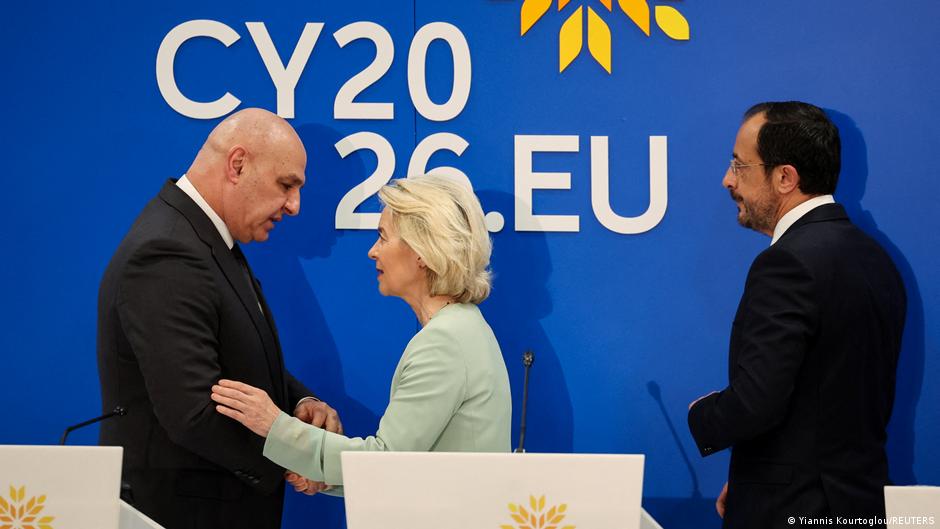
During the EU summit in Cyprus, European Commission President Ursula von der Leyen highlighted the importance of Lebanon’s role in a potential peace agreement with Iran. She emphasized that recent events had demonstrated the interconnected nature of regional security, stressing that stability in the Middle East cannot be achieved without addressing Lebanon’s situation.
Lebanon’s inclusion in the talks was a central theme of von der Leyen’s remarks. “A key takeaway from the past weeks is that security is indivisible,” she stated, adding that a deal must safeguard Lebanon’s “sovereignty and territorial integrity.” The EU leaders convened with Middle Eastern representatives, including Lebanese President Joseph Aoun, to discuss regional tensions. The meeting, held during a working lunch, involved officials from Egypt, Jordan, Syria, and Lebanon.
“You cannot have stability in the Middle East or the Gulf while Lebanon is engulfed in conflict,” von der Leyen remarked, drawing attention to Aoun’s presence as a symbol of Lebanon’s stake in the negotiations.
Though she did not directly accuse Israel, von der Leyen implied that the country’s military presence in southern Lebanon should be reconsidered. “A permanent path to peace requires more than temporary pauses,” she noted, reiterating the EU’s commitment to supporting the Lebanese people through the process.
Cyprus, the summit host, has faced direct consequences from the conflict. An Iranian drone attack on a British military base there shortly after the war began in late February underscored the regional impact. Von der Leyen and European Council President Antonio Costa both pointed to the dangers posed by Iran’s nuclear ambitions, urging that any peace deal must also tackle its ballistic missile program.
EU foreign policy chief Kaja Kallas warned that ongoing negotiations risk producing a weaker agreement than the 2015 Joint Comprehensive Plan of Action (JCPoA). “Without nuclear experts at the table, we might settle for an agreement less robust than the one that once held Iran in check,” she cautioned. The JCPoA, negotiated over two years with 200 specialists, was abandoned by former US President Donald Trump in 2018. This week, Trump pledged to create a “far better” nuclear deal.
“If the talks focus only on the nuclear issue without experts, the result could be a more dangerous Iran,” Kallas said. She also stressed the need to address Iran’s support for proxies and its involvement in hybrid and cyber activities across Europe.
Costa reiterated the call for an immediate ceasefire and the reopening of the Strait of Hormuz, advocating for “unrestricted access” in line with international law. “This is critical for global economic stability,” he asserted. Iran has proposed tolls for shipping through the strait, positioning them as compensation for damages from US and Israeli strikes.
French President Emmanuel Macron echoed the urgency, stating, “Europe must do even more” to restore stability. “Reinstating normalcy for the world’s economies is essential,” he added. Costa also underscored the deepening ties between European and Middle Eastern security, calling for stronger collaboration on defense and regional issues.