Teen discovers first ancient Greek artifact found in Berlin
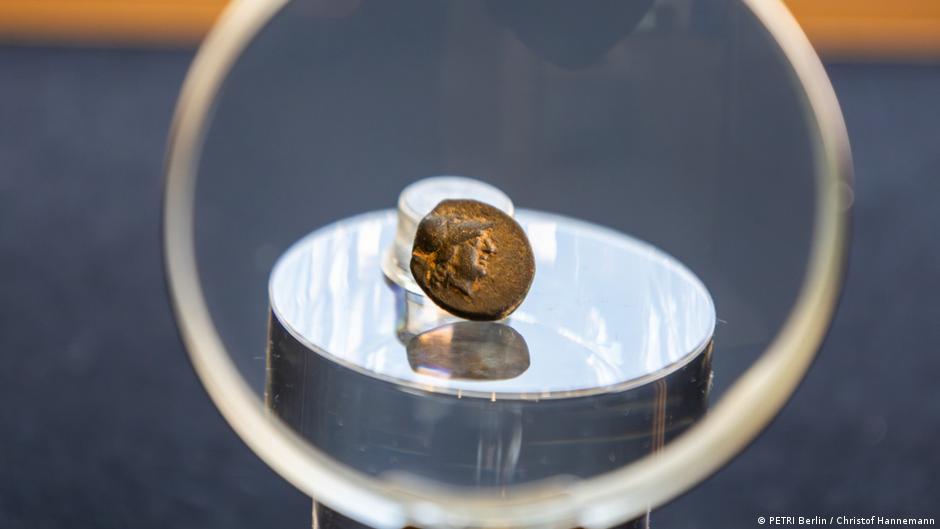
Teen Discovers Rare Ancient Greek Artifact in Berlin
A 13-year-old boy uncovered a bronze coin from ancient Troy, a discovery that has sparked excitement among German archaeologists. This rare find, dated to over 2,300 years ago, is believed to shed light on overlooked connections between ancient Greece and northern Europe.
During a school trip to the PETRI Berlin Archaeology Lab in winter, the young adventurer and his teacher presented the coin to experts. “My colleague immediately recognized its uniqueness,” recalled Jens Henker, a specialist at Berlin’s Heritage Authority. The artifact was then examined by multiple scholars before reaching the Münzkabinett Berlin, home to a globally renowned coin collection.
“This young boy realized he had found something interesting and wanted to know more about it,” Henker shared. The boy’s precise description of where he discovered the coin on a map led researchers to confirm its location at a well-documented agricultural site.
The coin, weighing just 7 grams and measuring 12 millimeters, features clear Greek iconography. One side shows the warrior goddess Athena in a Corinthian helmet, while the other depicts her with a headdress, spear, and spindle. It is currently displayed at the PETRI museum in the “current finds” exhibit.
Historical Context and Trade Networks
Although ancient trade routes between northern Europe and Rome are well-documented, links between Greeks and Germanic tribes during the Iron Age remain poorly understood. “The Greeks didn’t write about us in Germany; they saw us as barbarians,” Henker noted. “So these physical discoveries are crucial for uncovering their interactions.”
Berlin’s Museum for Pre- and Early History has been surveying potential excavation sites in the city since the 1950s. Layers of soil at this particular location were examined in the 1950s and 70s, with subsequent finds suggesting it was a burial ground active since the early Iron Age.
Henker explained that metal objects were uncommon in ancient settlements due to their reuse over time. However, “metal was sometimes placed in graves as a symbolic offering,” he said. “This coin might have served as a remembrance of a personal experience or cultural exchange.”
Pytheas, the only known ancient Greek explorer to reach northern Europe, is also relevant to this narrative. Around 330 BC, he sailed from modern-day Marseille to the Arctic, documenting the northern lights and possibly venturing into the Baltic Sea. “His accounts were dismissed by Greeks as fanciful,” Henker pointed out, “but later evidence confirmed his journey’s authenticity.”