From FA ban to double Euros winners – Lionesses reach 500 games
From FA ban to double Euros winners – Lionesses reach 500 games
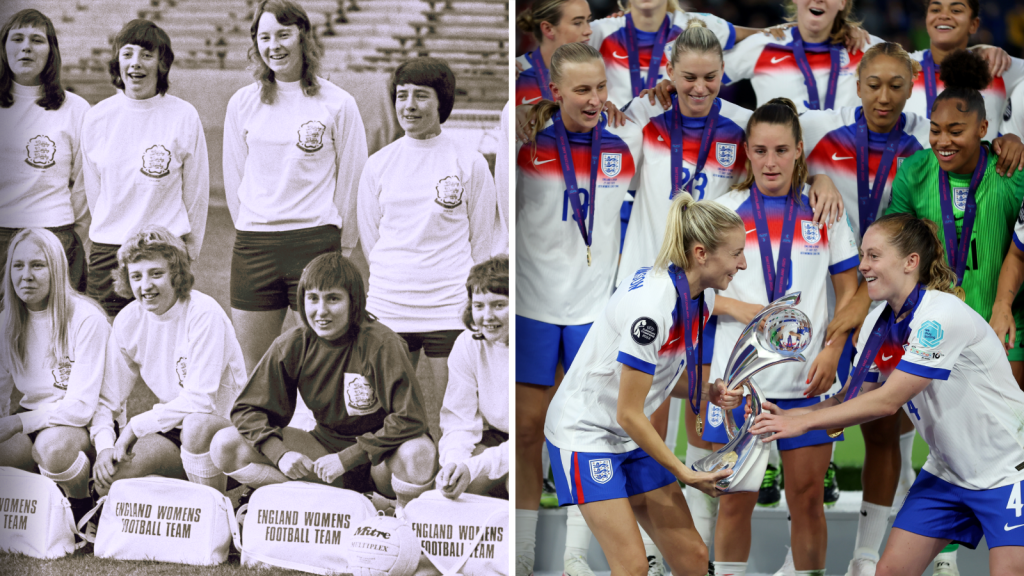
On Saturday, Sarina Wiegman’s team will face Iceland in Reykjavik at 17:30 BST. This match marks the 500th appearance for England’s senior women’s squad, a testament to the remarkable journey of the English women’s game. The Lionesses have consistently rewritten history over the past decade, achieving milestones such as their first tournament medal, first major trophy, and first title defense outside their home nation.
Reviving Women’s Football
The Football Association (FA) once deemed women’s football “most unsuitable for females,” external. This ban, enforced in 1921, stifled the sport for nearly half a century. It wasn’t until 1971 that the ban was lifted, allowing women’s teams to compete on a more formal level. The WFA, established in 1969, played a crucial role in this revival, though it struggled to keep pace with the game’s growth. In 1993, the FA took over management, bringing greater resources and professionalism to the sport.
“The game was most unsuitable for females,”
As the WFA’s influence grew, it laid the groundwork for England’s national team to emerge. The first official England squad was formed in 1972, with the Lionesses securing a 3-2 victory against Scotland at Ravenscraig Stadium in Greenock. This match, attended by just 400 fans, symbolized the start of a new era. A year later, their home debut saw an 8-0 win over Scotland in Nuneaton, showcasing the team’s potential.
International Recognition
England’s women’s team made their major tournament debut in 1984, competing in a Uefa competition that served as a precursor to the Women’s Euros. The team faced Denmark in a two-game series before advancing to a final against Sweden. Though the Swedes won the first leg in Gothenburg, Linda Curl’s goal in the second match at Kenilworth Road secured England’s place in the final. A penalty shootout decided the trophy, with Sweden prevailing 4-3 after Curl missed her spot-kick.
Wembley Milestone
Wembley Stadium became a landmark for the Lionesses in 1989. The team faced Sweden to commemorate the WFA’s 20th anniversary, drawing early crowds of around 3,000. Sundhage opened the scoring, mirroring her 1984 goal, before Lena Videkull sealed the win. The following day, a men’s match against Chile saw only 15,628 attendees, highlighting the growing interest in women’s football.
Hope Powell’s Legacy
Hope Powell served as England’s manager from 1998 to 2013, leading 162 games. Her tenure transformed the team, guiding them through six major tournaments, including the Euro 2009 final in Finland. Powell also spearheaded structural changes, such as the creation of the FA National Player Development Centre and the introduction of central contracts. These initiatives enabled players to pursue careers full-time, laying the foundation for future success.
Breaking Barriers in 2005
2005 was a pivotal year as England hosted their first major women’s tournament. The European Championship saw the Lionesses draw a crowd of 29,092 for their opening match against Finland at the City of Manchester Stadium. A 17-year-old Karen Carney scored the decisive goal, signaling the team’s growing strength. Subsequent matches drew 14,695 and 2,000 fans, underscoring the sport’s expanding appeal.