Bundesliga debut by Union’s female coach marred by misogyny
Bundesliga debut by Union’s female coach marred by misogyny
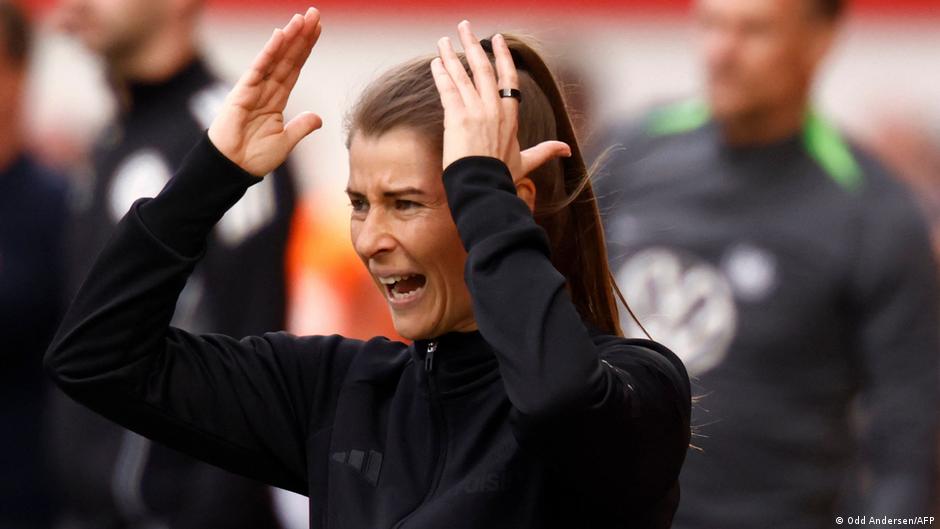
Marie-Louise Eta, the Bundesliga’s first female head coach, faced a difficult start as her team suffered a 2-1 loss to Wolfsburg. While the appointment marks a significant step forward, the online response to her role revealed lingering biases against women in coaching. The German Football Association (DFB) has seen a rise in female coaches, but the debate around Eta’s position continues.
Support Amid Criticism
Union Berlin’s social media team defended Eta after the match, addressing negative comments from fans. DFB vice-president Celia Sasic praised this approach, stating it was “absolutely the right thing.” In an interview with t-online, Sasic emphasized that the hostility targeted core values of football: respect and equality. “These remarks question the foundation of our sport,” she said.
“The comments are unacceptable. They’re not just about one person, but challenge the values that define our game: respect, fairness, and equality.” – Celia Sasic
Despite the setback, Eta remained focused on the performance. “It says more about the people posting it than the ones being discussed,” she remarked postmatch. Her resilience highlights the challenges women in coaching often face, a sentiment echoed by Helen Nkwocha, who had a similar experience in 2021.
A Trailblazer’s Experience
Nkwocha, a Black British coach, became the first woman to lead a men’s top-tier European team when she took charge of Tvoroyar Boltfelag in the Faroe Islands. She described the online hostility as a common occurrence for female coaches. “In the Faroe Islands, I received racially offensive messages and jokes about the island’s location,” she told DW.
“As female coaches, especially in competitive settings, we often encounter this kind of negativity,” – Helen Nkwocha
Nkwocha urged Union to stand by Eta, acknowledging the risks she faces. “A club must be strategic when hiring a new coach. They should stay focused on the game,” she advised. This perspective aligns with Union president Dirk Zingler’s comments, who stressed the importance of normalizing Eta’s role.
“I’m not having a discussion that suggests she stays with the men if she succeeds and moves to the women’s team if she struggles. That does women’s football a disservice,” – Dirk Zingler
Structural Challenges in Football
While men coaching women’s teams is common, the reverse remains rare. Robin Afamefuna, a professional player and cultural anthropologist, highlighted the structural barriers women face. “Eta’s example will be crucial for young girls seeing possibilities in football,” he said. “Before, the path wasn’t clear.”
“We have to talk about how women are disadvantaged in football and break down these systems,” – Robin Afamefuna
The DFB reports around 4,000 female coaches hold licenses to lead professional teams. Yet, Afamefuna noted progress hasn’t erased deep-rooted inequalities. “Society still has a long way to go before these women get equal opportunities,” he added. Eta’s debut, though successful on the field, underscores the ongoing struggle to shift football’s patriarchal norms.